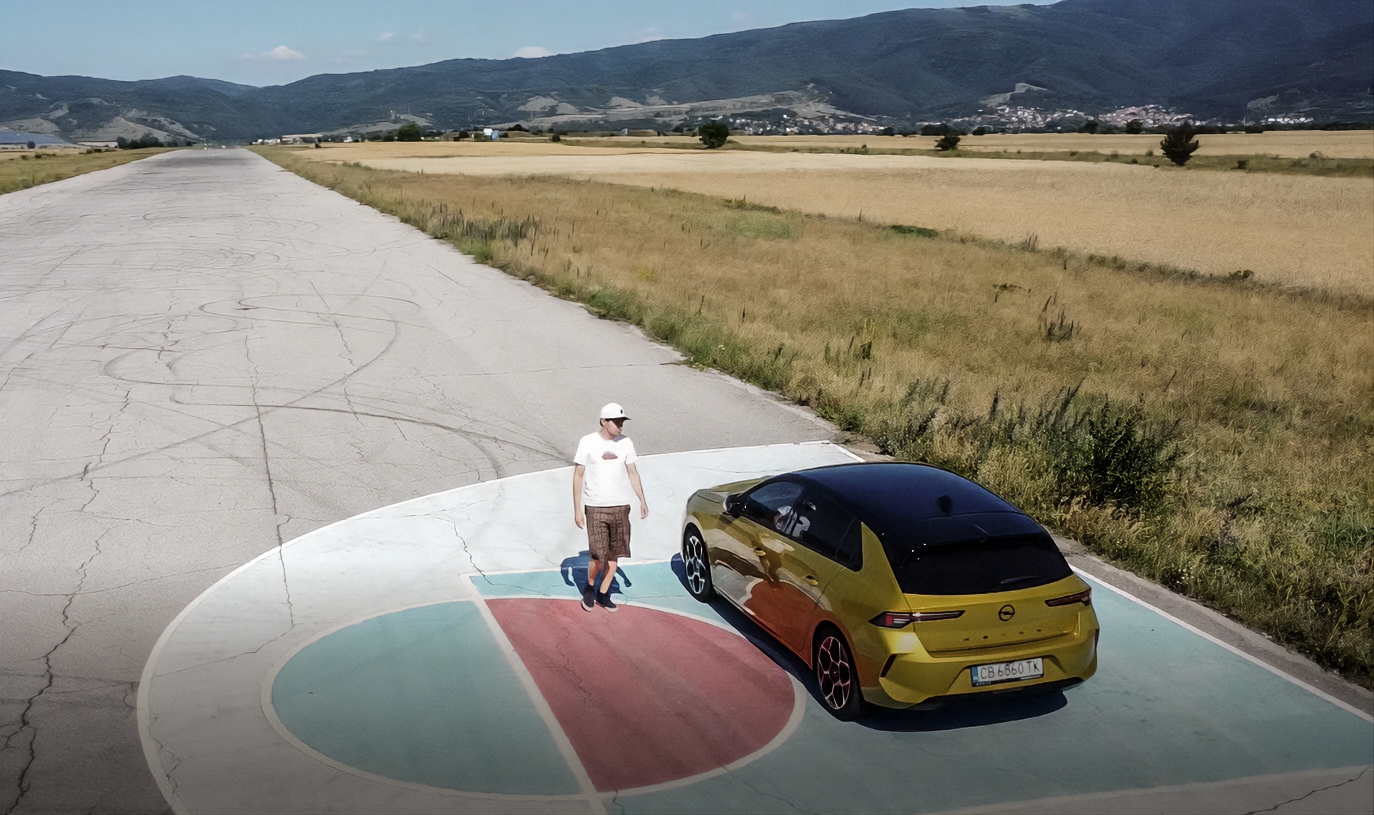
Today I am introducing you to what many Bulgarian drivers jokingly call their worst nightmare – the Opel Astra. But no, we are not talking about white Astras hiding behind a 30 km/h sign. We are talking about the latest generation of the German compact model – the Astra L.
Opel has long been known for its compact family cars. The first Opel Kadett arrived back in 1936. After six generations, the name changed and Opel Astra entered the scene, continuing the success story. One of the highlights was the 2016 European Car of the Year award won by Astra K. In other words, expectations are high. This is also the first Astra developed after Opel’s separation from GM, which makes it particularly important – it shows what we can expect from the brand going forward. The early signs are positive. The new Astra has already won the Golden Steering Wheel and Compact Car of the Year awards in Germany.


For me, this model is interesting for another reason. The design references to late-generation Kadett models instantly reminded me of the white family Opel I used to ride in as a child. Nostalgia plays its role here – but only partly.
Design

The Astra combines a harmonious silhouette with progressive details and dynamic elements. In GS Line trim especially, the design becomes genuinely attractive. The front is dominated by the so-called “Vizor”, first seen on the Opel Mokka. The black grille and slim headlights give the Astra a sporty yet restrained appearance. The strong central crease on the bonnet reinforces that impression.
From the side, the car remains visually appealing. The design is relatively clean, but pronounced wheel arches, the optional black roof (reserved for GS Line), and the optional Pentagon wheels with red accents make it distinctive

Here I also found what brought me back to my childhood – the clear reference to Opel’s past in the rear side window design and the plastic trim reminiscent of older Kadett models.
At the rear, elegant wide tail lights create the impression of a car that stands firmly planted on the road. Two details deserve special mention.


First, the vertically positioned third brake light – an unusual and, in my opinion, excellent solution. Second, what is missing: no fake exhaust tips. In an era where artificial design elements are common, this honesty deserves applause.

Overall, I am genuinely impressed with the Astra’s design. Simple but recognisable. Dynamic without being aggressive.


Interior

At first glance, the interior appears less striking than the exterior. Compared to its technological sibling, the Peugeot 308, the German feels almost conservative. Much of this impression comes from the dominant grey tones and restrained design choices.
A second look reveals a more convincing picture. In front of the driver sits the modern Pure Panel Pro cockpit, consisting of two standard 10-inch displays – one for the digital instrument cluster and one for infotainment. The infotainment system itself is not class-leading in terms of graphics or speed. However, even the base version includes wireless Apple CarPlay and Android Auto. For many drivers – myself included – that is more important than flashy native software.
The digital cluster is slightly disappointing. Customisation options are limited and the graphics are not particularly refined. For example, the cluster in the Volkswagen Golf 8 looks more sophisticated and premium.
On the positive side, there is an optional head-up display. It is large, clear, and shows extensive information, including trip computer data. Interestingly, its height adjustment is controlled via the mirror adjustment button – unusual but practical.


One feature that immediately won me over is the presence of real, physical buttons on the steering wheel and for frequently used functions, especially climate control. In a world increasingly dominated by capacitive surfaces, this is a major ergonomic advantage.

The sports seats in the test car are upholstered in Alcantara and certified by Aktion Gesunder Rücken (AGR). Perhaps that explains why they are genuinely excellent. After long hours behind the wheel, I felt no discomfort.
In terms of space, the situation is satisfactory. Two adults can travel comfortably in the rear, although the Golf 8 feels slightly more spacious. Practicality is strong, with large door bins, useful storage compartments and a cleverly hidden glasses holder integrated into the dashboard.


Overall, I am satisfied with the Astra’s interior. Ergonomics and comfort are excellent. Materials and build quality are solid. I would simply like to see more colour and trim options, as well as more refined graphics on both screens.

On the road
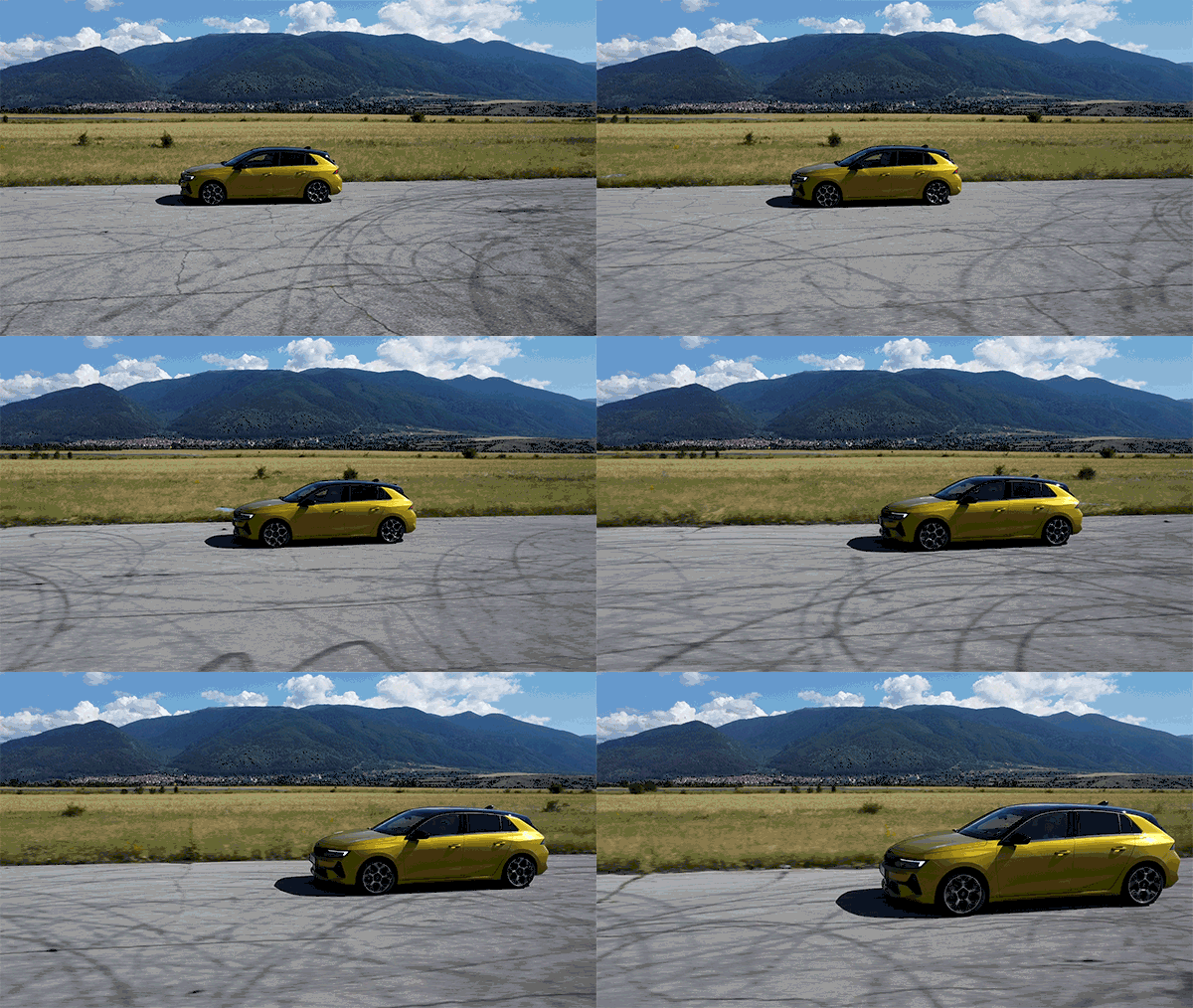
The engine range is extensive. Three-cylinder 1.2-litre petrol engines are available with 110 hp or 130 hp. There is also a 1.5-litre diesel with 110 hp. A plug-in hybrid combines a four-cylinder petrol engine with an electric motor for a total of 180 hp. Recently, a fully electric version with 156 hp and a range of up to 460 km was introduced.
There is choice – what is missing is a truly sporty version.

My test car featured the balanced 1.2-litre petrol with 130 hp paired with an eight-speed automatic transmission. Official figures claim 0–100 km/h in 9.7 seconds, a top speed of 210 km/h, and combined fuel consumption of 5.4–5.7 l/100 km.

In city driving, the Astra feels comfortable and refined. Suspension comfort and sound insulation are noticeably improved compared to the previous generation. The small petrol engine delivers adequate punch for urban use.
On winding roads around Vitosha, Sport mode sharpens the response slightly, but manual gear shifts via the paddles are slow and largely unnecessary. The automatic mode works perfectly well.
I tested the acceleration with a Racebox device and recorded a best time of 10.3 seconds to 100 km/h – slightly slower than the official claim.
При по-динамично шофиране двигателят става осезаемо по-шумен, но както съм споменавал и преди, 1.2 литровият трицилиндров двигател звучи доста симпатично и има характер. Динамиката, която предоставя е далеч от впечатляваща, но е достатъчна за малко по-бързо придвижване и по-важното, дори за миг не съм си казал “ех, искаше ми се да има още един цилиндър”. Напротив, небалансирания трицилиндров двигател е много чаровен. Иначе, управлението на колата е достатъчно прецизно, но просто не е увлекателно. Тук смятам, че предишната Astra бе по-добра. Осемстепенният “автоматик” също е малко неуверен при шофиране с повече газ, на моменти се чуди коя е точната предавка за ситуацията и самите смени стават по-груби. Окачването пък предоставя доста добър баланс между комфорт и липса на попюляване. Това ми допада и всъщност е далеч по-важно в ежедневието.

ТI tested the acceleration with a Racebox device and recorded a best time of 10.3 seconds to 100 km/h – slightly slower than the official claim.
After that slight disappointment, I continued calmly towards Bansko. My overall impression is that in “normal” driving, the Astra is genuinely pleasant. Even this engine delivers adequate performance for relaxed cruising. If you want something quicker, the plug-in hybrid is the logical step. If you want something truly fast, you will need to look at another brand altogether. Noise levels are well controlled, including at motorway speeds. The suspension is a real highlight – it is notably comfortable, yet the car remains composed and does not feel floaty. That said, if maximum ride comfort is your absolute priority, the French sibling of the Astra, the Peugeot 308, might be the more suitable choice.

At the end of the two-day test, it was time to evaluate two key things. First, the AGR-certified seats are genuinely excellent. Second, fuel consumption is very good, even if it sits slightly above the official figures.
In my case, with mixed driving that included more dynamic sections and frequent stops for photos, the average consumption was 6.5 l/100 km over a total distance of 400 km. For a 130 hp petrol engine paired with an automatic transmission, that is a perfectly respectable result.
Conclusion
The new Opel Astra is one of the strong contenders in the C-segment and its award success is no coincidence. It relies on clean design, strong ergonomics and solid everyday usability.
It is pleasant to drive and feels engineered to serve its owner without unnecessary drama. The powertrain range is broad, although a true hot version is missing.
Pricing in Bulgaria starts from approximately €23,000 (converted from 45,000 BGN). The attractive GS Line version tested here exceeds €30,000, while plug-in hybrids add roughly another €10,000.
In my opinion, the Astra is a very strong player in its class. If you are looking for a compact car suitable for both city driving and long journeys, this model deserves serious consideration.
eng. Tsvetan Iliev