Although models from DS have already appeared on the pages of Roadhunter, allow me to briefly remind you that this is a relatively young French premium brand. It is part of the former PSA Group, alongside Peugeot and Citroën, and its roots lie precisely with Citroën and the revolutionary Citroën DS from the middle of the last century.
In keeping with current trends, the DS range consists mainly of SUVs and crossovers. A formula I usually find rather dull. However, the interpretation here is so different that it genuinely captures my attention. DS models are a bit like haute couture – extravagant, bold and occasionally walking a fine line between daring and excess. But that is precisely where their charm lies.
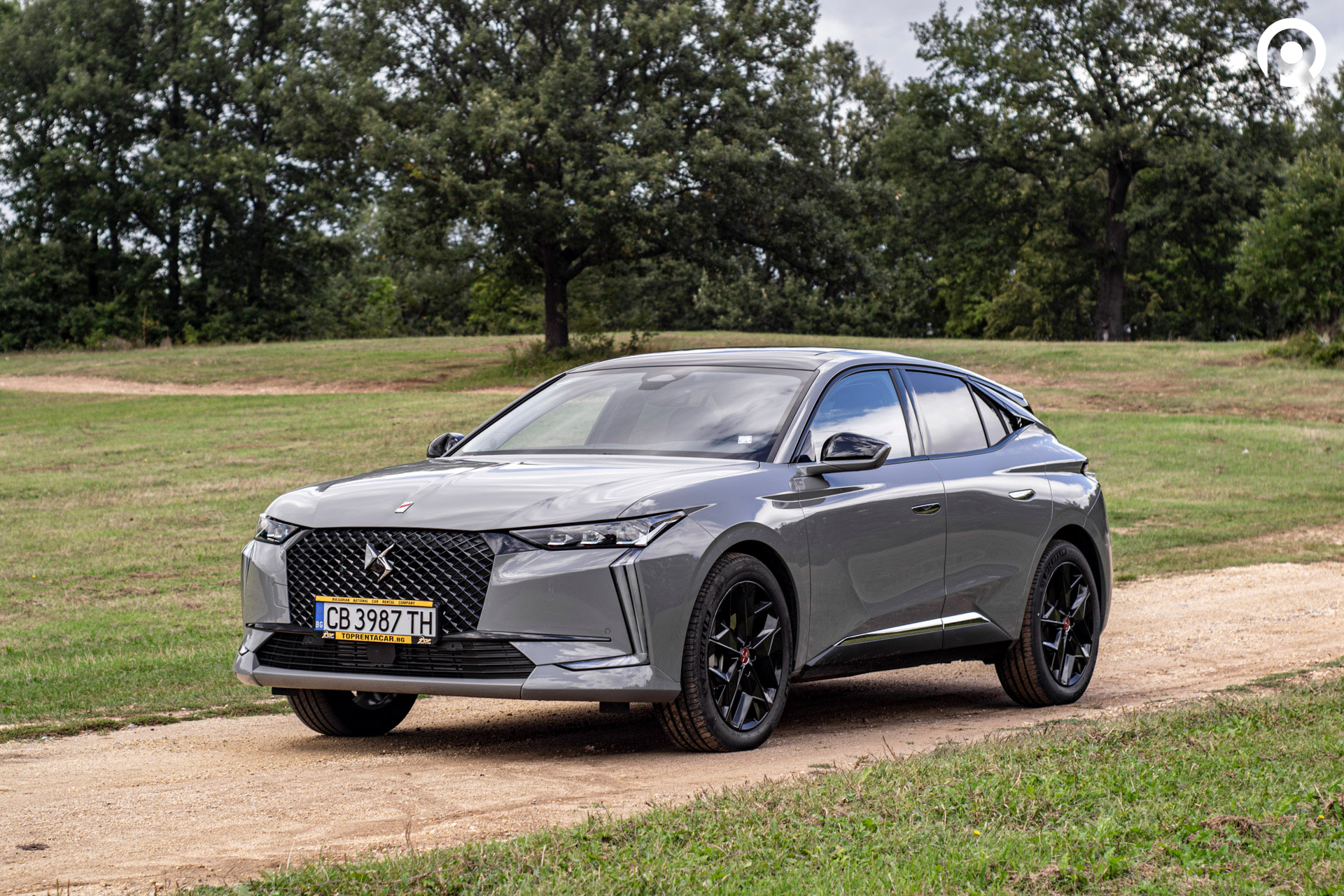
The DS 4 is one of the brand’s newer additions. I appreciate the fact that it is officially presented as a hatchback. Still, given certain design elements and its slightly raised ride height, I would confidently describe it as a crossover.
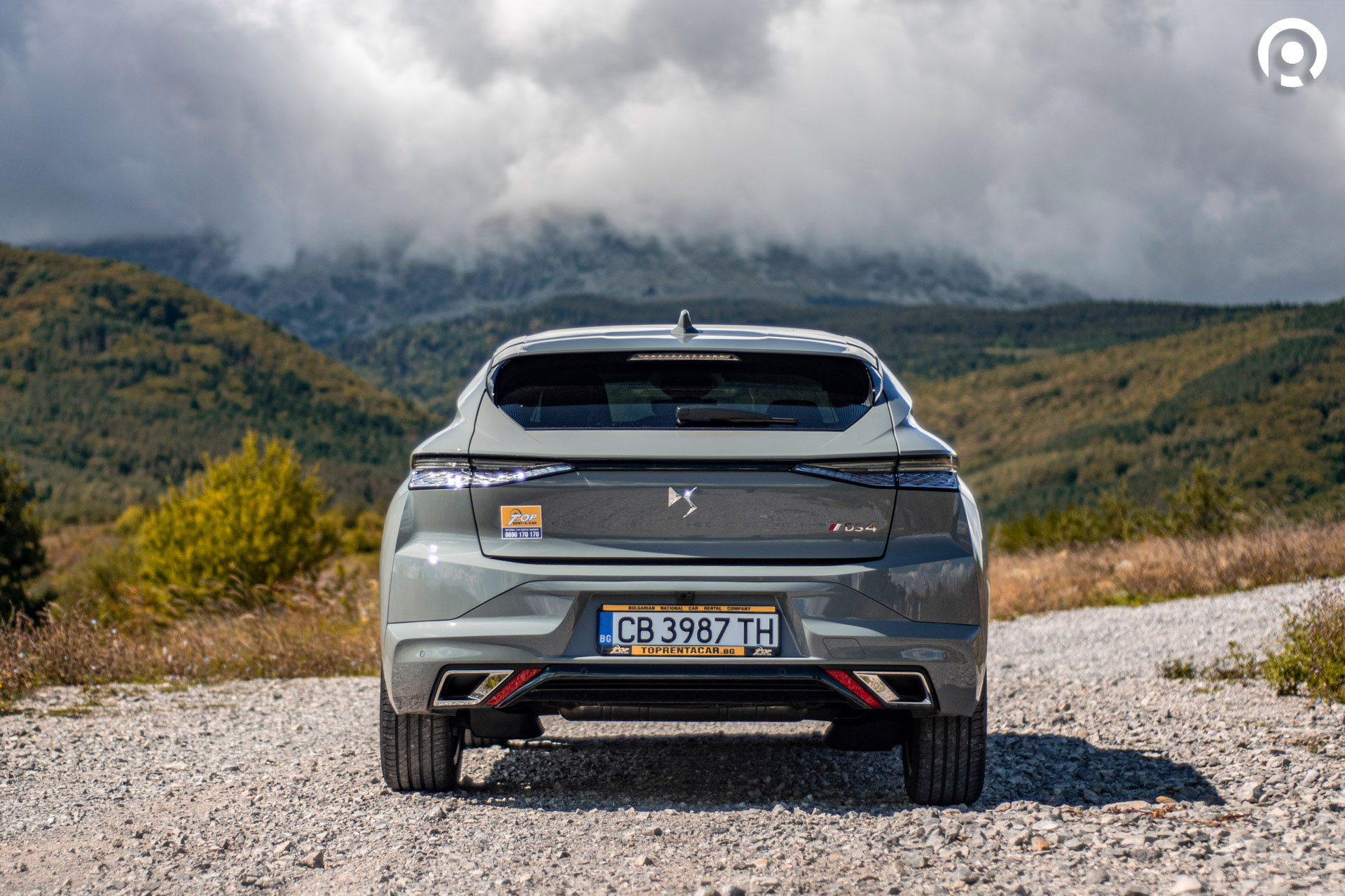
Another interesting detail this time is that the test car does not come from the official brand importer in Bulgaria, but from a rental company. Yes, instead of the usual predictable fleet choices, Top Rent A Car have dared to offer something more distinctive and niche to their customers. And that alone deserves recognition.
Design
The exterior design of the DS 4 is polarising. The combination of sharp, almost illogical creases and unconventional details will not be to everyone’s taste. I, however, quite like it. What appeals to me most is the concept of a slightly raised hatchback. You get the higher seating position many buyers desire, but without the typical drawbacks of a traditional SUV – extra weight, bulkier proportions and compromised driving dynamics.
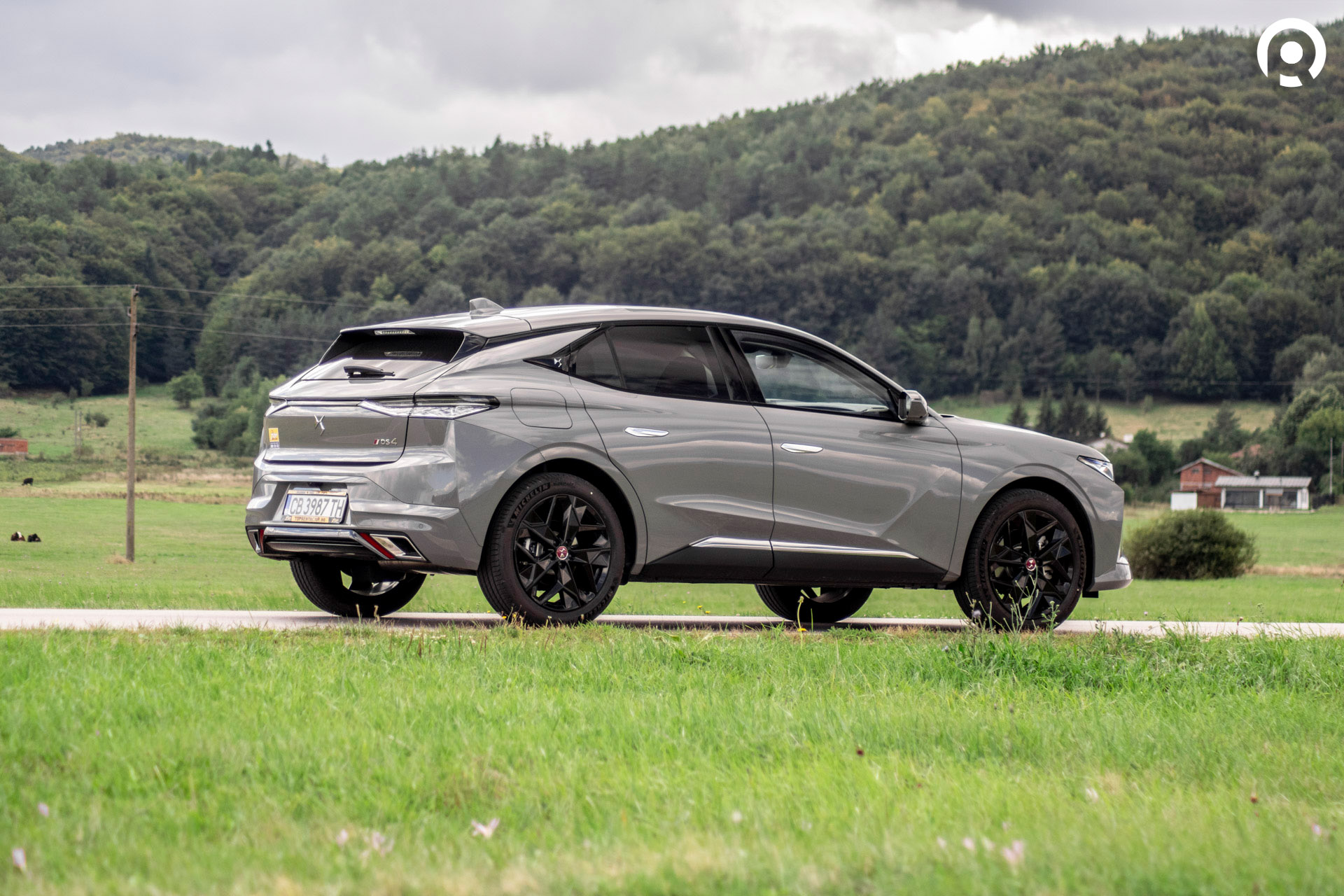
Interestingly, the DS 4 is available in no fewer than eight trim levels, grouped into three distinct themes – luxury, sporty and “adventure”. Personally, I find the sporty versions the most appealing, and fortunately the test car was exactly that. In top Performance Line+ specification, the car features additional black exterior elements and 19-inch black Minneapolis wheels. Combined with the Lacquered Grey paint, the overall look is modern and dynamic.
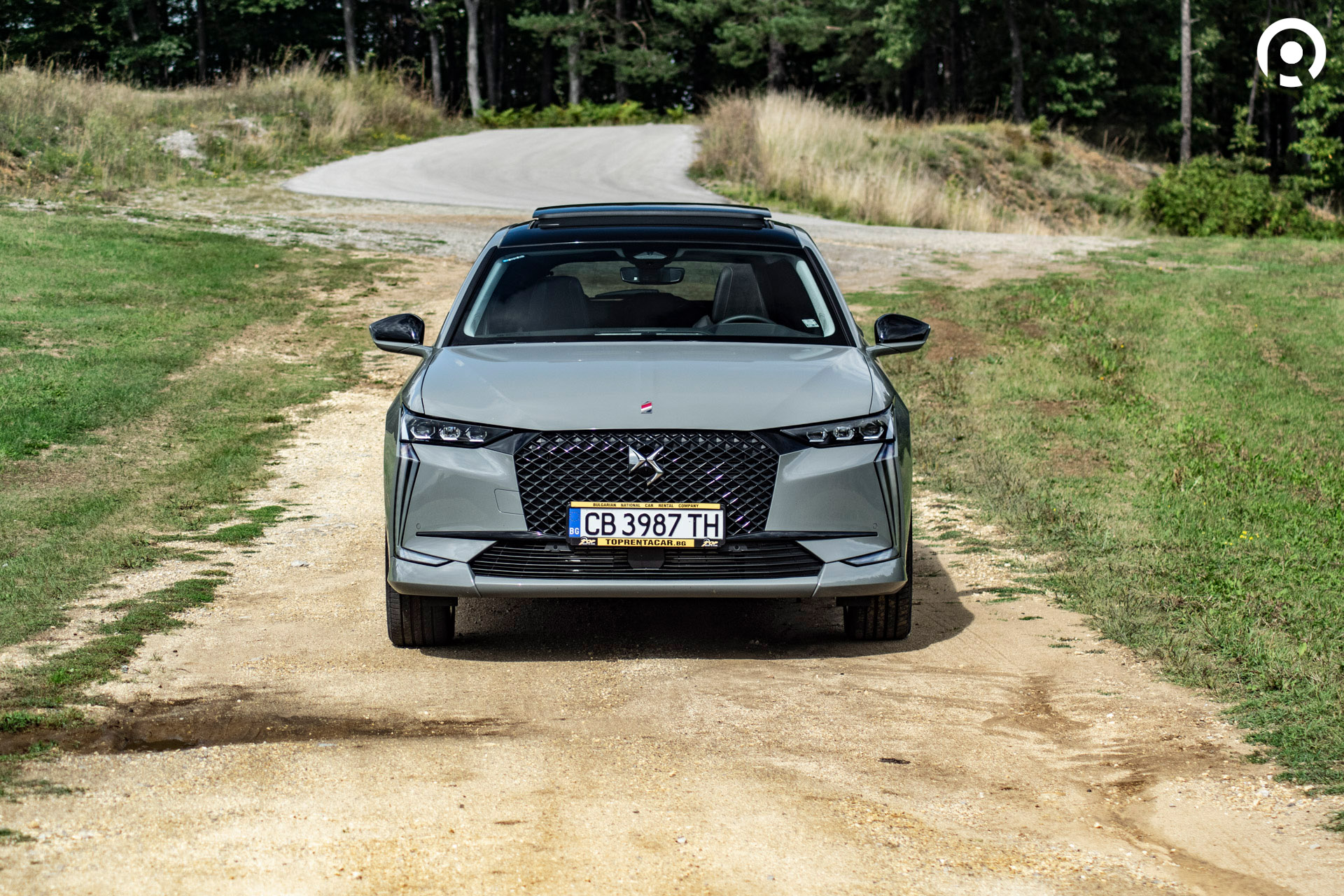
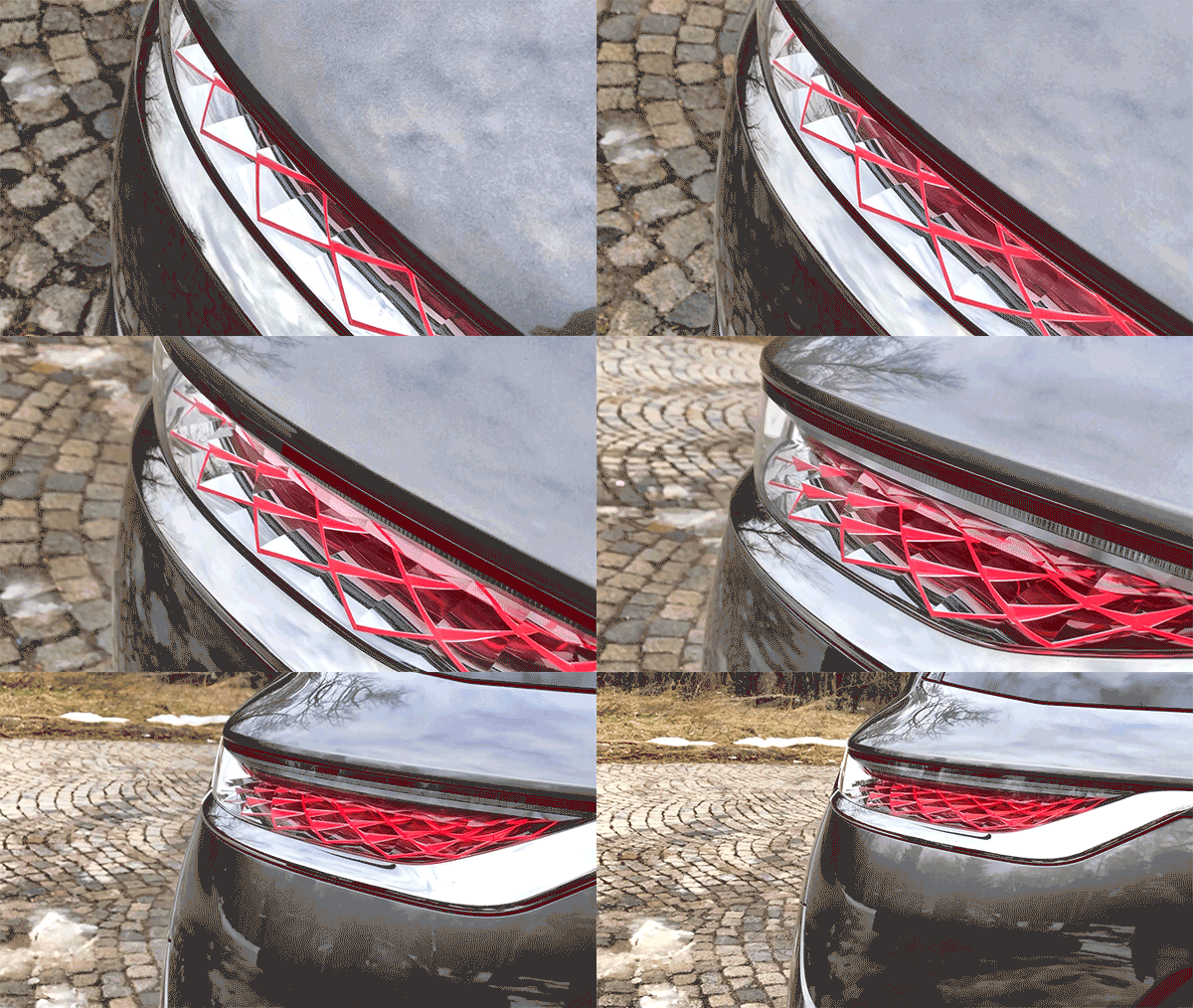
Lighting is one of the most intriguing aspects. The rear lights are shaped in an unusual way, reminiscent of the larger DS 7 Crossback. At the front, three main lighting elements dominate, complemented by purple LEDs that create a welcome light “show” when unlocking the car. The angular daytime running lights may look slightly eccentric at first glance, but they fit perfectly within the DS design language.
Another interesting detail is the flush door handles. They remain hidden when the car is locked or in motion. I must admit that when they retract after pulling away, they produce a slight noise that startled me more than once, making me think I had accidentally touched something.


The final result is bold, distinctive and unconventional. Perhaps most importantly for a relatively young premium brand, the DS 4 genuinely looks premium. The proportions play a key role here – the long bonnet and relatively short windscreen give the car a confident, almost coupé-like stance.
I personally like it. My only real criticism concerns the fake exhaust tips at the rear. They are simply unnecessary and, frankly, rather disappointing. What do you think? Does the DS 4’s design appeal to you?
Interior
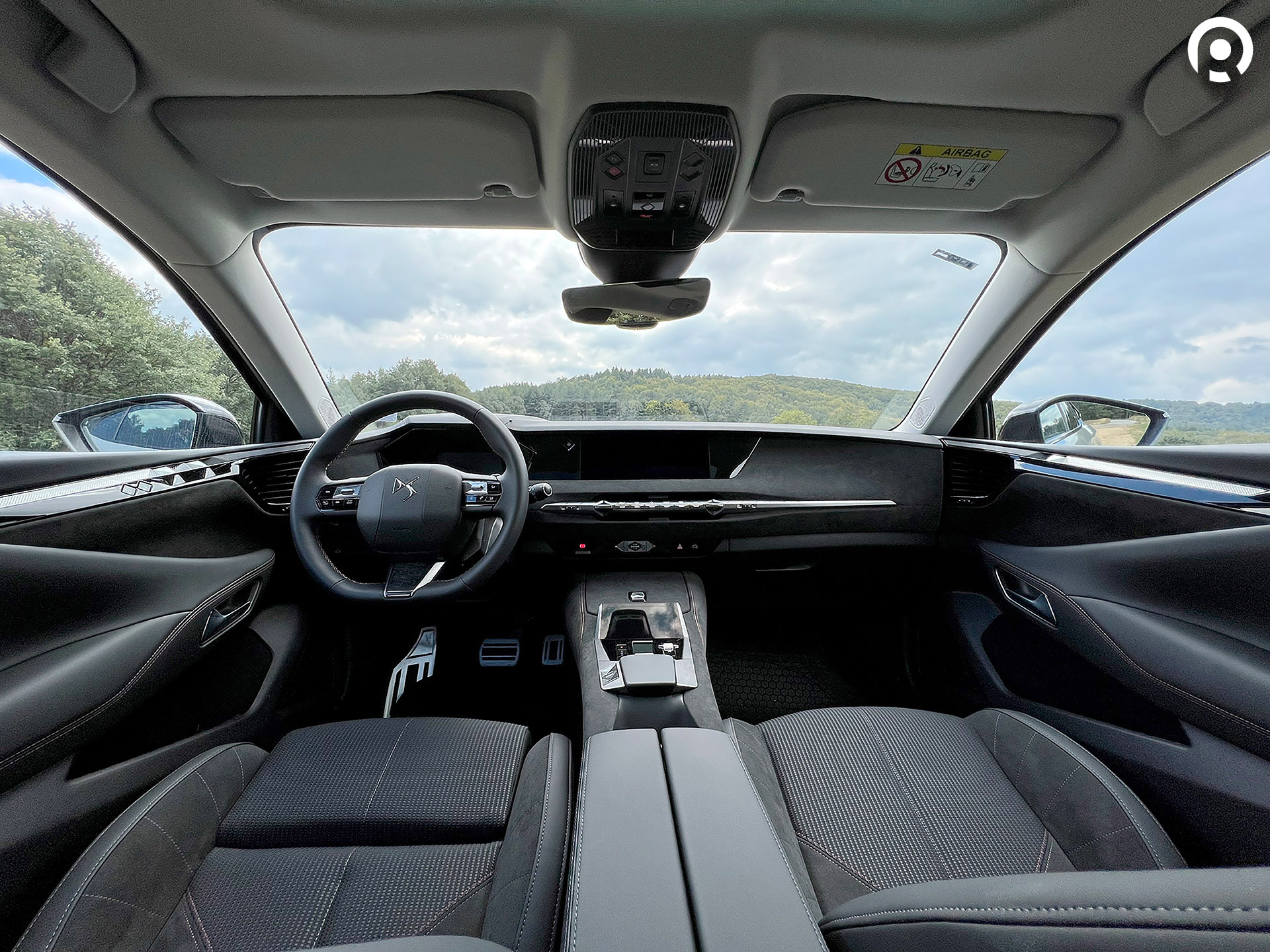
The interior of the DS 4 continues the theme of surprise and avant-garde design. What struck me immediately is that, unlike older models such as the DS 3 and DS 7 Crossback, where the design occasionally felt as if it crossed the line, everything here is more refined – yet still pleasantly extravagant.
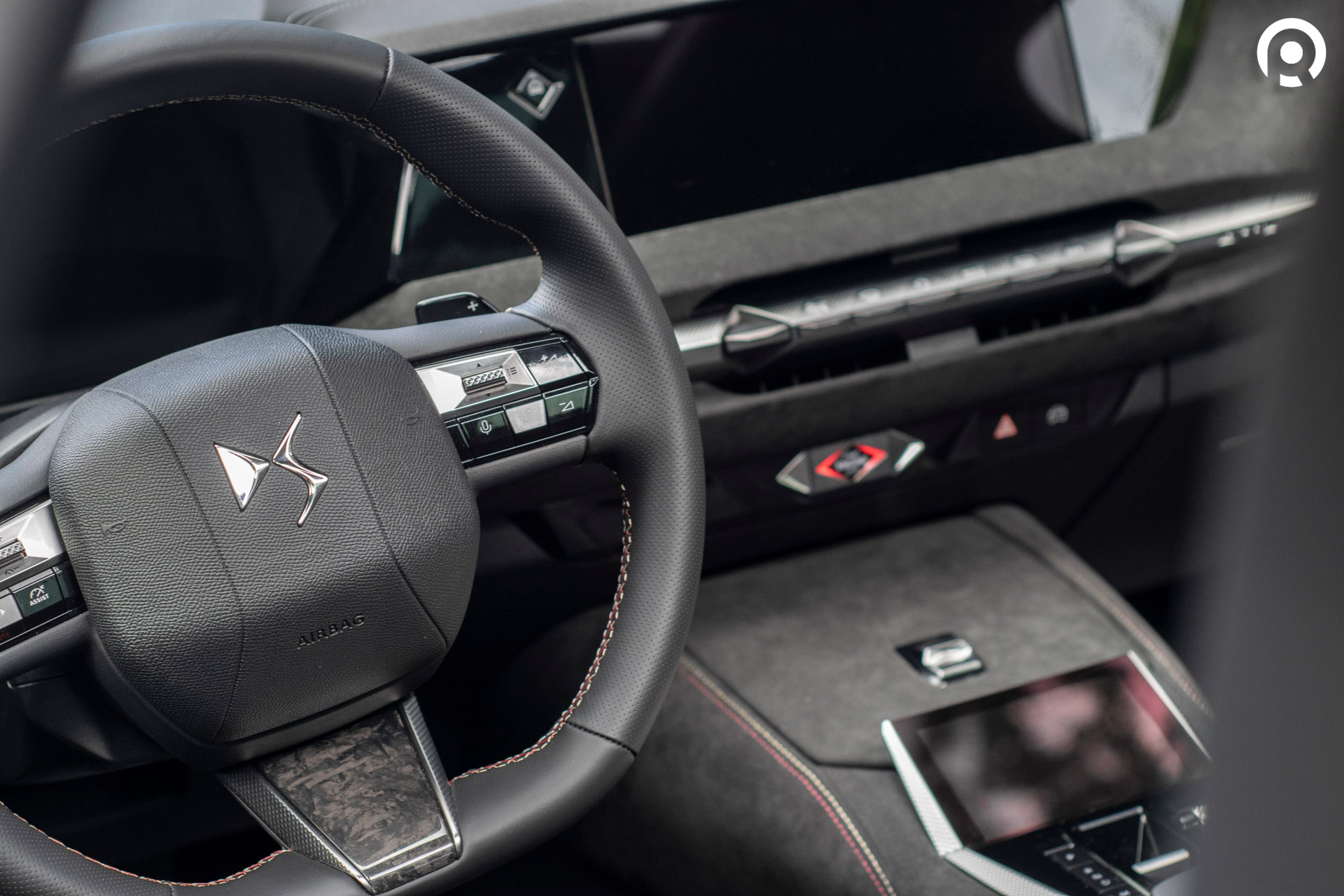
Just like the exterior, the cabin can reflect either a luxurious atmosphere (in several variations) or, as in this case, a sporty character. Why sporty? Because of the numerous details: black sports seats trimmed in woven textile, Alcantara and leather, contrast stitching, an Alcantara-covered dashboard and a forged carbon insert on the steering wheel.
What truly impressed me is the attention to design and detail. Almost everything looks unconventional, yet ergonomics are not sacrificed. Even something as ordinary as the window switches has been reinterpreted. They are positioned higher than usual and visually separated into left and right by using different materials – black gloss and satin chrome with a diamond texture (wood on certain trims). The door panels themselves are sculpted in an eye-catching way, yet the armrests are comfortable and the doors close with reassuring solidity. Add to that large, fabric-lined door bins – practical and premium at the same time.


My attention was also drawn to the physical climate control buttons. Unfortunately, temperature adjustment itself is integrated into the infotainment screen, but at least the key functions remain tactile. The central display cleverly passes through the air vents, effectively hiding them without noticeably affecting their performance.
Not all original ideas serve pure aesthetics. One feature I genuinely appreciated is the small storage niche in front of the central armrest. You can place your phone there safely, within reach but without it becoming a distraction. Even more interesting is the small opening at the bottom of this niche leading into the armrest compartment. You can route your charging cable through it, keeping everything neat and organised. That is true practicality.

However, the DS 4 is a car of contrasts. There is practicality, but also a touch of excess. A perfect example is the five-inch display on the centre console called DS Smart Touch. Its main function is to display six shortcuts on the infotainment screen when pressed; you swipe sideways to select a menu. It can also recognise handwritten input for navigation and allows you to accept or reject commands (such as phone calls) with a swipe.
Could this five-inch display have been replaced by a simple touchpad or even something more “heretical” like a physical rotary controller? Certainly. But the screen looks impressive – and excess is often the shortest path to luxury.
What I do not particularly like is its limited functionality. Why can it not be used to navigate through menus more comprehensively? Why can it not be used for text input in Apple CarPlay? It feels like a missed opportunity.
Moving on to the infotainment system itself, the screen measures 10 inches regardless of trim level. Graphics are clear and the system operates quickly. Overall, it is intuitive and pleasant to use, although it does not quite reach the very best in the market.
The instrument cluster is digital as standard, with a seven-inch display. More interesting is the head-up display available on higher trims. It is among the best solutions currently on the market, thanks to its generous size and the wealth of information it provides. Interestingly, height adjustment is controlled via the mirror adjustment button – something I wish someone had told me before I spent ten minutes digging through menus.


The rear seats offer decent visibility and are not an unpleasant place to travel, but space for adults could be better. The backrest is relatively upright and headroom is somewhat limited.
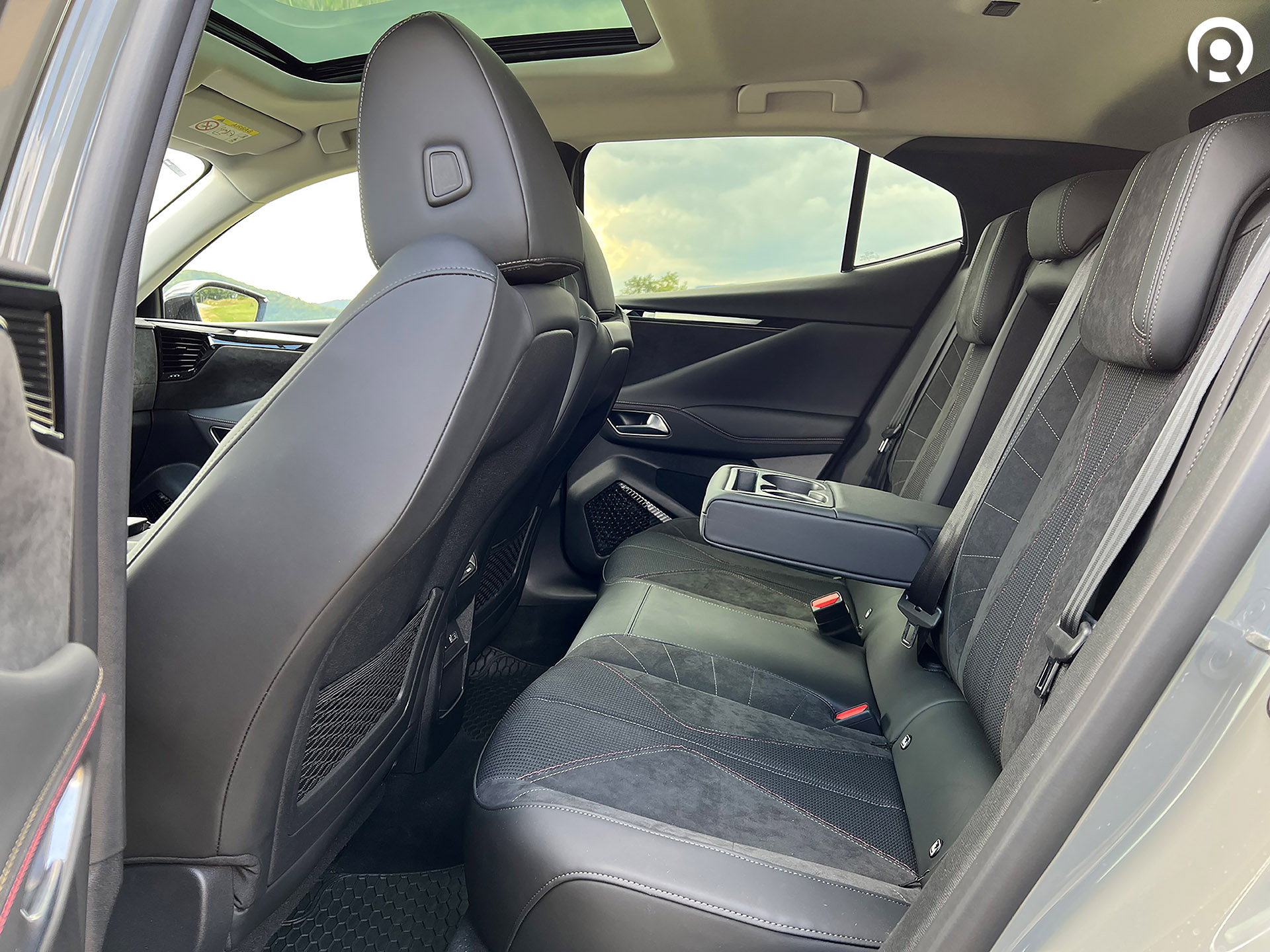
Finally, the most important aspect for a car targeting the premium segment: material quality and build. The overall impression is very good. The combination of materials and the attention to detail, even in the rear, are impressive. Build quality feels solid, although I did notice a slight creaking noise from the driver’s door. In such a quiet car as the DS 4, that does not go unnoticed.


On the road
The DS 4 offers a solid engine range. The entry-level option is a three-cylinder petrol unit producing 130 hp. It suits a smaller car like the Peugeot 208 perfectly well, but here it feels like a compromise.
Above it sits a four-cylinder petrol engine available with 180 hp or 225 hp. There is also a 130 hp diesel focused entirely on efficiency. At the top of the range is the plug-in hybrid E-Tense with a combined 225 hp and a 12.4 kWh battery, offering over 60 km of electric range. That makes it the most logical choice for predominantly urban driving.
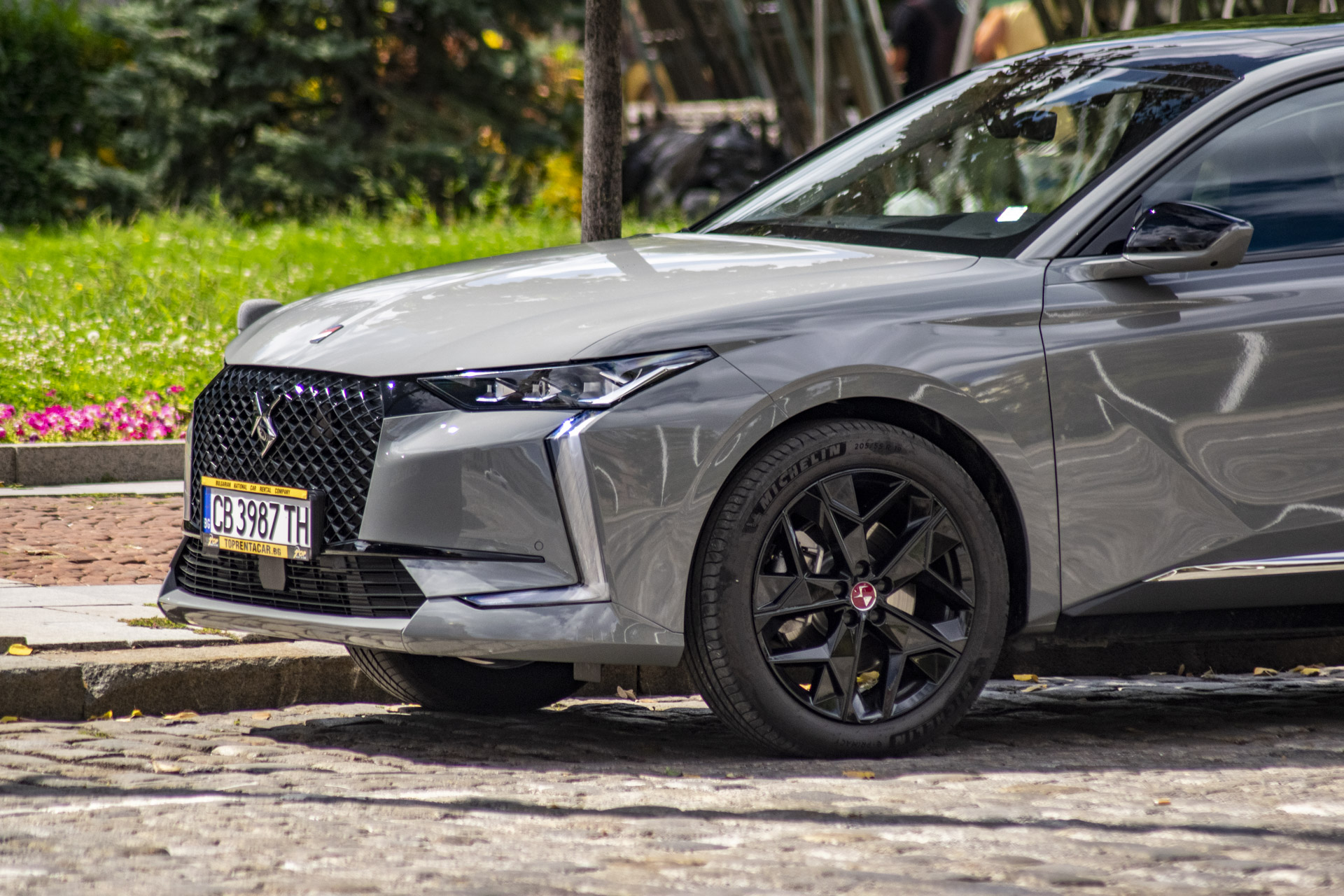
Fortunately, Top Rent A Car did not hold back – neither on equipment nor on powertrain. The car waiting for me in front of their Mladost 1 office was powered by the most potent petrol engine available: a 1.6-litre four-cylinder unit producing 225 hp and 300 Nm of torque. It is paired with an eight-speed automatic transmission and drives the front wheels only – all-wheel drive is not offered on the DS 4.
Acceleration from 0–100 km/h takes 7.9 seconds, top speed is 235 km/h and official fuel consumption ranges between 5.7 and 8.5 l/100 km. If we are to speak about sportiness, this is effectively the most dynamic version of the DS 4. Yes, the hybrid is marginally quicker in a straight line, but the added 234 kg of electrified hardware inevitably makes itself felt on a twisty road.

Based on my experience with the closely related Peugeot 308, I expected a comfortable drive. And I was not mistaken.
Even on large 19-inch wheels, the DS 4 does an impressive job of masking the disgraceful condition of our urban roads. Comfort is complemented by excellent sound insulation. The windscreen is acoustic, but at typical city speeds that is not the decisive factor. What truly stands out is the overall insulation of the cabin, particularly around the wheel arches. Road noise is minimal.
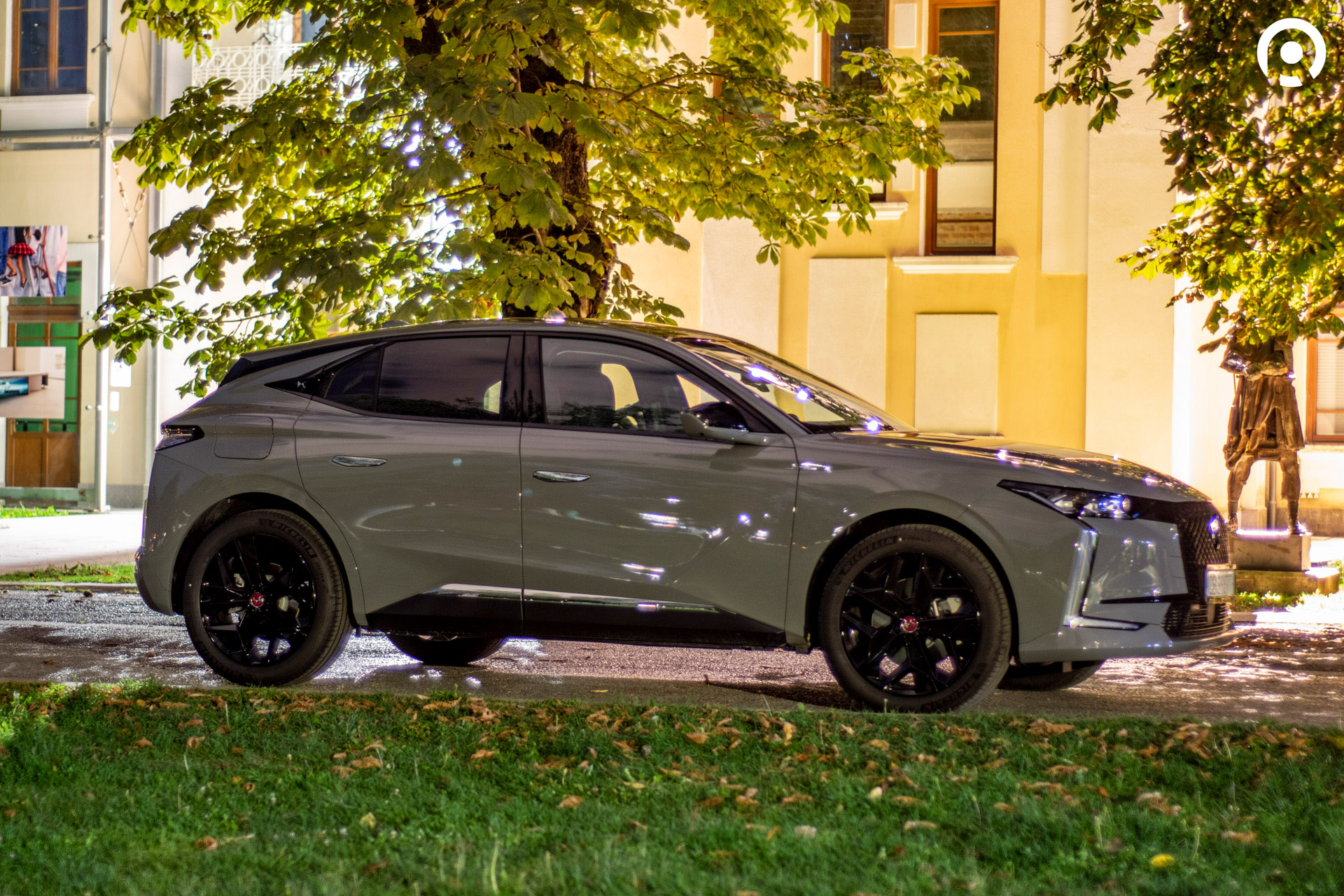
This transforms city driving into a genuinely pleasant experience. The slightly elevated seating position, the smooth operation of the automatic gearbox under gentle throttle, and the remarkable quietness create a calm atmosphere – something I greatly appreciated amid Sofia’s usual chaos and aggression.
A particularly useful feature for urban driving is the Rear Cross Traffic Alert system. When reversing out of a parking space, the sensors in the rear bumper warn you of approaching vehicles, significantly increasing safety.


The more interesting part came once I left Sofia and headed towards Belchin Banya. After clearing the last villages, I switched to Sport mode and pushed harder. Not for long, however, as it quickly became clear that the DS 4 is not at its best when driven aggressively.
Steering precision is adequate and higher speeds are certainly possible, but not particularly enjoyable. The comfortable suspension, which is such an advantage in everyday driving, leads to noticeable body roll and a certain looseness in faster corners. No one really benefits from that. The gearbox can hesitate slightly under sudden full throttle, although it quickly regains composure. Paddle shifters are available, but in this segment they feel largely unnecessary. As for outright performance, the engine itself is strong, offering confident overtaking and effortless cruising.
Later that day, I tested the 0–100 km/h acceleration on the track near Sapareva Banya. Officially, the figure is 7.9 seconds. My best measured result was 7.81 seconds, or 7.92 seconds after correcting for the slight incline of the track. Very respectable.
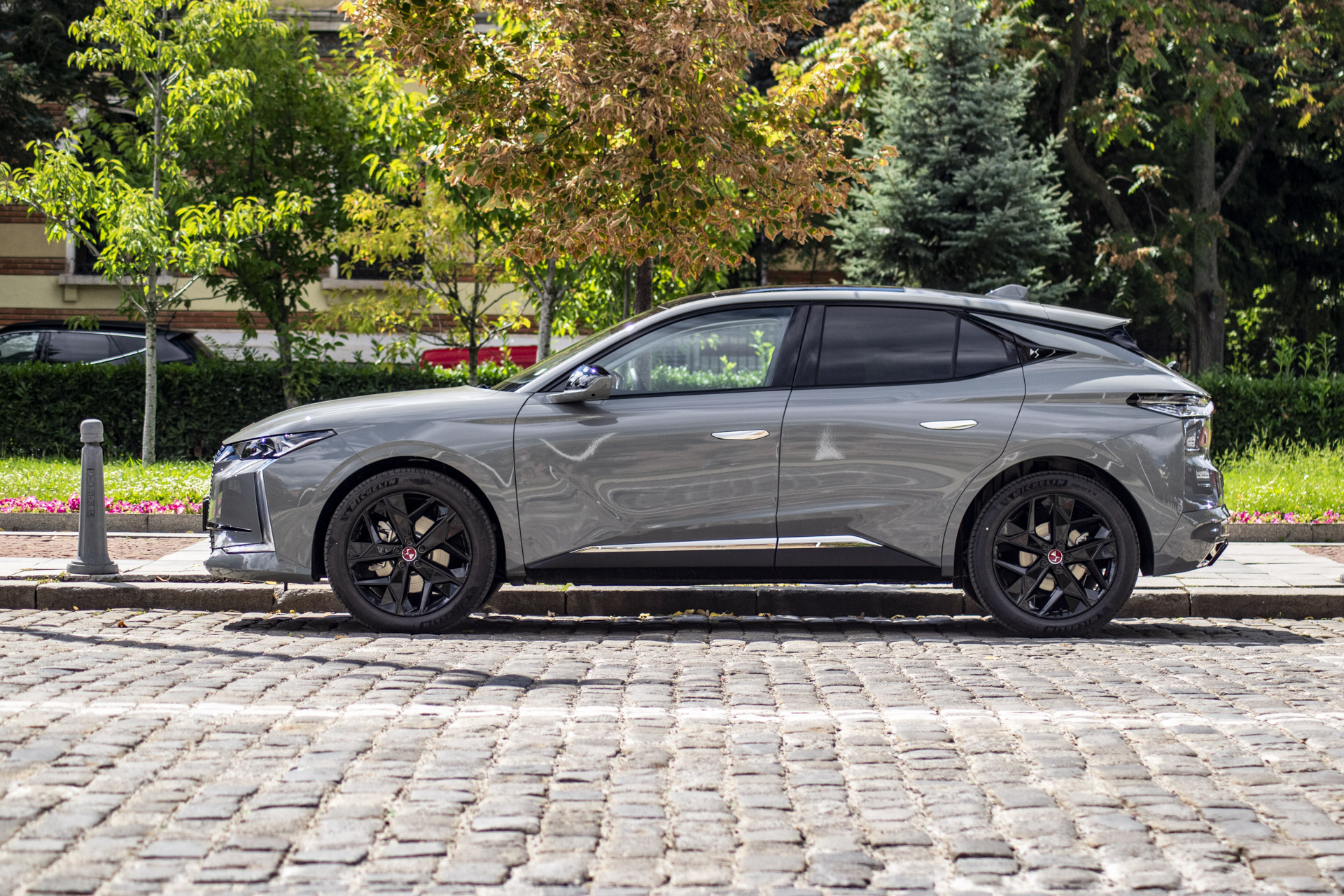
As we have established, comfort is the DS 4’s true strength. It is worth noting that it can be even more impressive. Uniquely in this class, DS offers optional adaptive suspension with road scanning. A camera monitors the road surface ahead, the system analyses the information instantly and adjusts the dampers accordingly before the car reaches the irregularity. It is an impressive piece of technology – and the option costs approximately €1,000 (converted from 1,971 BGN), which is more than reasonable.
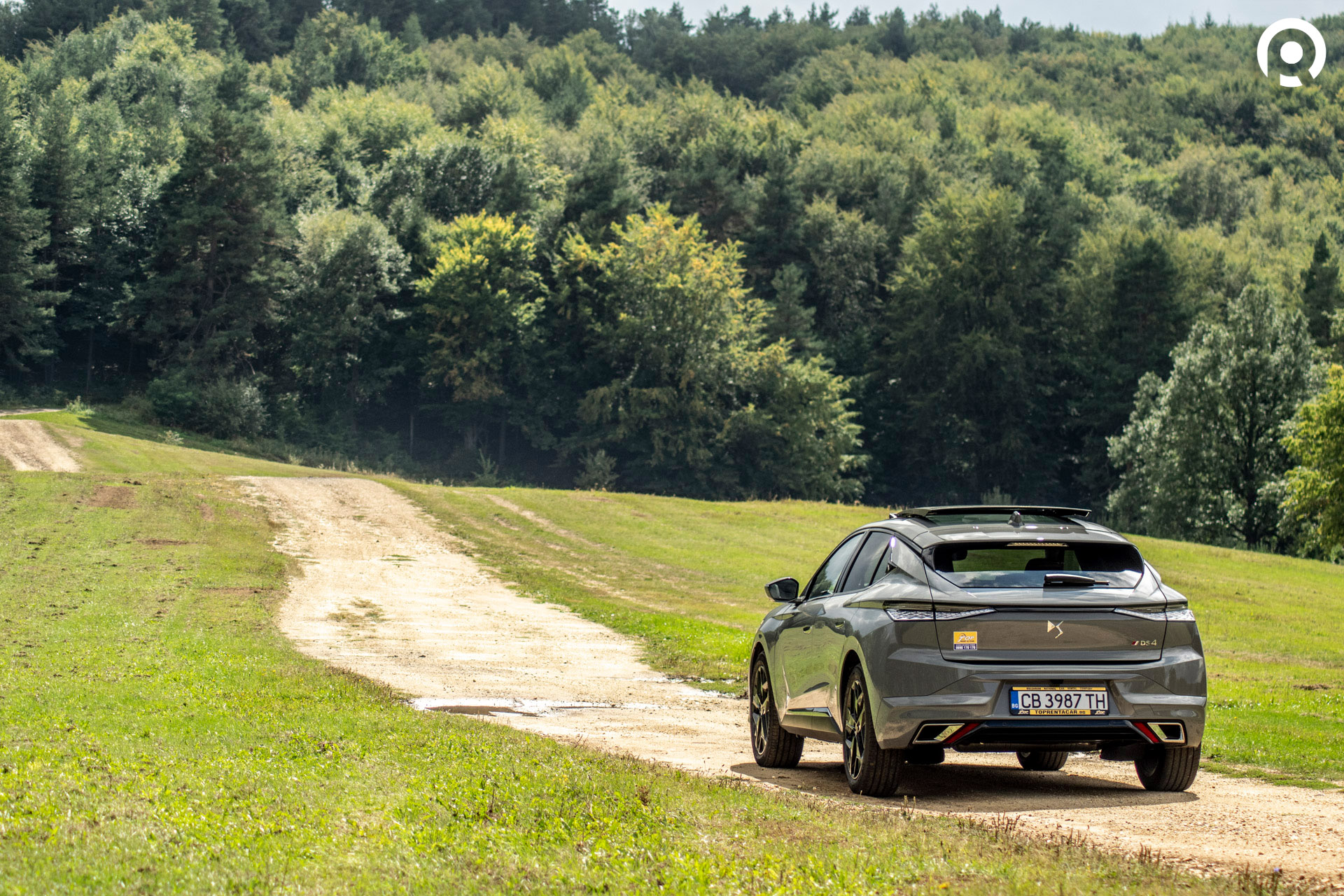
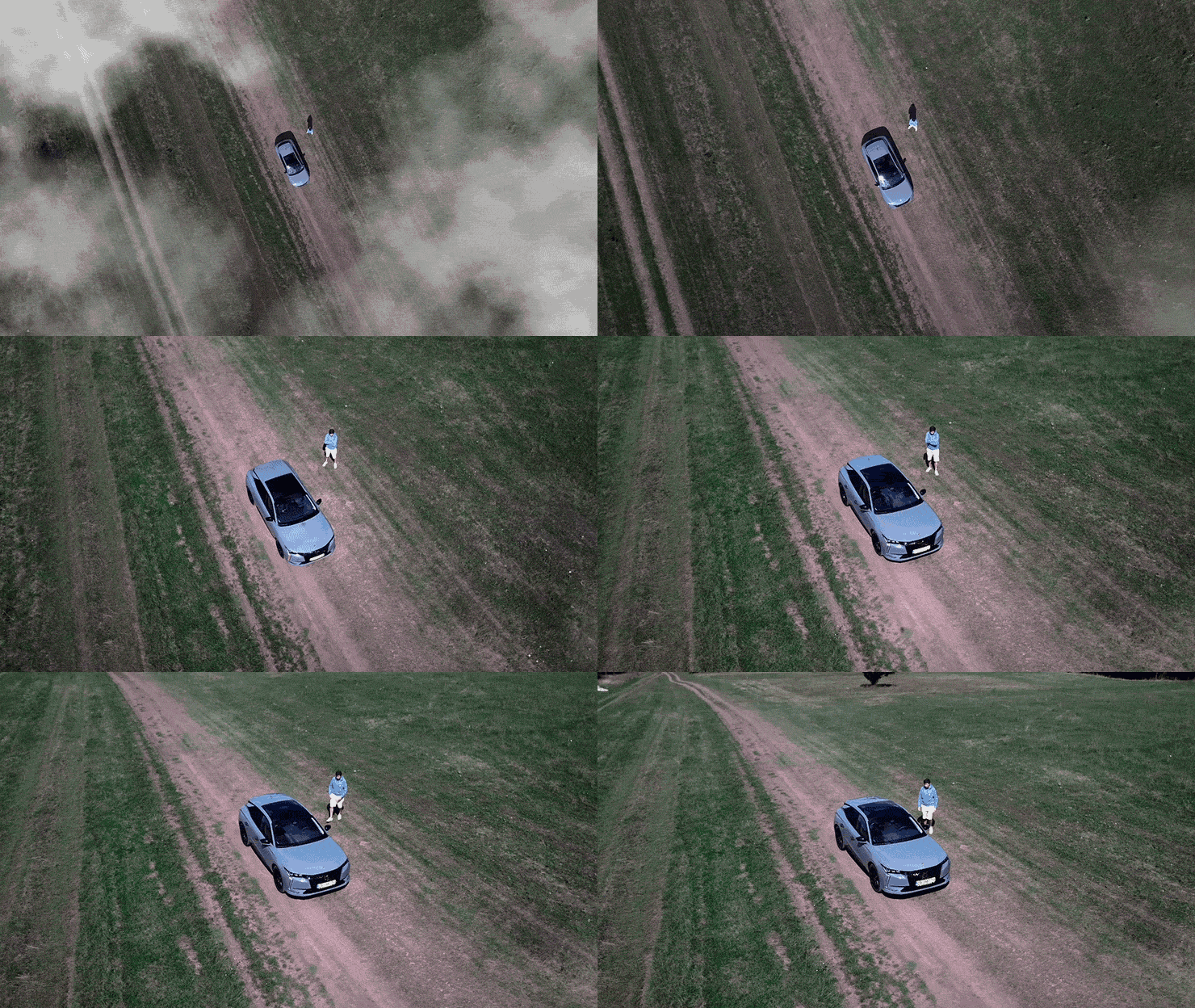
Overall, the DS 4 guarantees calm and comfortable travel, while the powerful petrol engine allows for effortless overtaking. The increased ground clearance also permits light excursions beyond paved roads – within reason, of course.
On the road, the car behaves in a competent and refined manner. That wins my sympathy – and more importantly, makes it a serious contender in the premium compact segment.
Conclusion
As far as DS as a brand is concerned, I can confidently say that the DS 4 is the best model I have tested so far. But even beyond the boundaries of the brand itself, this is a genuinely good car and a credible alternative to established premium hatchbacks such as the Mercedes-Benz A-Class and the BMW 1 Series – at least in their more modest engine versions.Unlike them, the DS 4 offers greater practicality thanks to its slightly taller body and increased ground clearance. In that sense, its closest direct competitor was probably the now-discontinued Infiniti Q30.


The DS 4 delivers a striking exterior design and an impressive interior. The cabin combines quality materials, a rich variety of atmospheres depending on trim line, advanced technology and bold design solutions. This is matched with good practicality and solid execution. The positives do not end there, as the car behaves in a refined manner on the road and provides outstanding comfort.In line with the best models in the segment, the DS 4 does not suffer from any major, clearly defined weaknesses. I would recommend that anyone considering this class of vehicle gives the compact French contender serious attention.
Pricing in Bulgaria starts from approximately €31,500 (converted from 61,450 BGN). The test car, equipped with the most powerful petrol engine and the top “dynamic” Performance Line+ specification, costs around €43,000 (converted from 84,193 BGN). Given the current state of the market and the price increases we have witnessed over the past two years, this represents a rather compelling proposition.
eng. Tsvetan Iliev