When I hear the name Eclipse, I think of the sporty coupes that roamed the streets of Sofia in the 1990s – cars I admired openly. There was one abandoned under a tarp in Mladost 3. It might have been stolen and “hidden.” Back in those even more chaotic times, anything was possible. Of course, I also remember the green second-generation Eclipse that became famous thanks to its role in The Fast and the Furious.
Times change, however – and so do cars. Mitsubishi went through a difficult period, reduced its model range, and focused on SUVs. The glory days of the 3000GT and EVO are now just memories and classifieds.
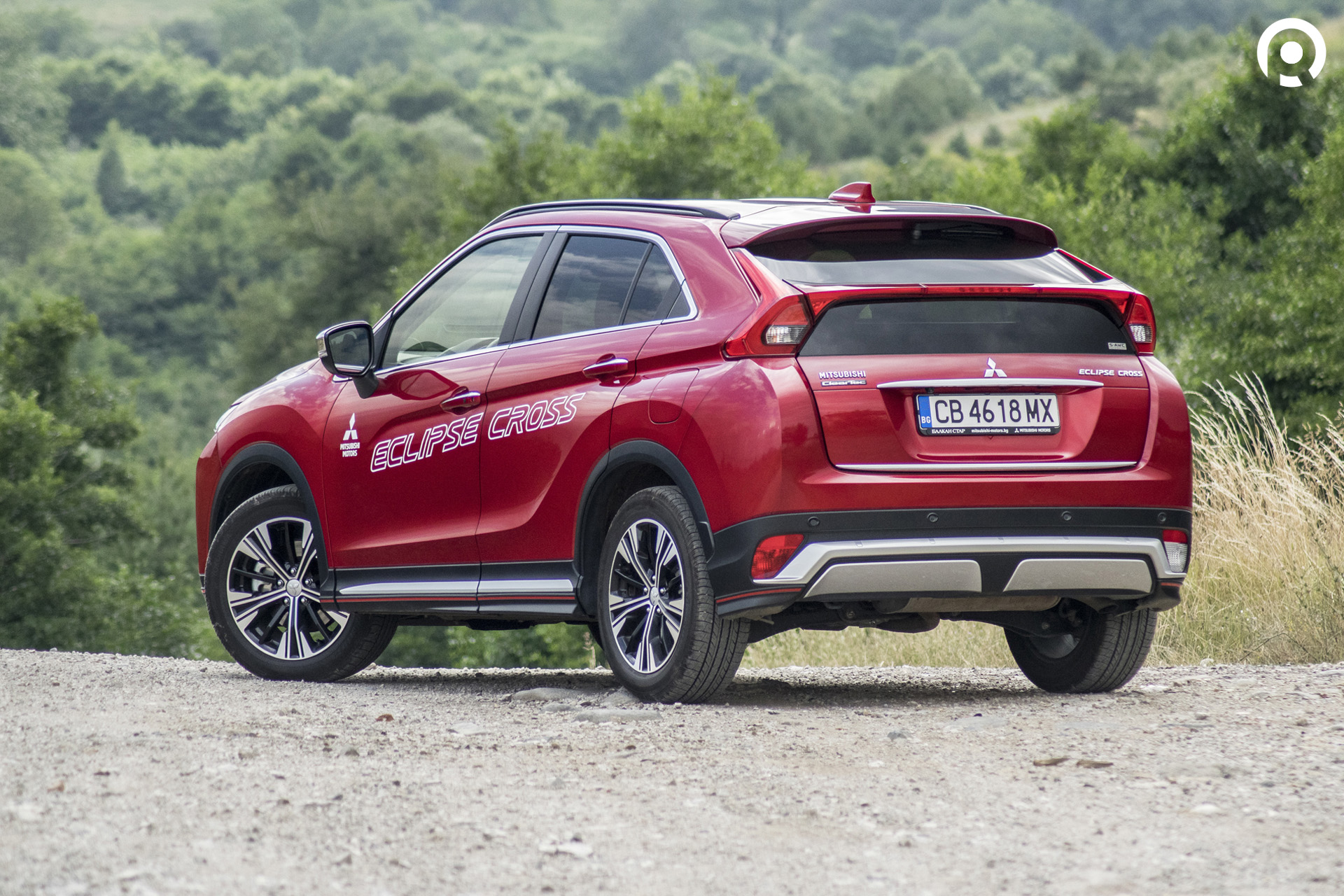
Today, though, the Eclipse name returns, combined with the “Cross” suffix. It’s back in showrooms, and I’m about to test this new interpretation – one that has very little in common with the original.
Design
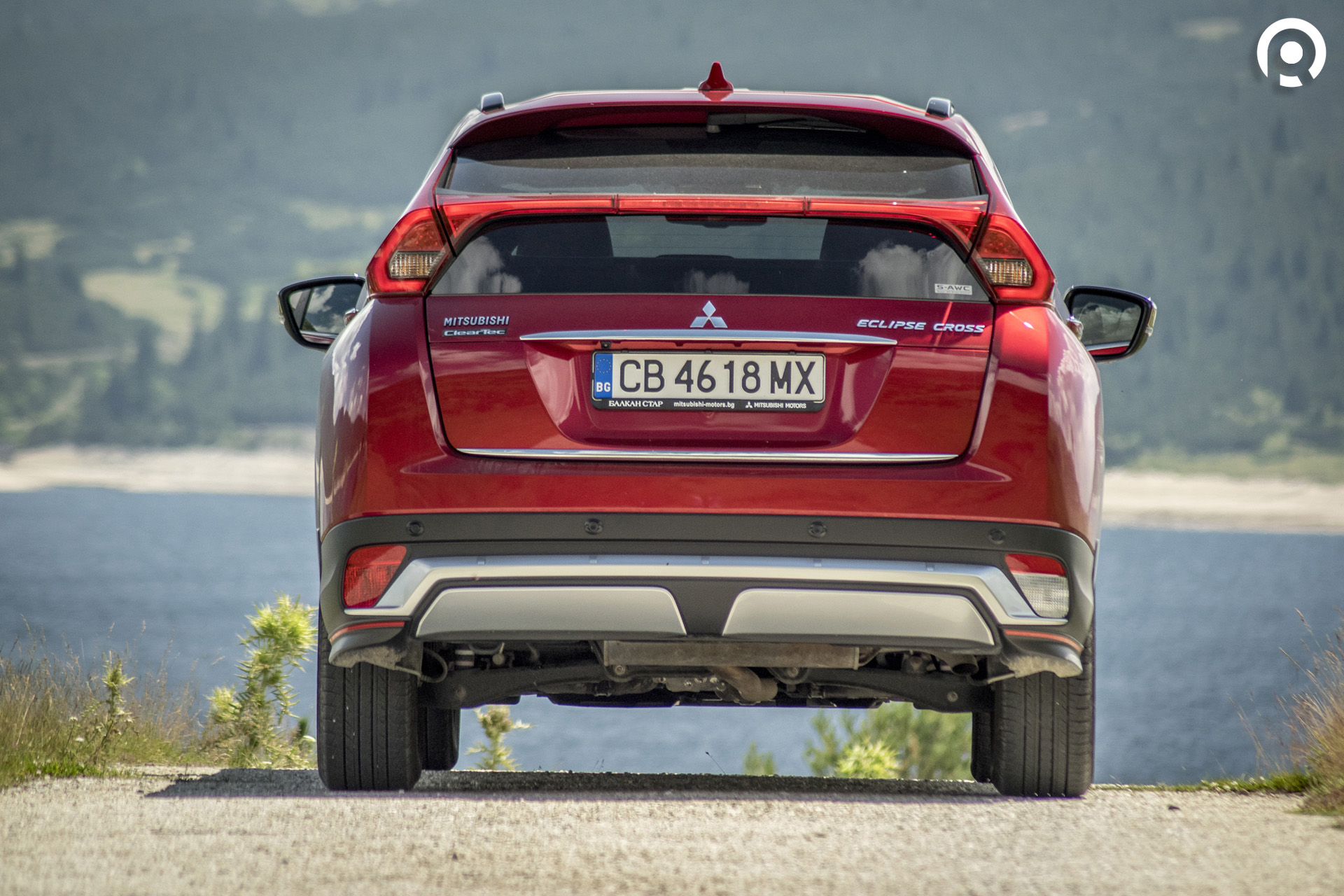
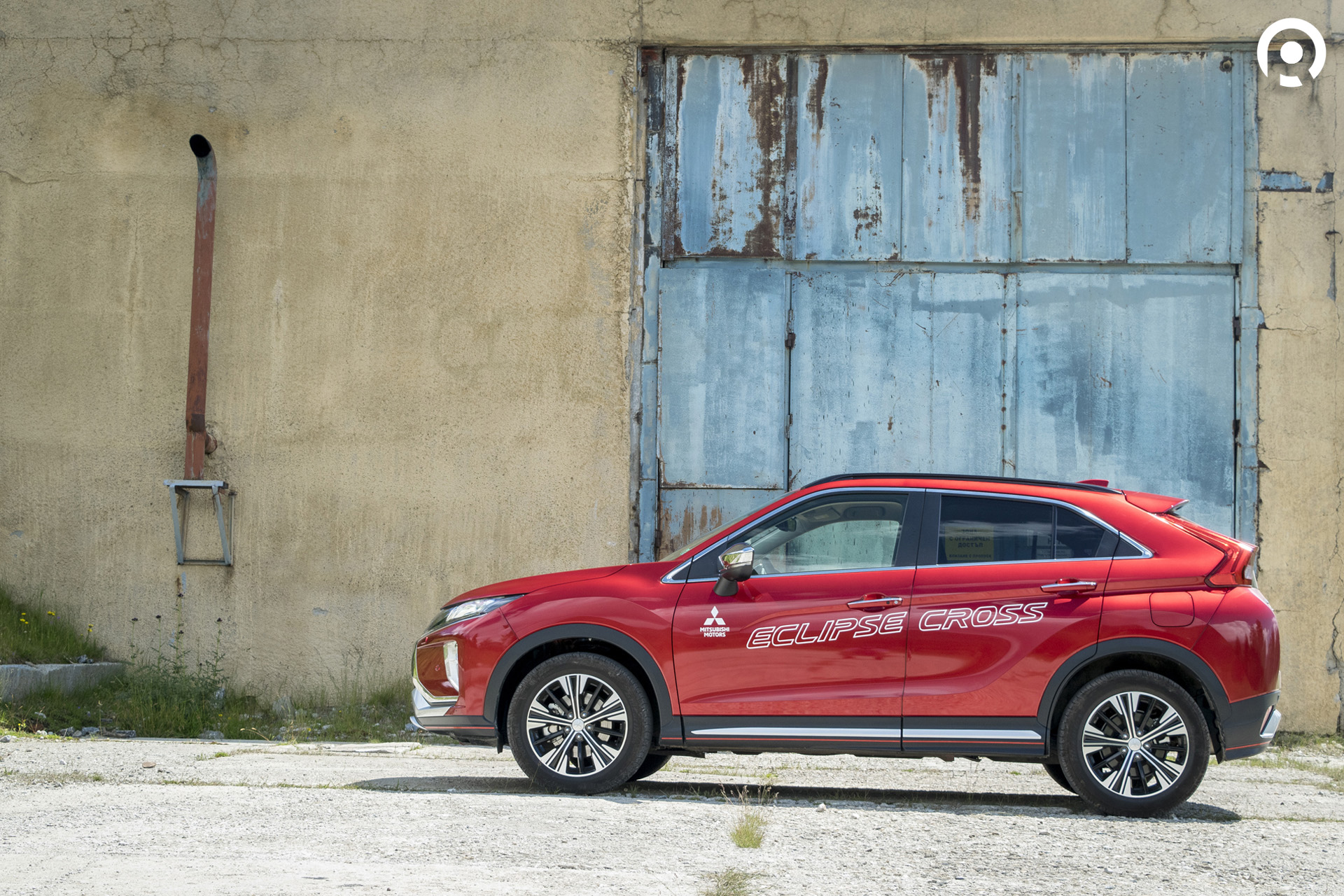
The new Eclipse is a compact SUV aimed at stealing some buyers from the segment favourite Nissan Juke and similar models. That means the design needs something controversial – something to divide opinions. Here, that element is the distinctive rear. The sloping rear window, reminiscent of the BMW X6 and its followers, aims to give the car a sportier look.
It’s split in two by the rear light strip, which also acts as a spoiler and reduces lift at higher speeds. A controversial feature – one I personally like. I also appreciate the hidden rear wiper, tucked under the roof spoiler.
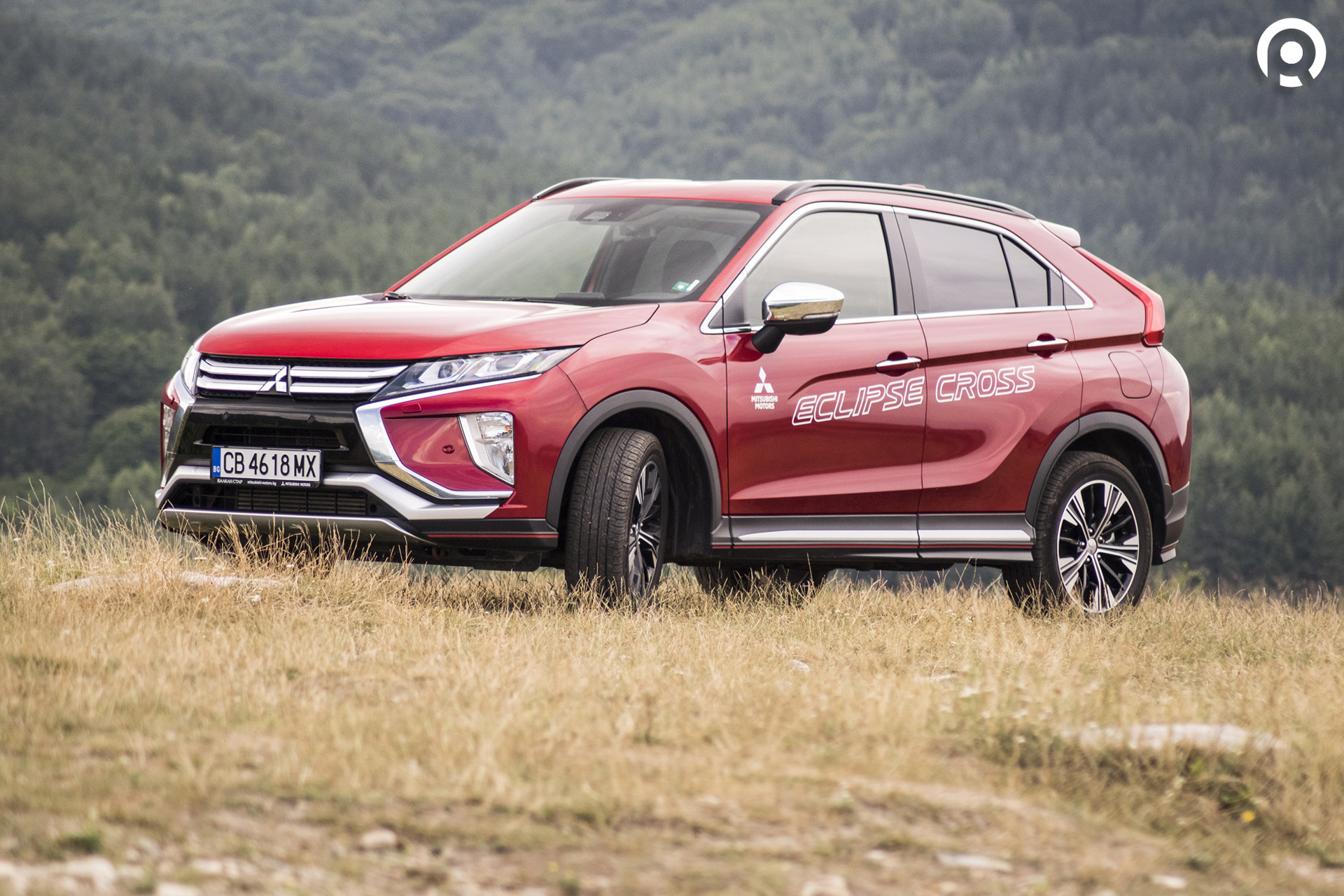
The front, however, feels less convincing. Combined with the heavy use of chrome, it reminds me of something designed primarily for the Chinese market – a minus in my book.
On the plus side, there are the side skirts with a carbon-fibre-like finish and a red accent. A small detail, but one that adds a noticeable sporty touch to the overall look.
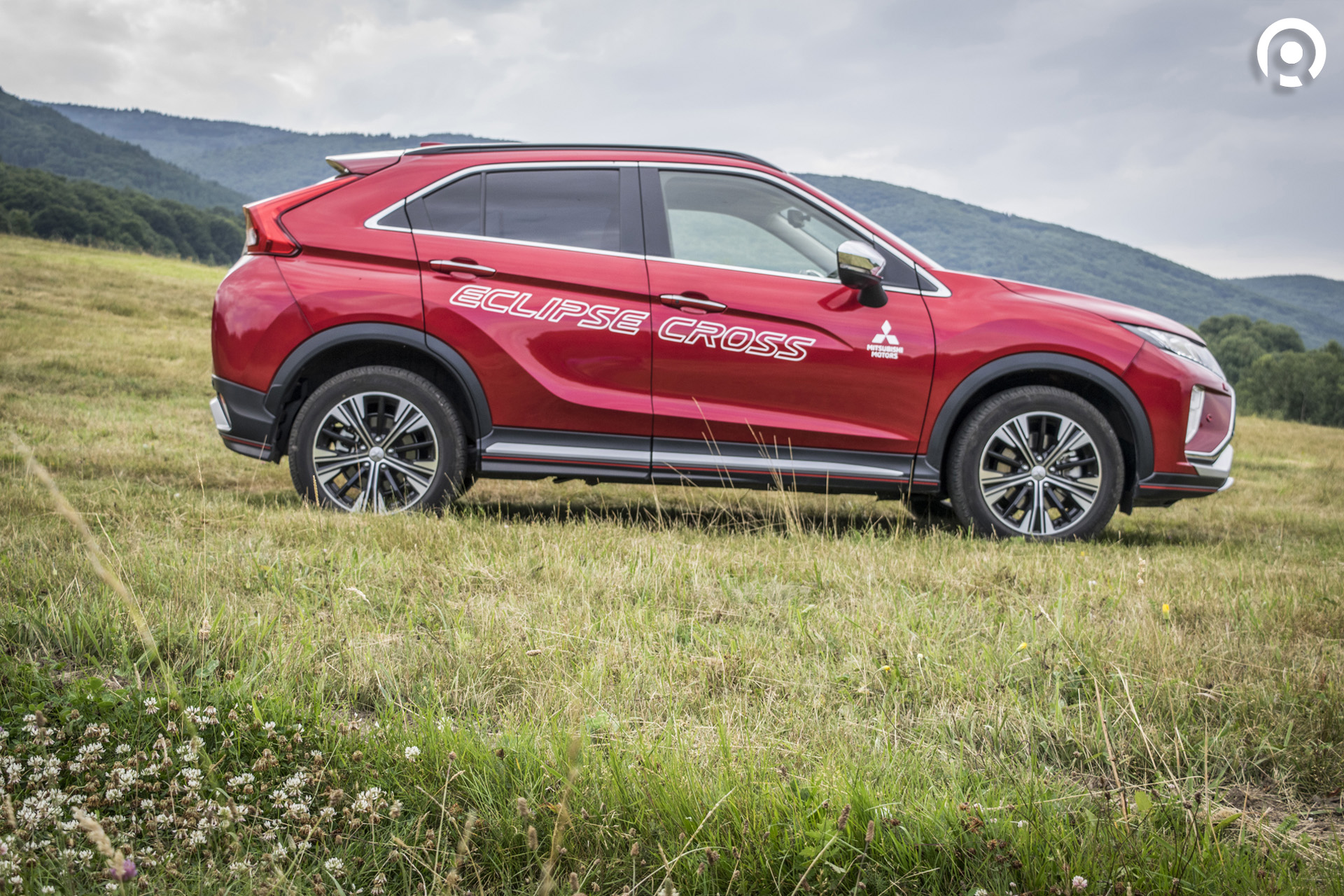
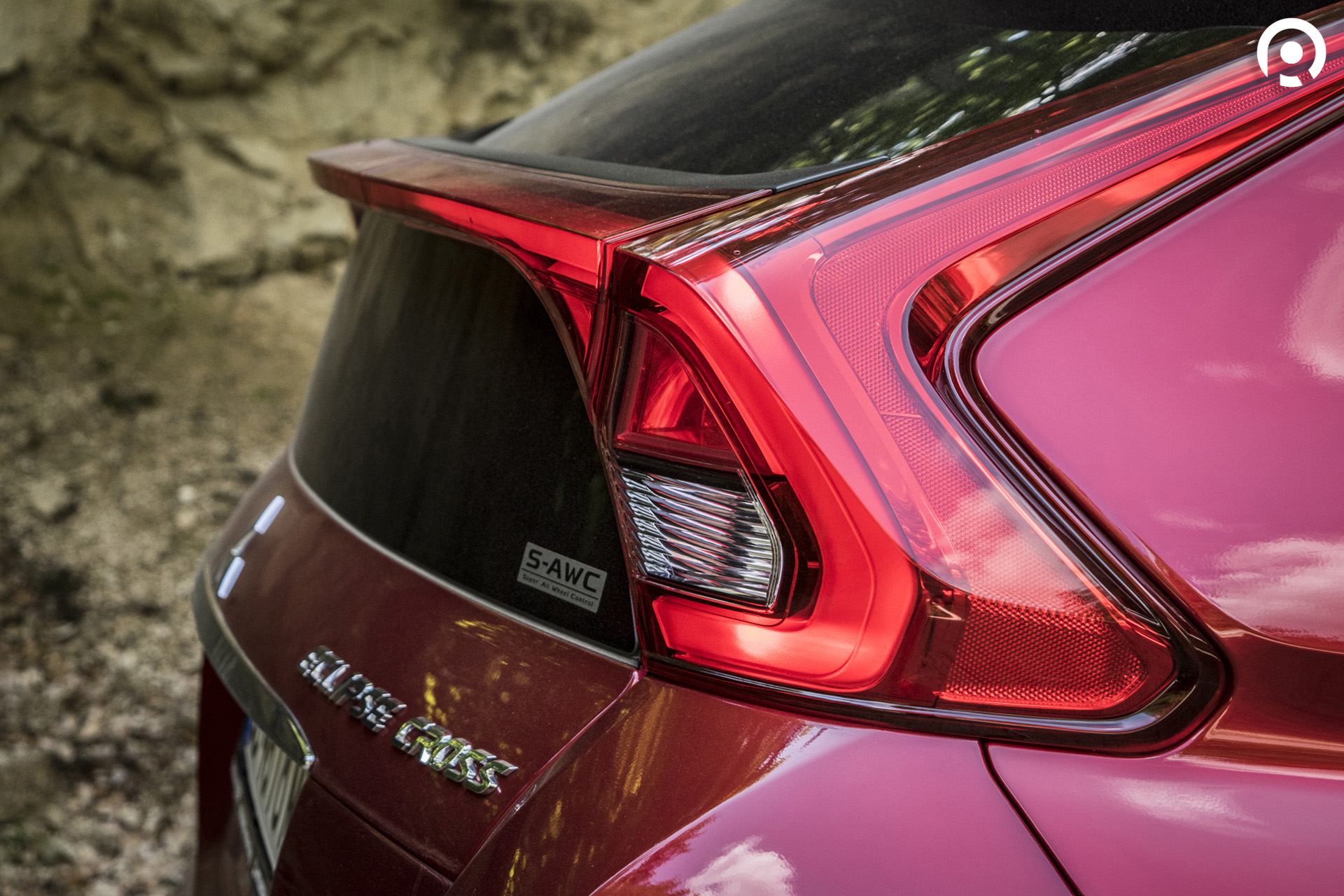
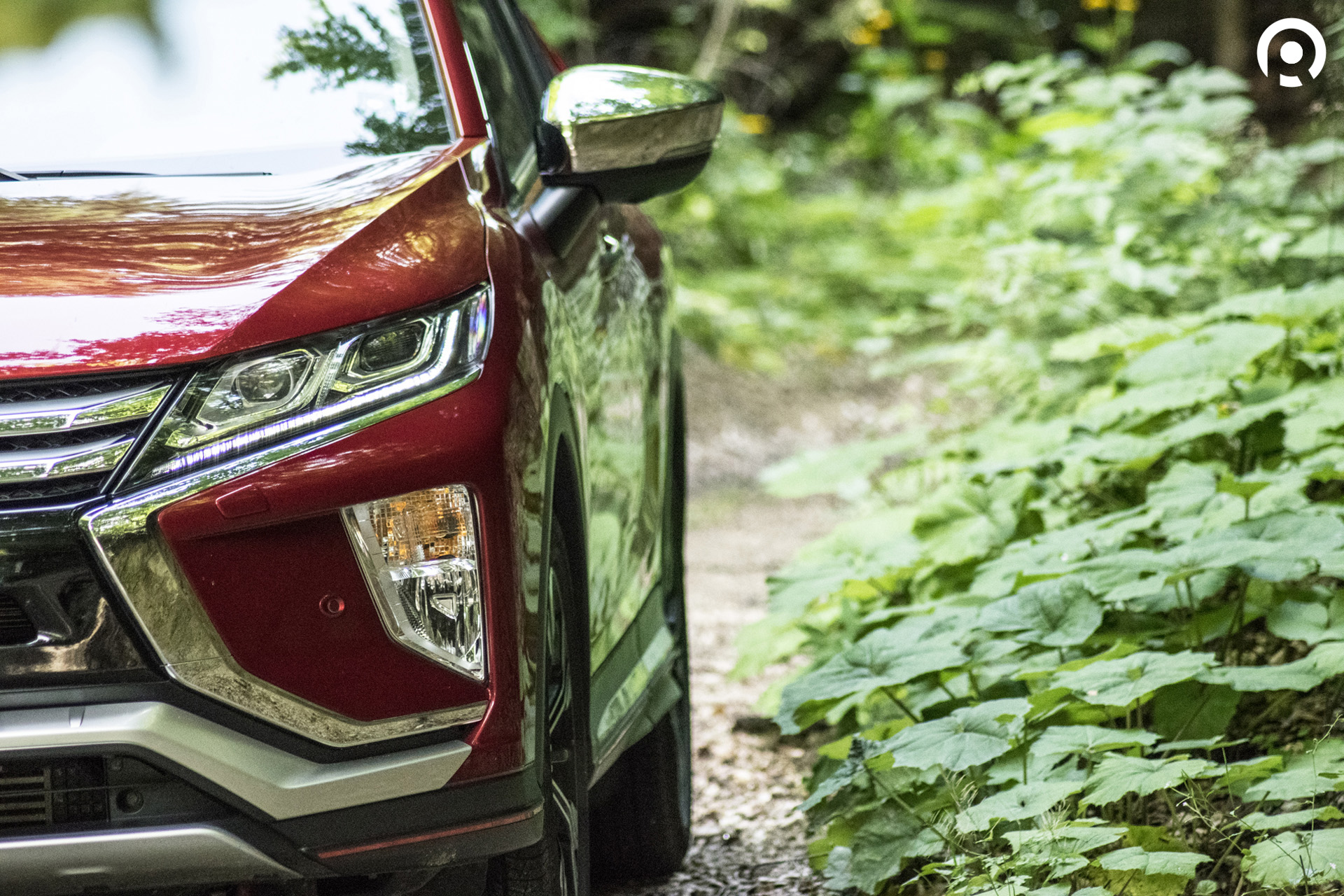
Overall, it feels like Mitsubishi wanted to do something bold but didn’t go all the way. The result is a mix of conservatism with a hint of avant-garde. The market will decide how successful this approach is. As for me – I’m left with mixed feelings.
Interior
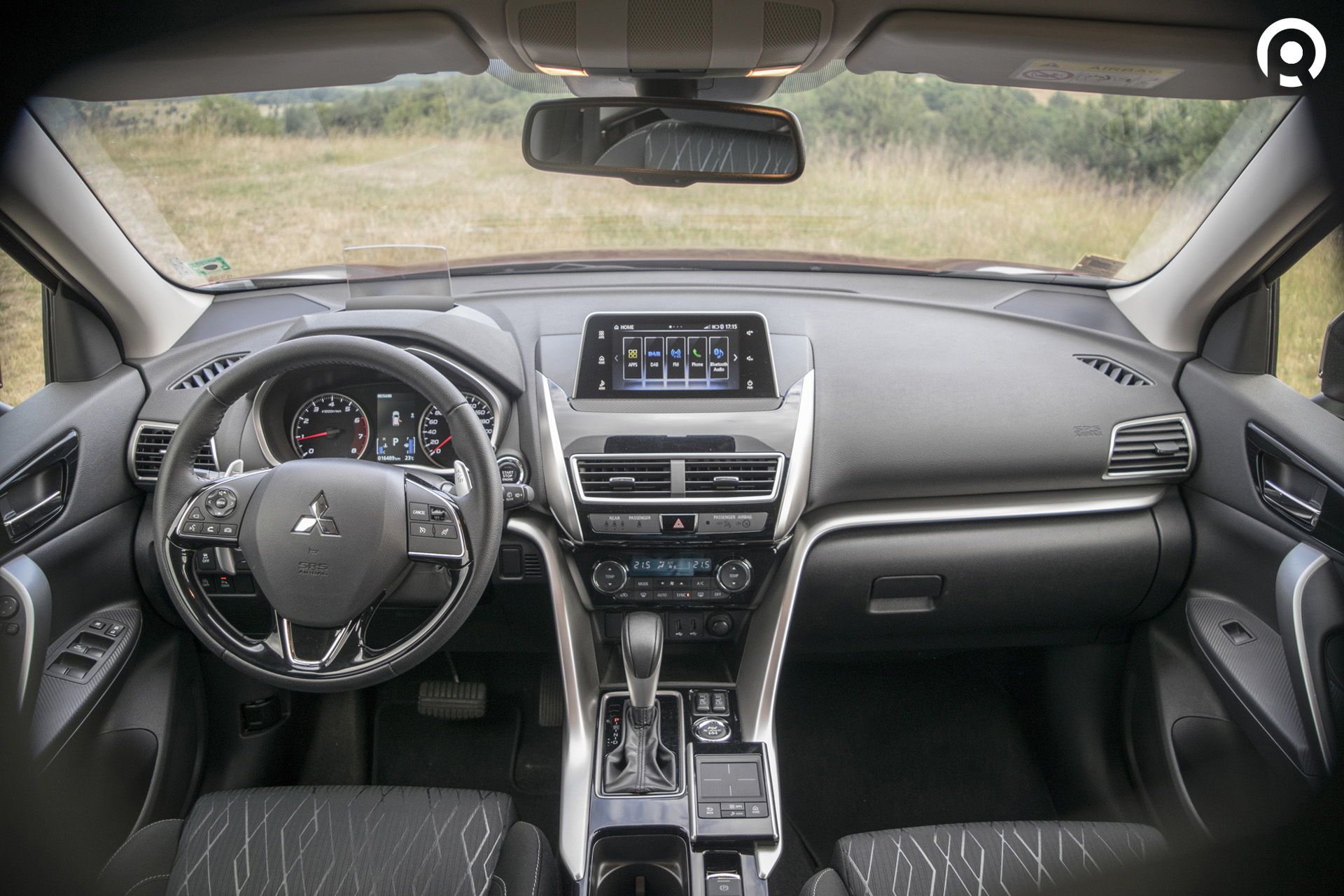
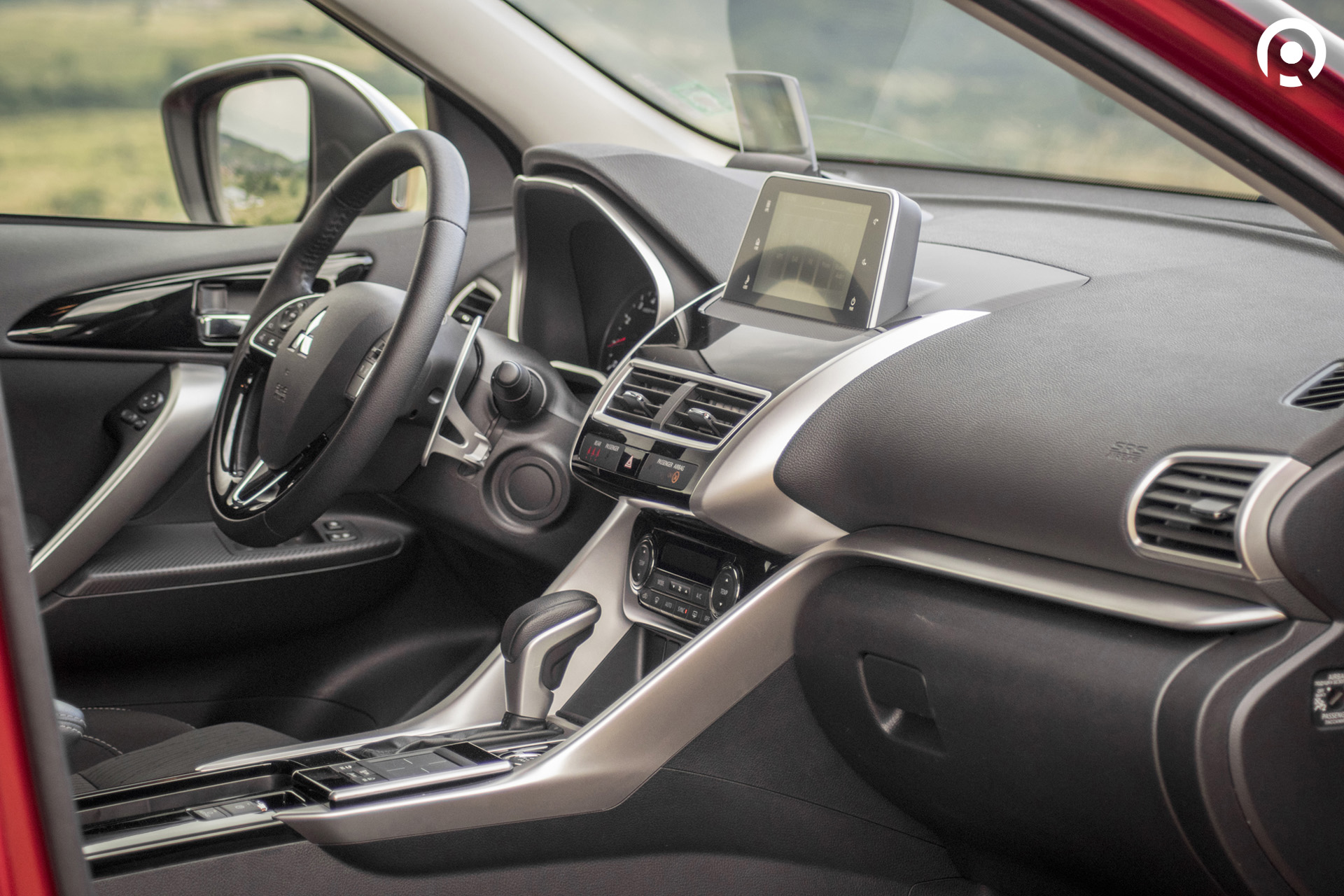
The interior follows a conventional layout, with a mix of typically Japanese quirks and elements closer to European expectations.
Among the former are the trip computer buttons placed on the dashboard instead of the steering wheel, a row of rectangular buttons awkwardly positioned to the driver’s left, and – most surprisingly – the seat heating controls. Seeing them brought back childhood memories. A quick search later, I found identical buttons in a 2001 Pajero – and I wouldn’t be surprised if they date back even further.
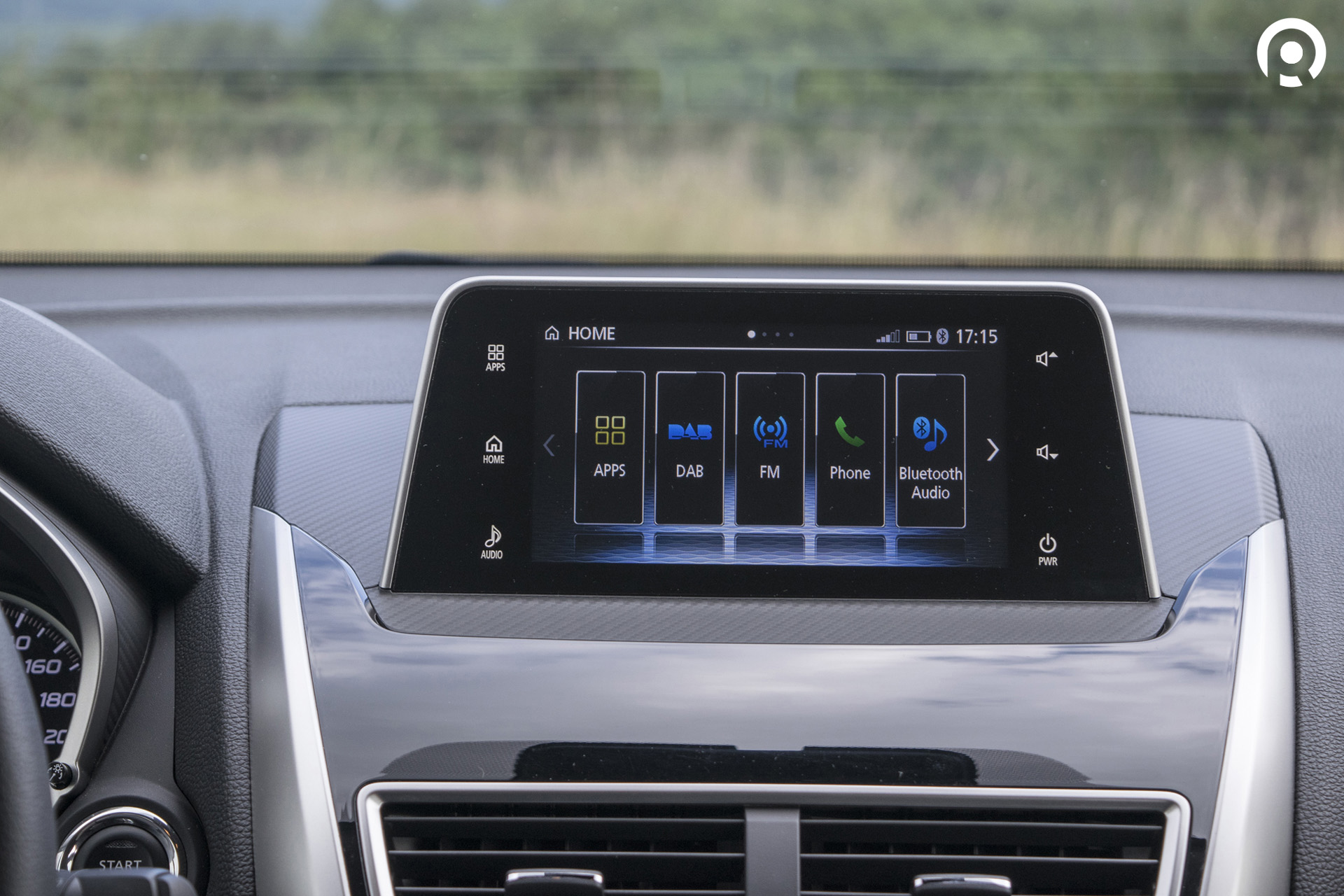
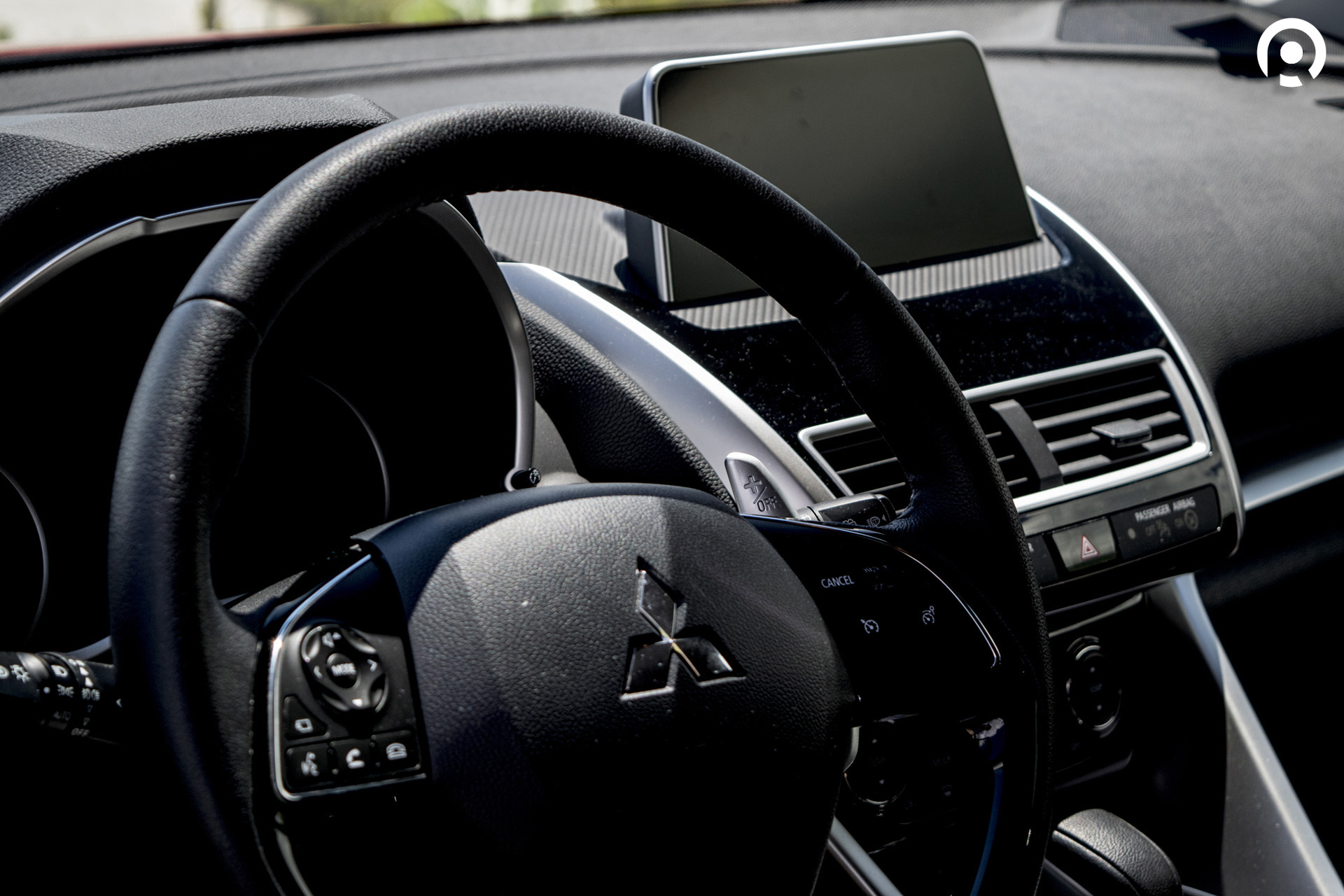
Now to the more modern side of things – the infotainment system. The display sits high above the centre console, which works well. Interestingly, the top-spec Instyle+ version includes physical buttons and even a hood over the screen, but I actually prefer this simpler setup.
Control is handled via the touchscreen or, more conveniently, a touchpad near the gear selector. It supports multi-touch gestures, including volume control with two fingers, and the entire surface can be pressed to confirm selections. It’s a well-executed system. That said, I still prefer a traditional rotary controller and a dedicated volume knob – less modern, but far more intuitive while driving.
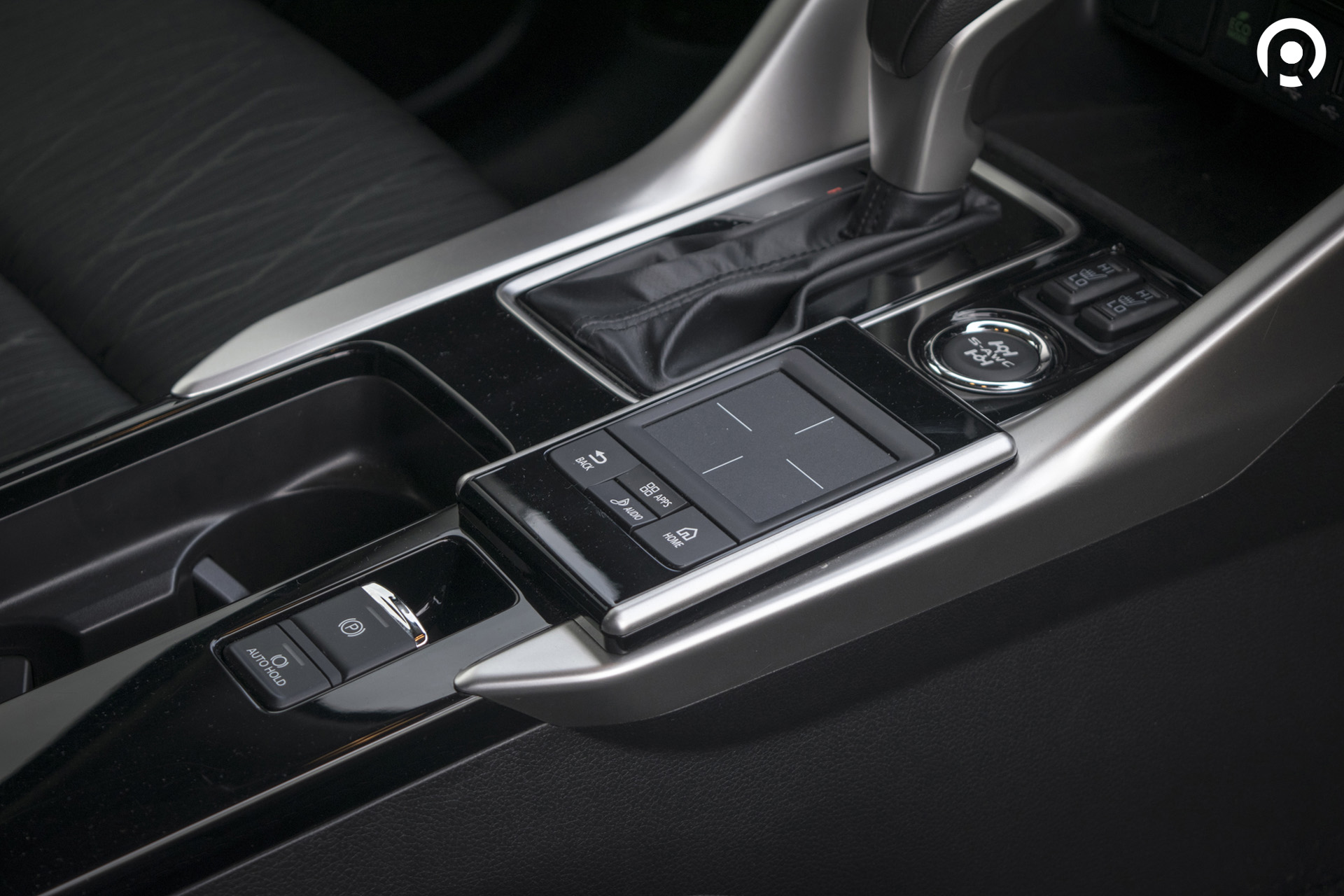
Material quality is fairly basic, which is expected for the class. There’s plenty of hard plastic, and although everything appears solid at first glance, I noticed creaks from the dashboard when driving over uneven surfaces. Whether this is specific to the test car or a broader issue – I can’t say.
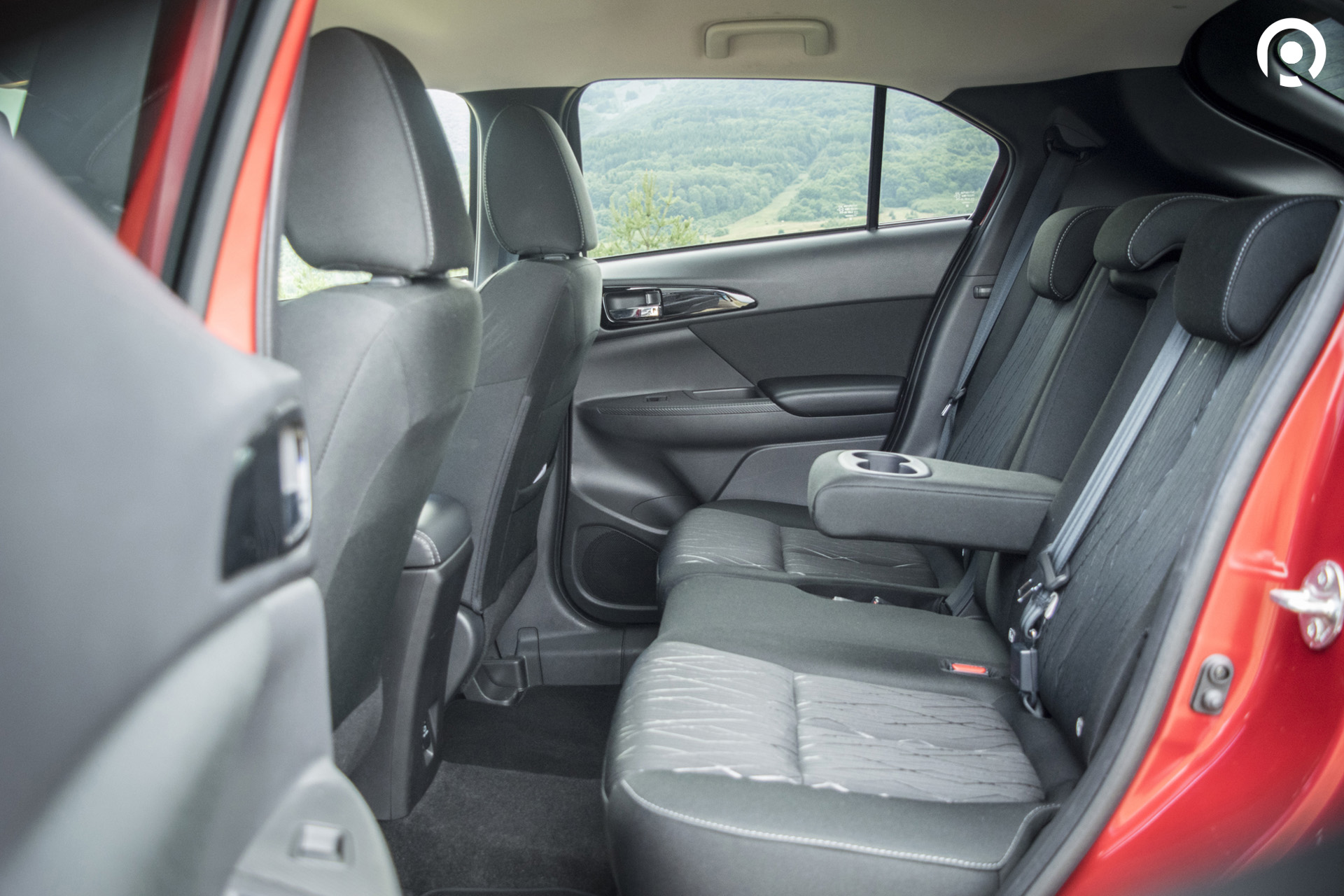
The highlight of the interior is space and practicality. Up front, there are large door bins and storage areas, but the real surprise comes in the rear. Despite the sloping roofline, headroom is generous, and the rear seats are positioned relatively high, improving comfort. As a result, legroom is excellent – surprisingly so for a car of this size. It genuinely impressed me!
On the road
The test car was equipped with a 1.5-litre turbocharged petrol engine producing 163 hp and 250 Nm. With all-wheel drive, the Eclipse Cross accelerates from 0 to 100 km/h in 9.8 seconds and reaches a top speed of 200 km/h. Average fuel consumption is rated at 7 l/100 km.
My first destination was a burger place – in other words, the centre of Sofia. The natural habitat for cars like this. Here, a few things stood out. First – the engine is impressively smooth and quiet at low revs. In fact, the next day, while parking, someone asked me if it was electric. That says a lot. Things change when the start-stop system activates, as the engine restarts with a noticeable shake.
Otherwise, the car feels well suited to the city – easy to drive and very manoeuvrable.
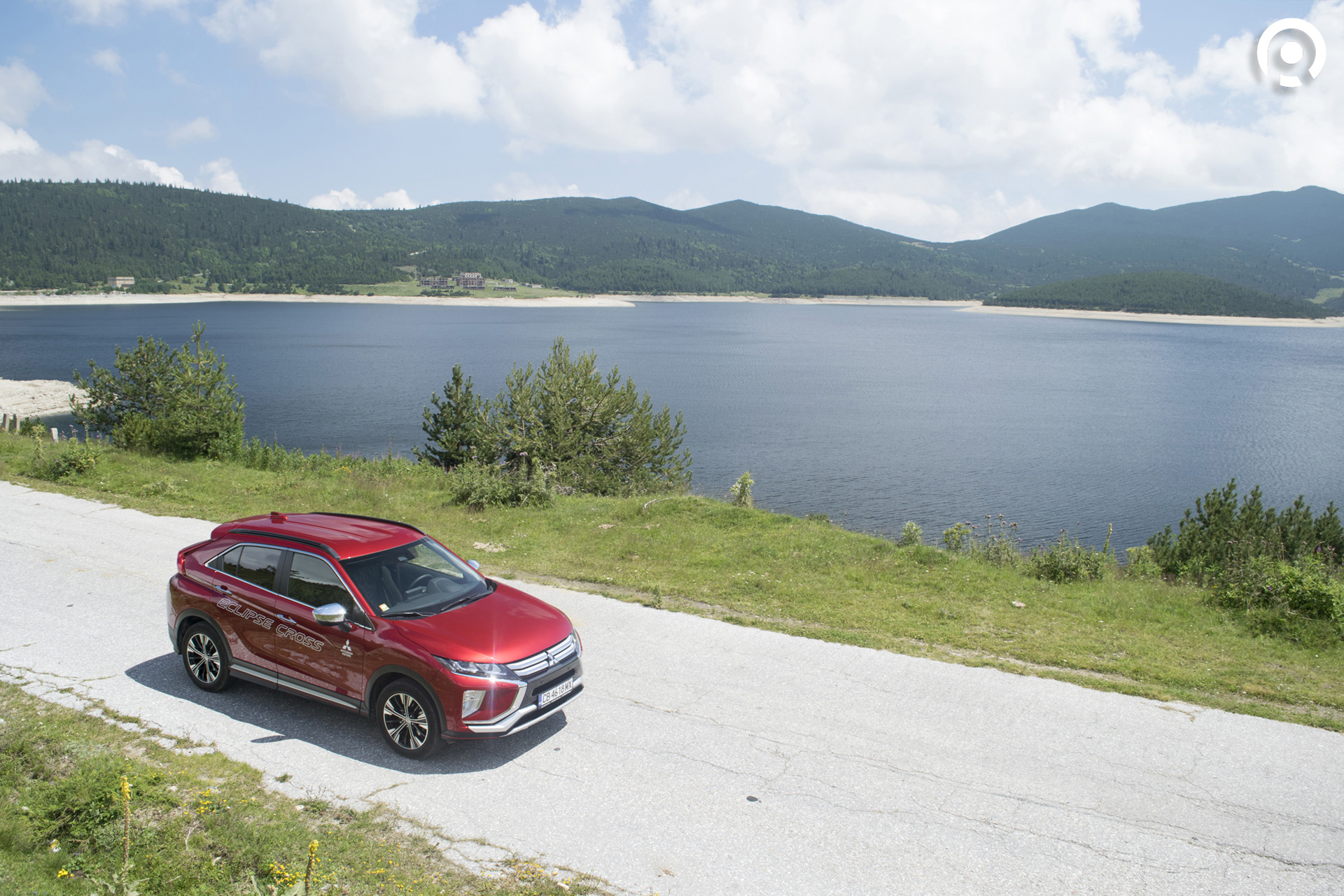
While navigating traffic, I found myself wondering what kind of gearbox the car had – I got in completely uninformed. Then came a moment of chaos: brakes screeching, horns blaring, and I nearly tested the five-star Euro NCAP rating. A “professional” driver failed to understand right-of-way rules. Let’s just say I later had a discussion with him.
As for the gearbox – it’s a CVT. Initially, I mistook it for a traditional automatic. Perhaps thanks to it, city fuel consumption was 7.3 l/100 km – quite reasonable.
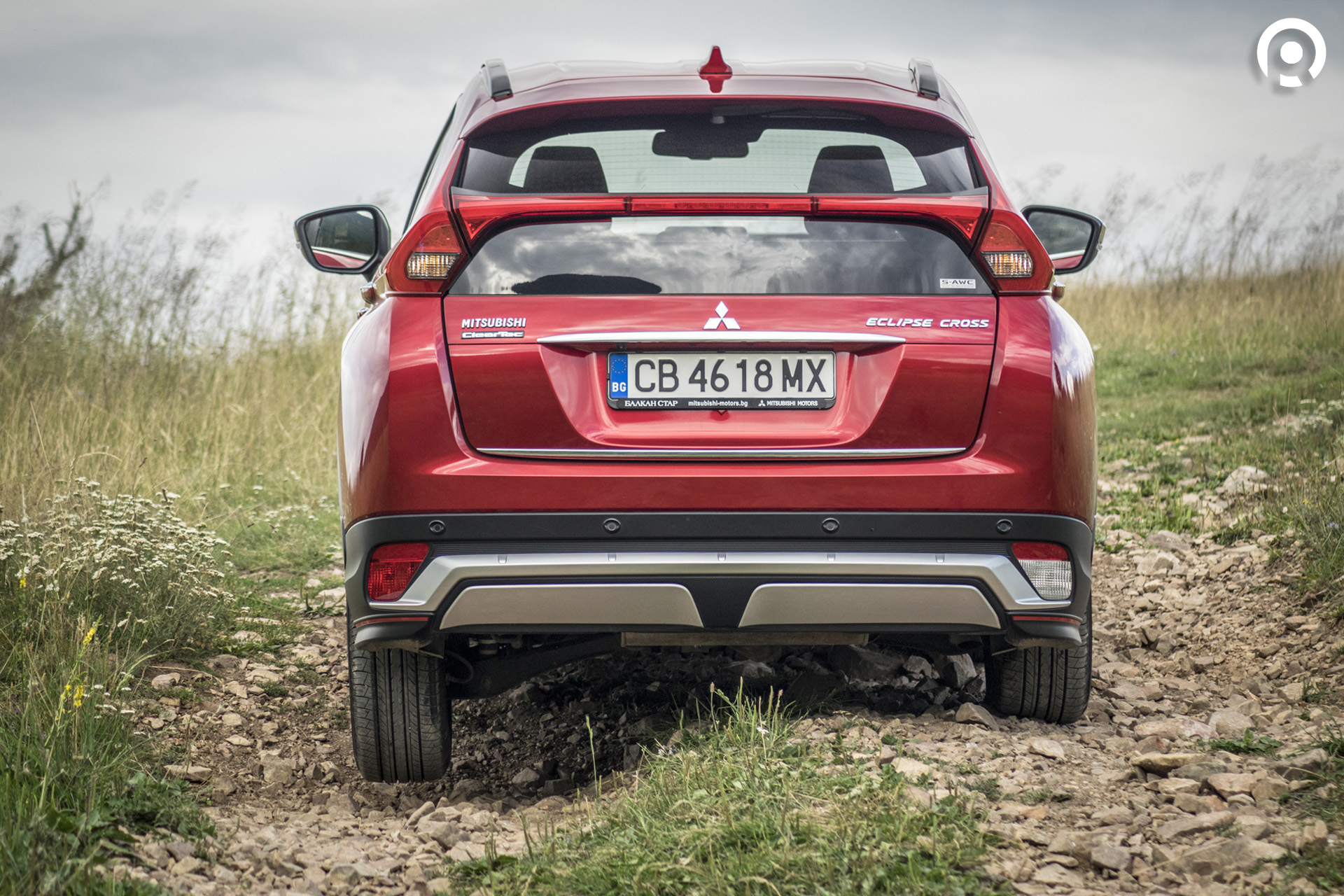
Later, I headed towards the outskirts of Sofia to test how much of Mitsubishi’s off-road DNA made it into the Eclipse Cross. The all-wheel-drive system, called S-AWC (Super All Wheel Control), distributes torque between axles and even between the front wheels via braking.
On dirt roads, the increased ground clearance is useful, even without needing AWD. Things became more interesting on a rough uphill section. The suspension lacks articulation, so lifting a wheel is easy. In such cases, the system’s response wasn’t quick enough. After a few failed attempts, I managed the climb with more speed – but it’s clear that while capable, this isn’t a true off-roader.
Still, for light off-road use and weekend trips, it’s perfectly adequate.
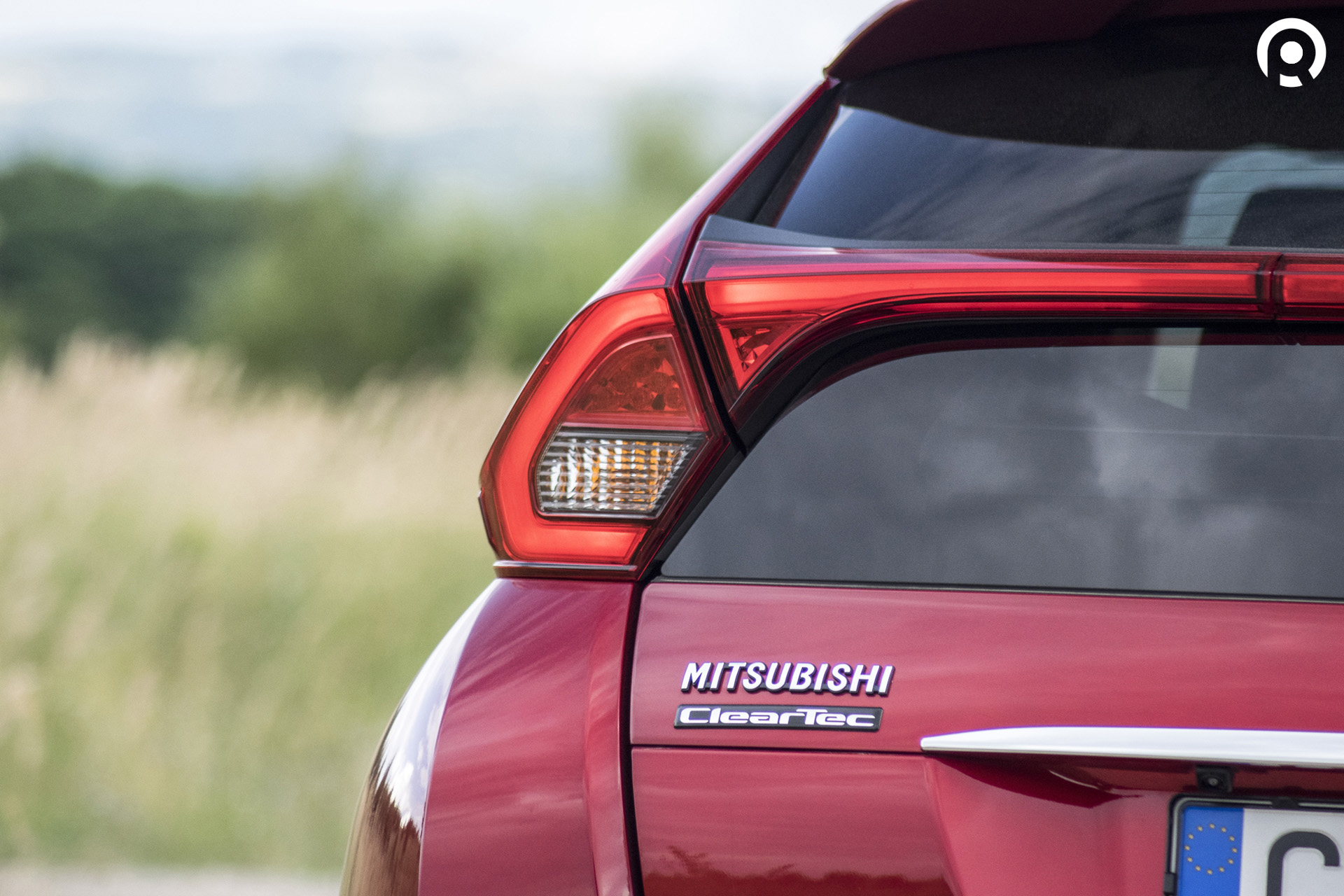

The next morning found me on the Trakia motorway. Here, the car showed its strengths – good stability and solid acoustic comfort. Road noise remains well isolated, while wind noise from the large mirrors is noticeable but acceptable.
Performance is decent. The CVT behaves in an unusual way – sometimes simulating gear shifts, sometimes holding revs steady while speed increases. It’s different, but not intrusive if you don’t focus on it.
After a short motorway run involving plenty of acceleration and braking, fuel consumption reached 9.9 l/100 km. In calmer conditions, around 8 l seems achievable.
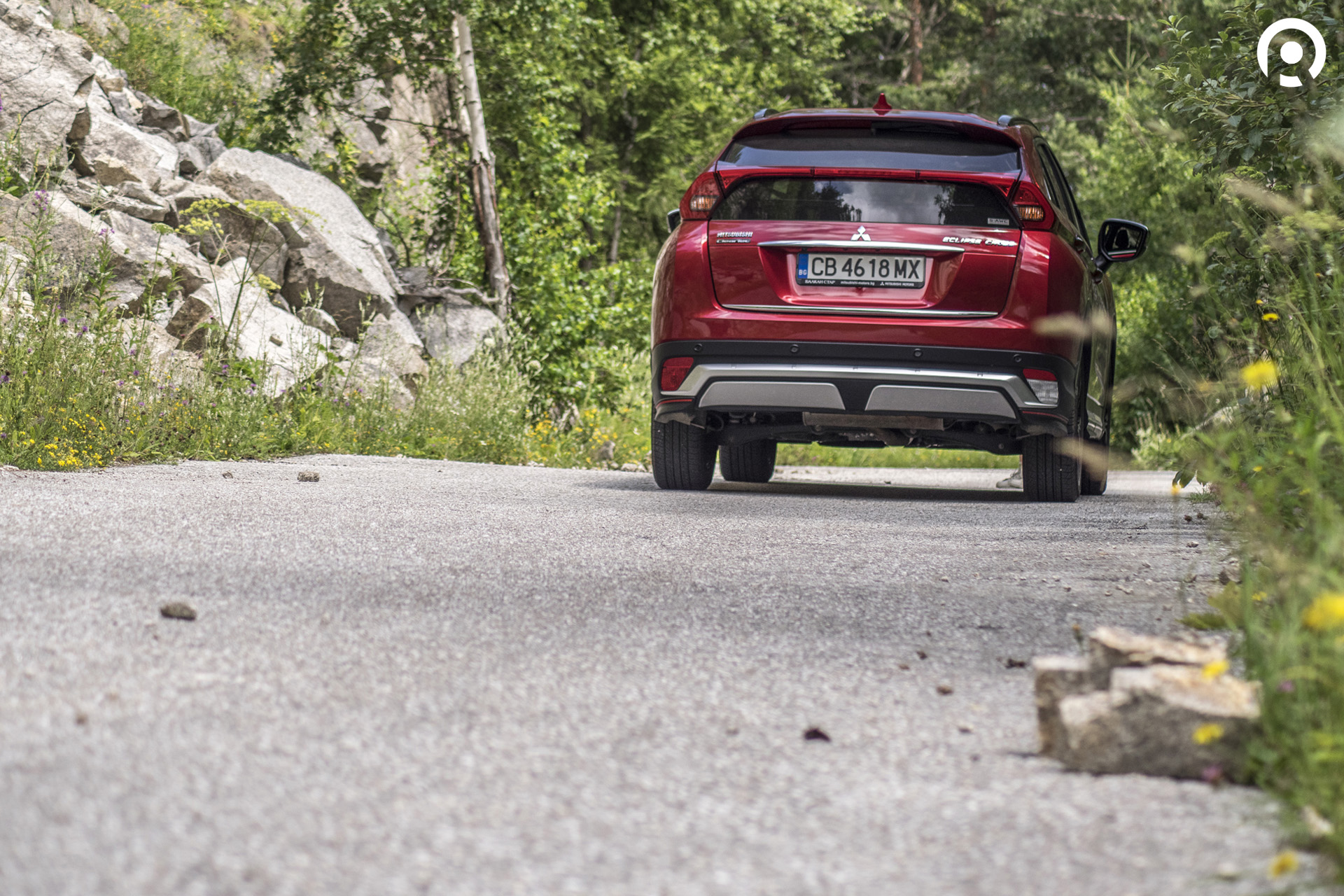
Next came a twisty road – though not ideal due to poor surface quality. Driving economically, I managed 5.5 l/100 km. It’s worth noting that the suspension is quite firm, so bumps are clearly felt, but body roll is minimal.
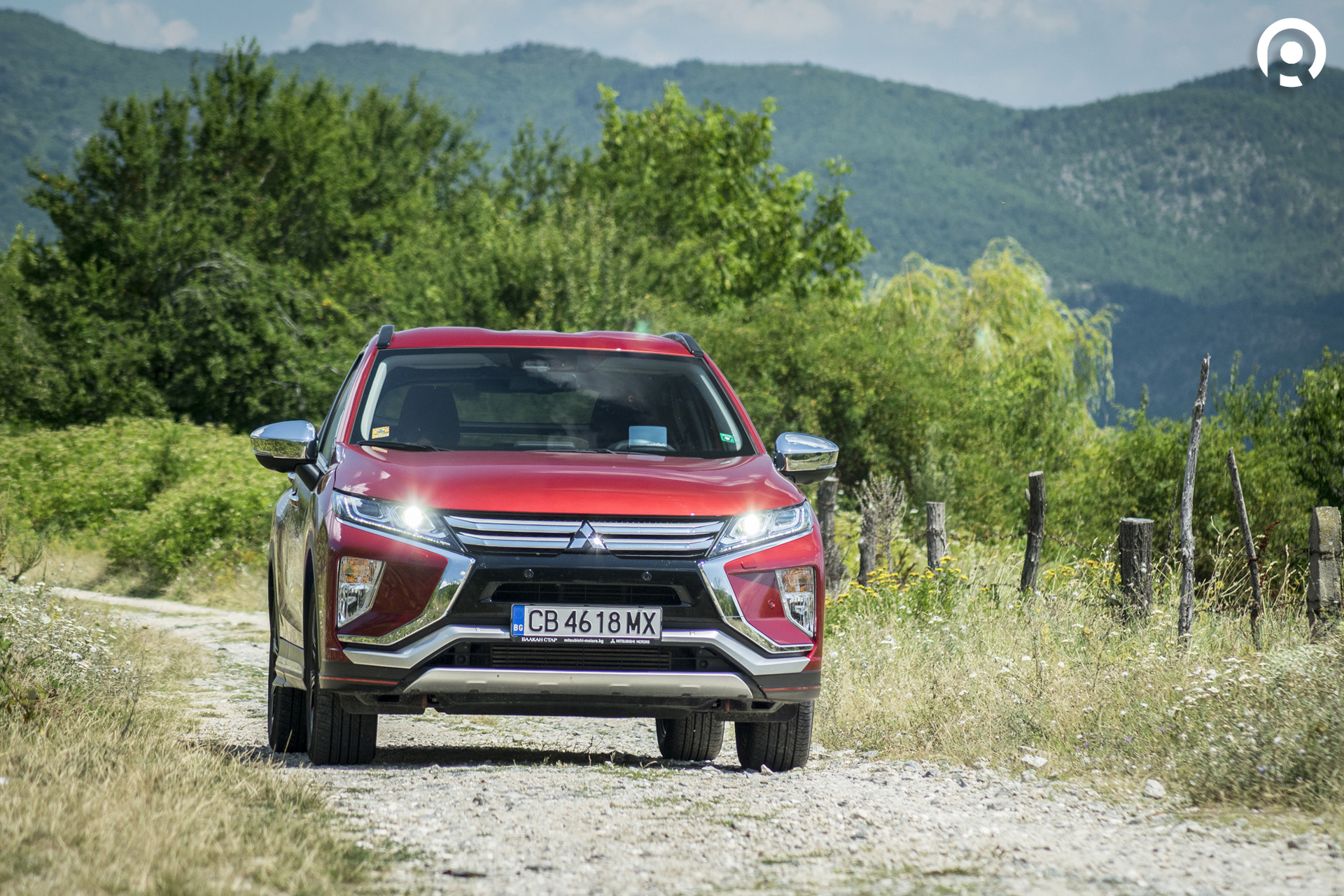
Then came Belmeken – and a pleasant surprise. The Eclipse Cross is actually quite enjoyable to drive. Yes, the gearbox takes away some of the fun, but overall, it’s a capable and engaging car for its type.
The short wheelbase and firm suspension make it agile without being unstable. S-AWC might not shine off-road, but here it contributes positively. Steering is direct – almost reminiscent of pre-electric systems – and the engine responds quickly. The sound is also surprisingly enjoyable for a four-cylinder.
In short – I’m impressed.
Conclusion
The Mitsubishi Eclipse Cross is positioned in the right segment, even if it arrived a bit late.
The issue, in my view, is that it offers solid engineering wrapped in less convincing design and interior execution. Technically, it’s very good – both in terms of driving and drivetrain. But the unfinished details and conservative interior might turn some buyers away. The exterior is subjective, but I feel it could have been more distinctive.
That said, the car has strong qualities – generous equipment, engaging driving dynamics, a refined engine, and a spacious, practical interior.
I don’t expect it to become a bestseller, as Mitsubishi has lost some of its image in Europe. But it’s definitely a model that could help rebuild that image over time.
With a price of around €29,000 for a well-equipped test car (and €23,000 starting price), the Eclipse Cross is an interesting option for those set on owning an SUV. Don’t dismiss it before giving it a proper drive.
Eng. Tsvetan Iliev