
Alright, perhaps at first glance you asked yourselves, “Why is he showing us a C-Class while writing about the E-Class?!” In reality, these are simply the times we live in, and Mercedes has joined the trend started by Audi about a decade ago — namely the serious unification of design between the different sedan classes.
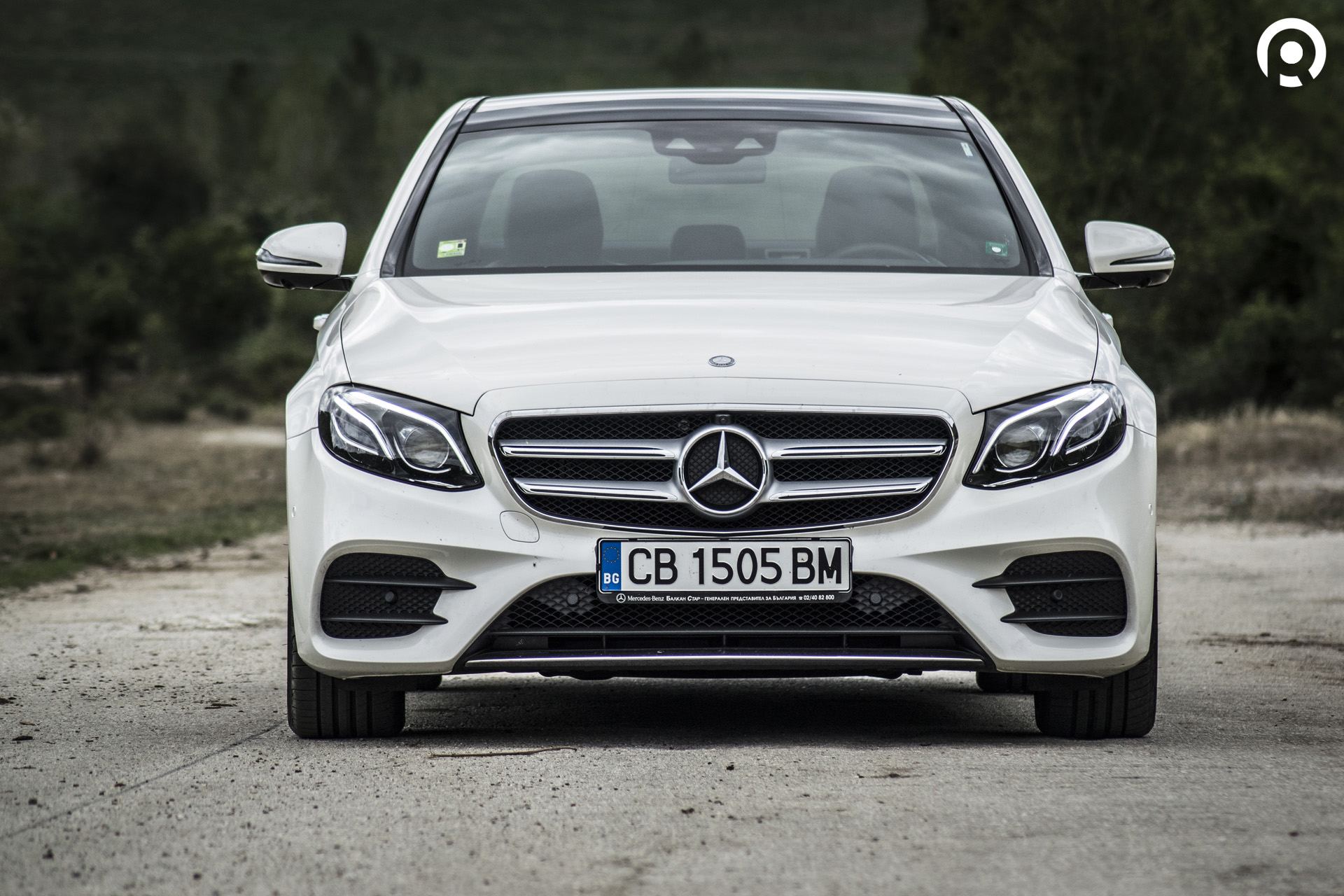
So yes, the car in the photos really is the new E-Class — Mercedes’ large executive sedan, known for years for its high levels of comfort and reliability. The car preferred by German taxi drivers and business executives all around the world.
Design
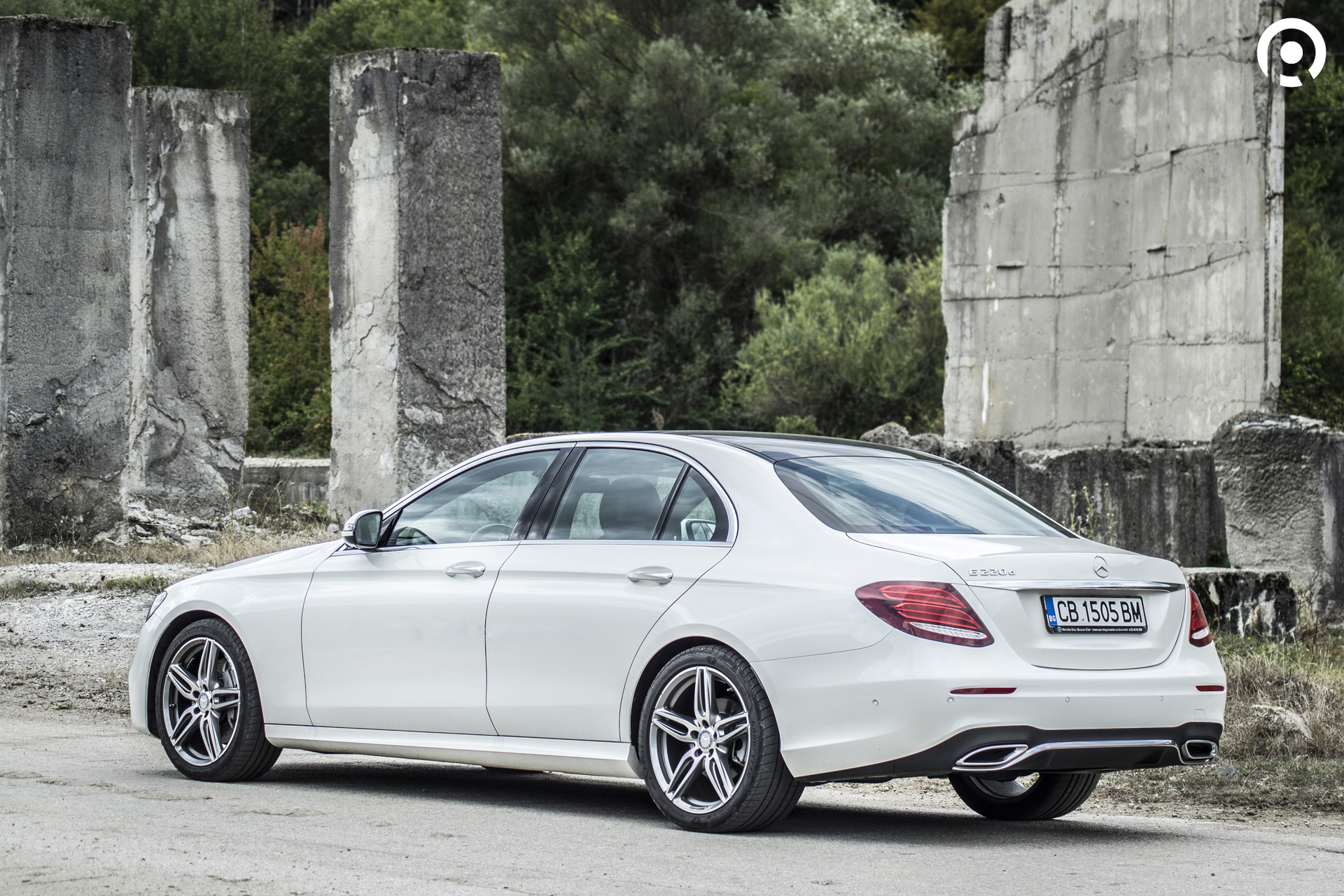
Continuing the thought from the introduction, the E-Class really does resemble the larger S-Class and even more so the compact C-Class. A few months ago, I was walking through the streets of a small Spanish town one evening when I spotted a parked E-Class and became excited that I would finally get a closer look at it. I approached it and realised I was standing in front of a C-Class instead… confusing situation, and honestly I felt a little embarrassed because it is rare for me to mistake cars like that.
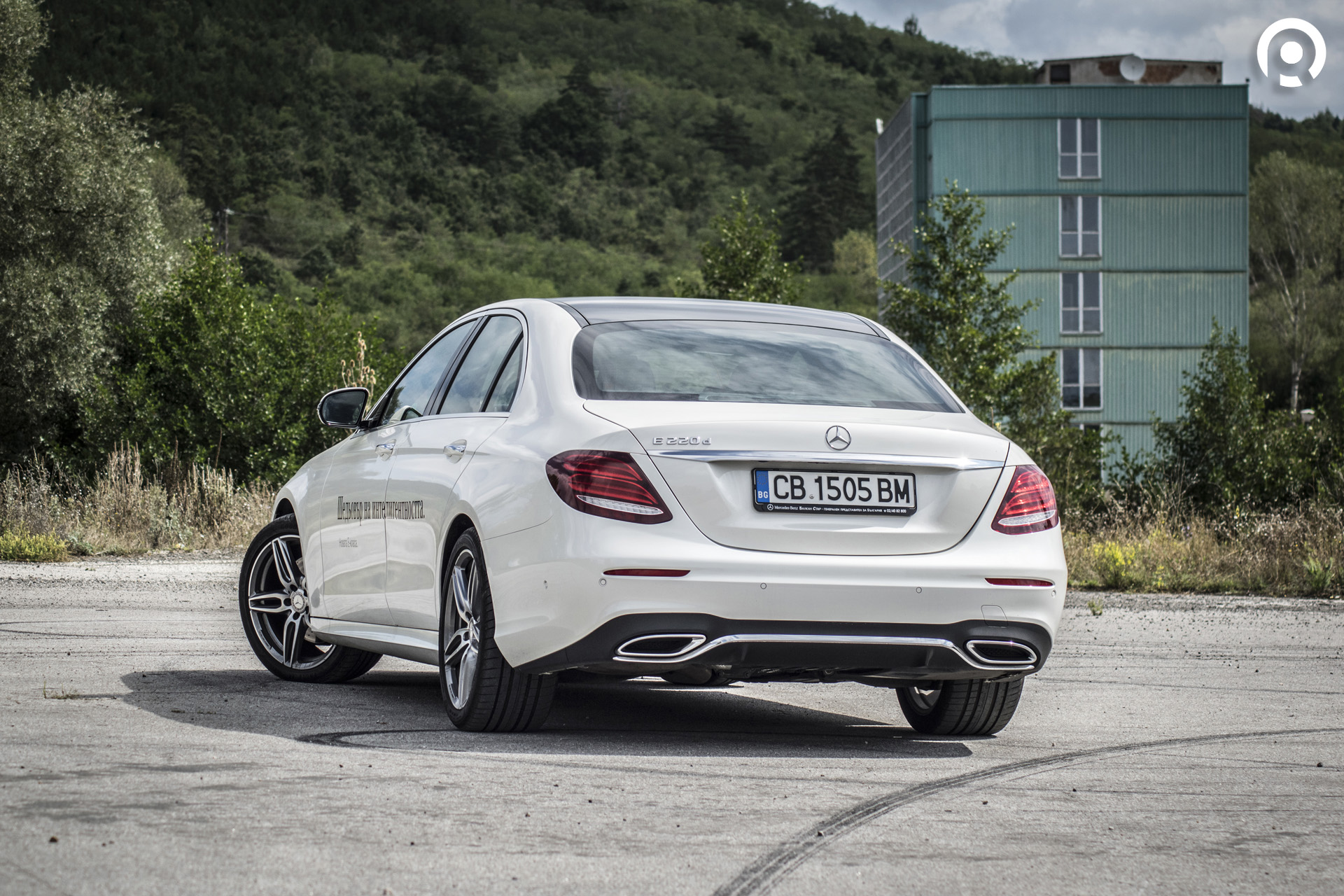
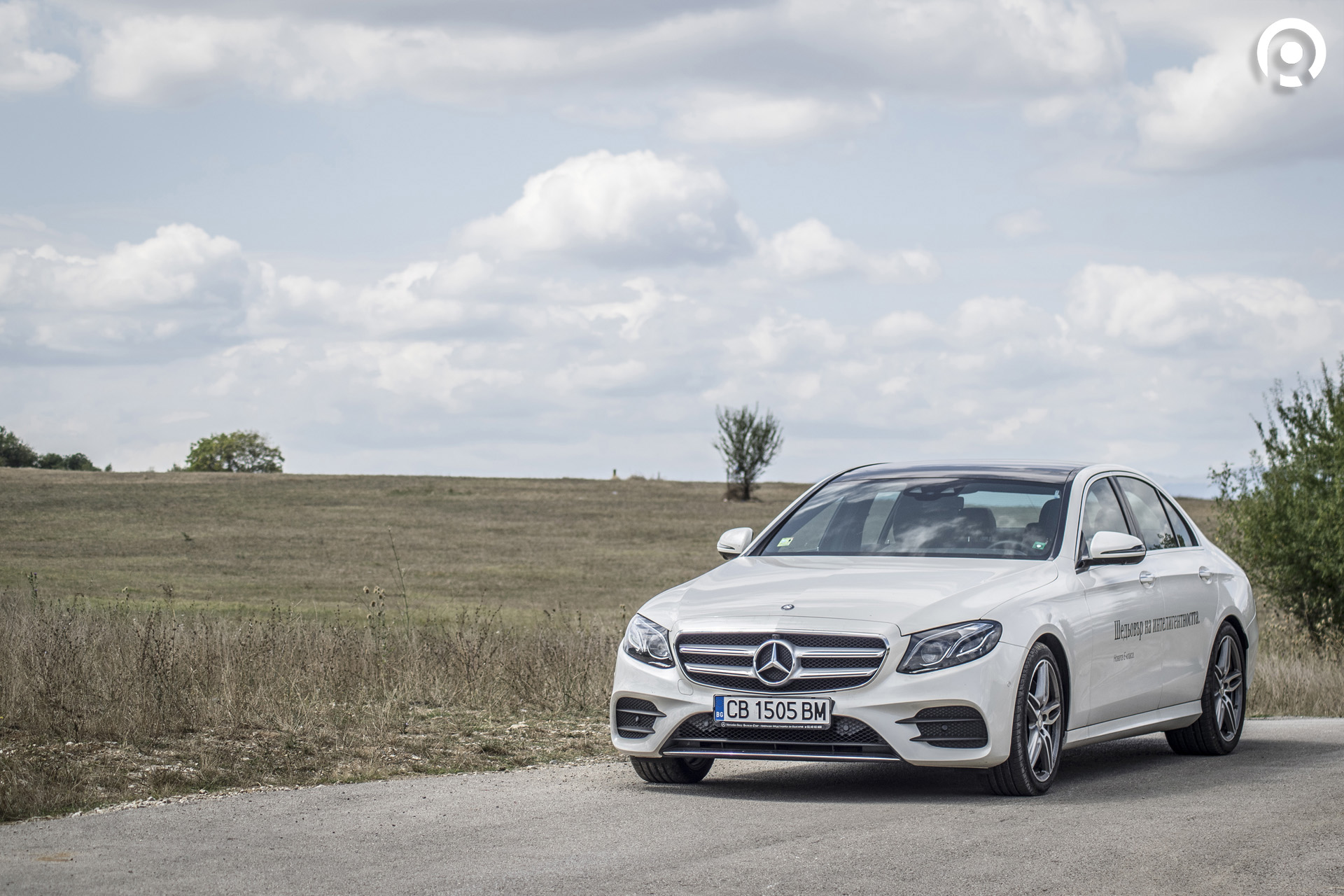
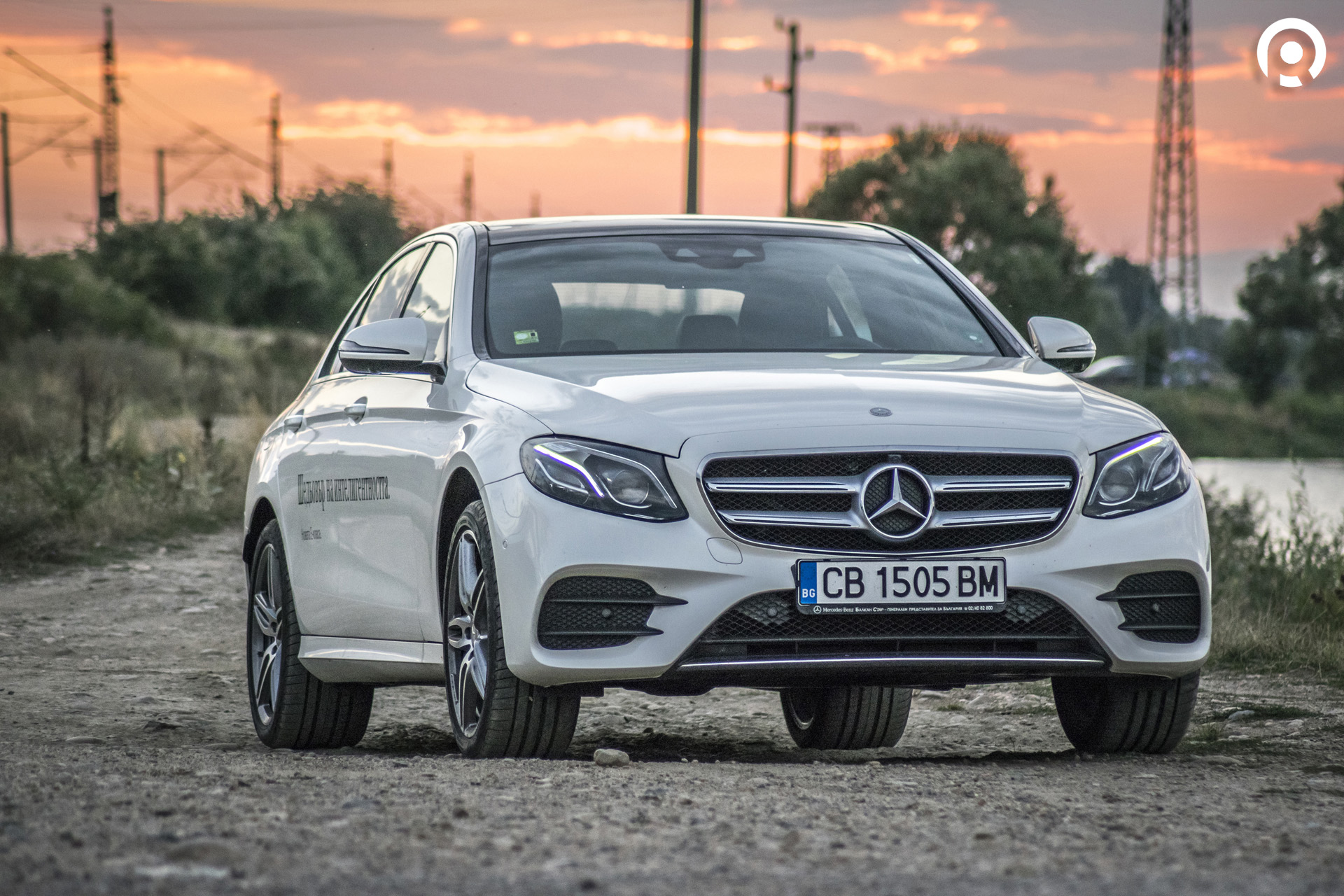
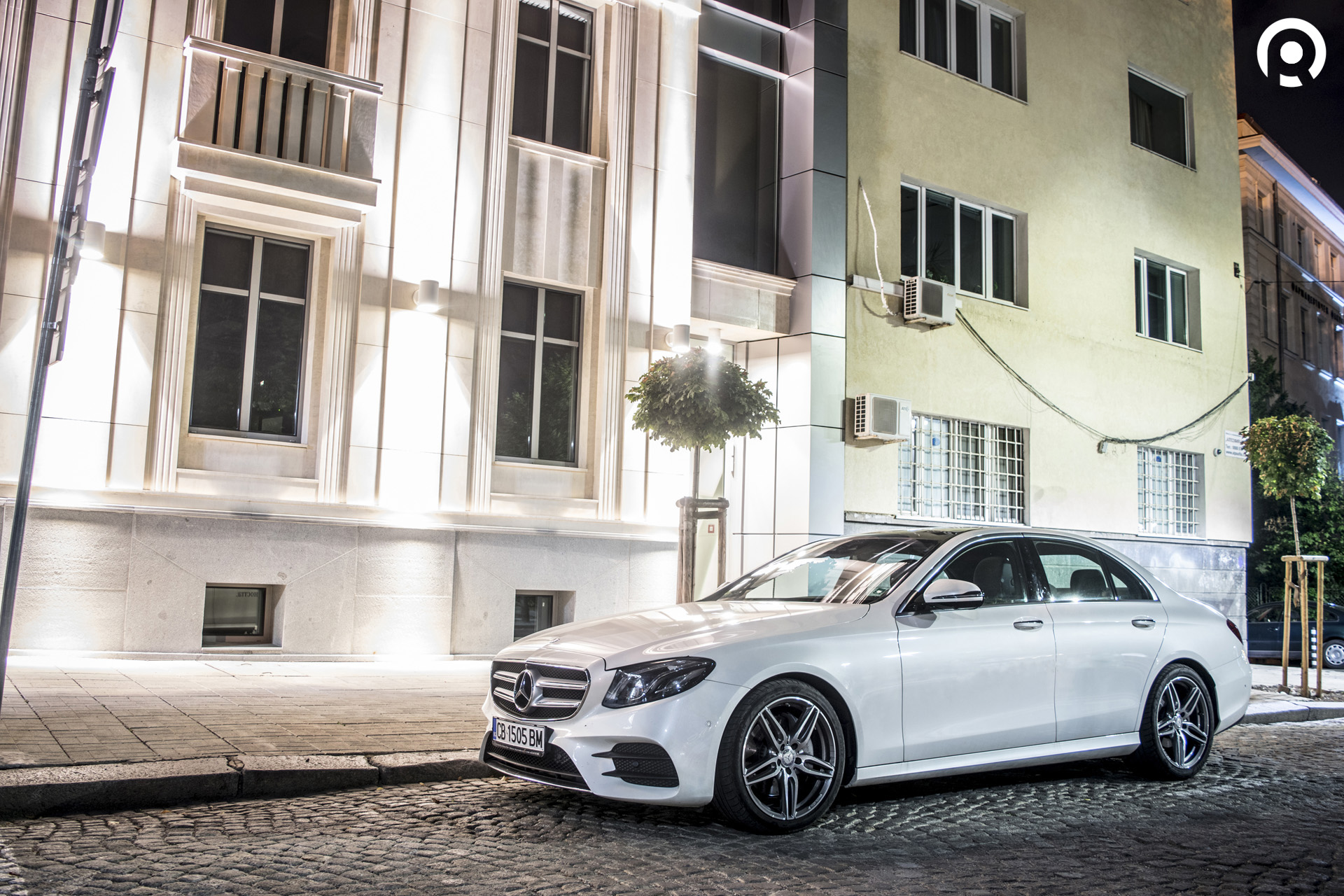
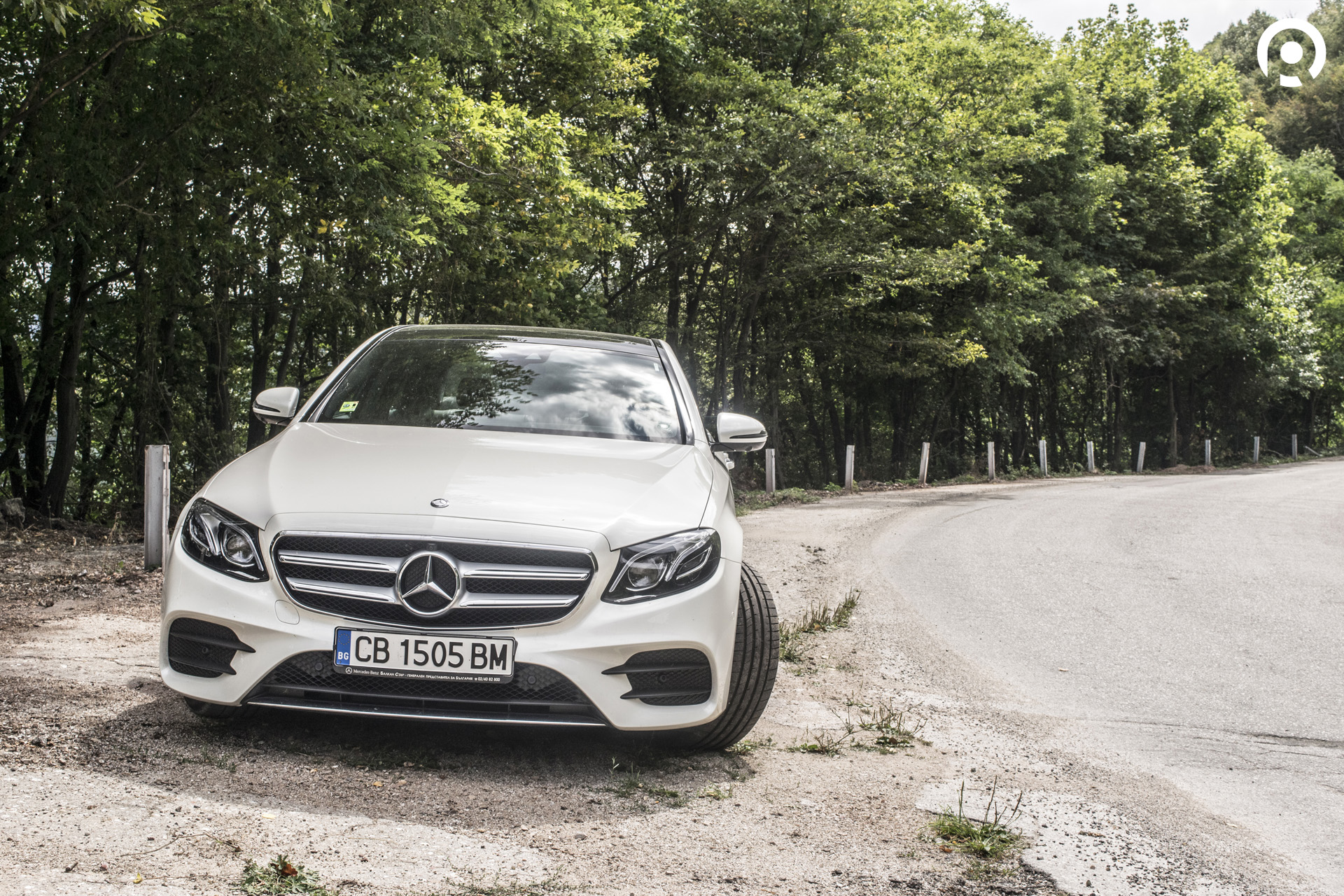
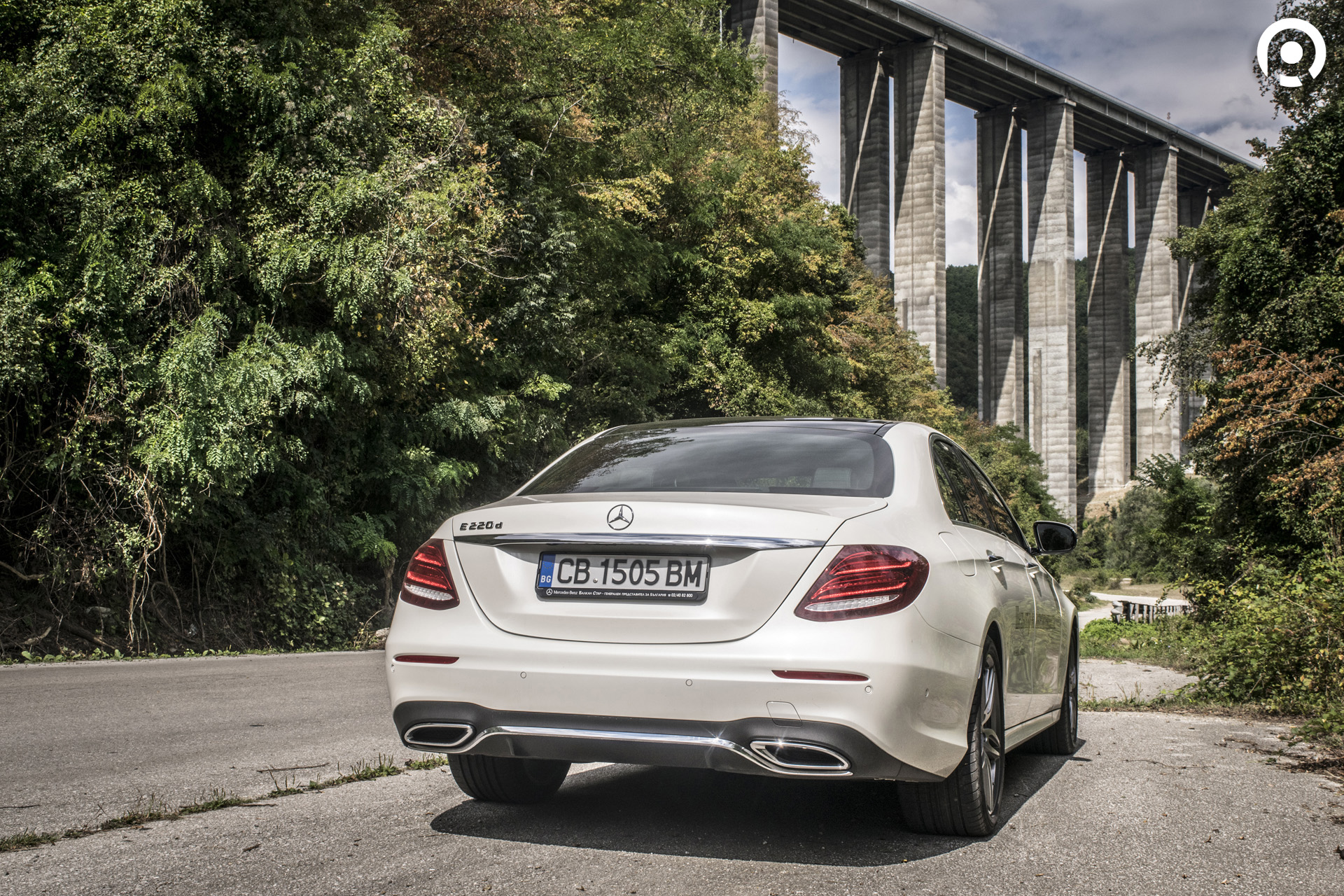
Anyway, once we put the similarities aside, the car itself looks very pleasant. Its proportions are close to ideal, with a long bonnet, short front overhang and elongated rear section. In two words — a classic sedan.
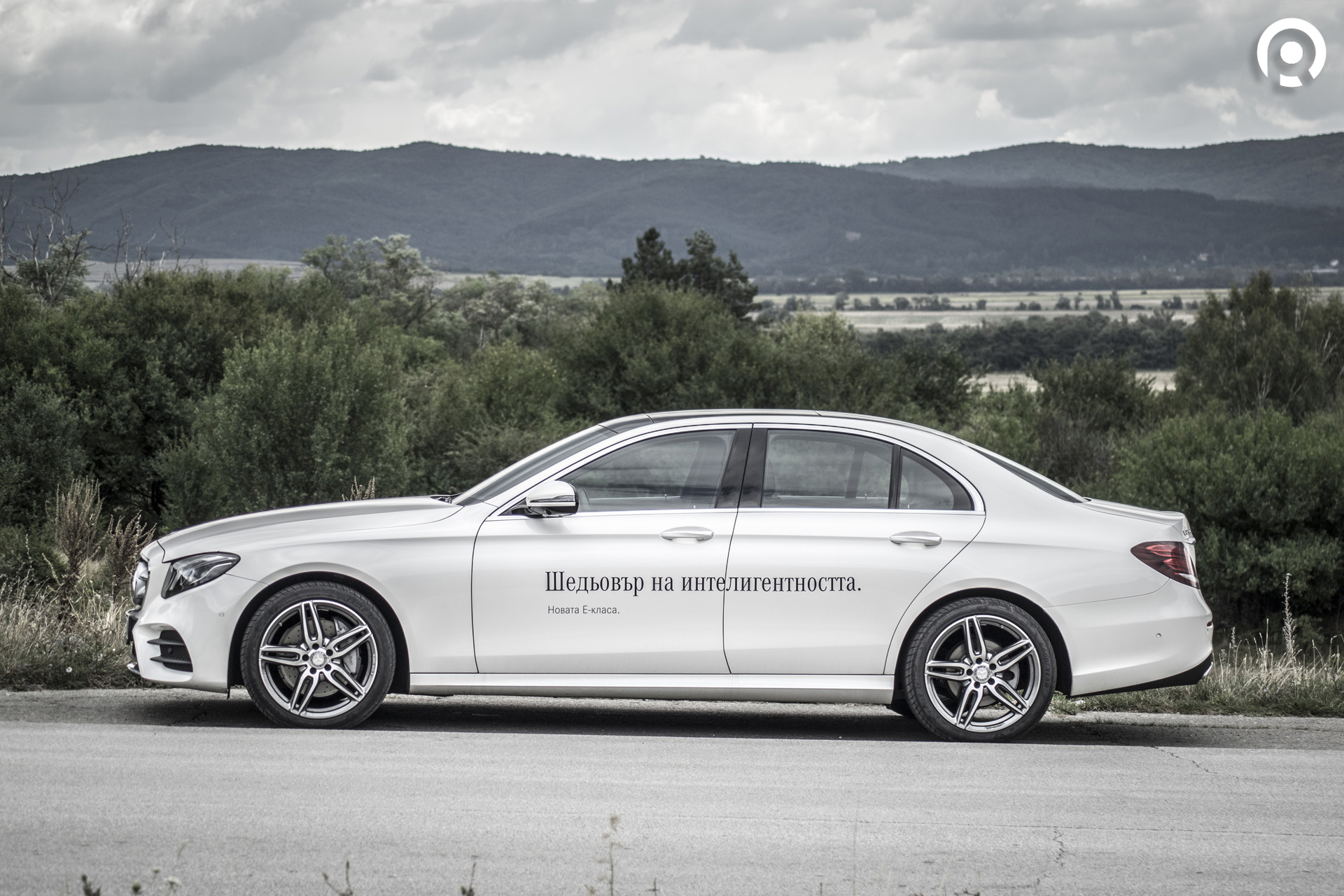
Its overall presence is rather conservative and restrained — after all, this is a car for serious people and there is no need for unnecessary flamboyance. The AMG Line version you see in the photos has a slightly more demonstrative appearance thanks to the more aggressive bumpers, large wheels and exhaust finishers… which are not actually functional because the real exhaust pipes are hidden underneath the bumper. Still, even with this package, the Mercedes E-Class remains far more restrained than alternative rivals such as the Jaguar XF or Maserati Ghibli — cars that always attract attention on the street.
Interior
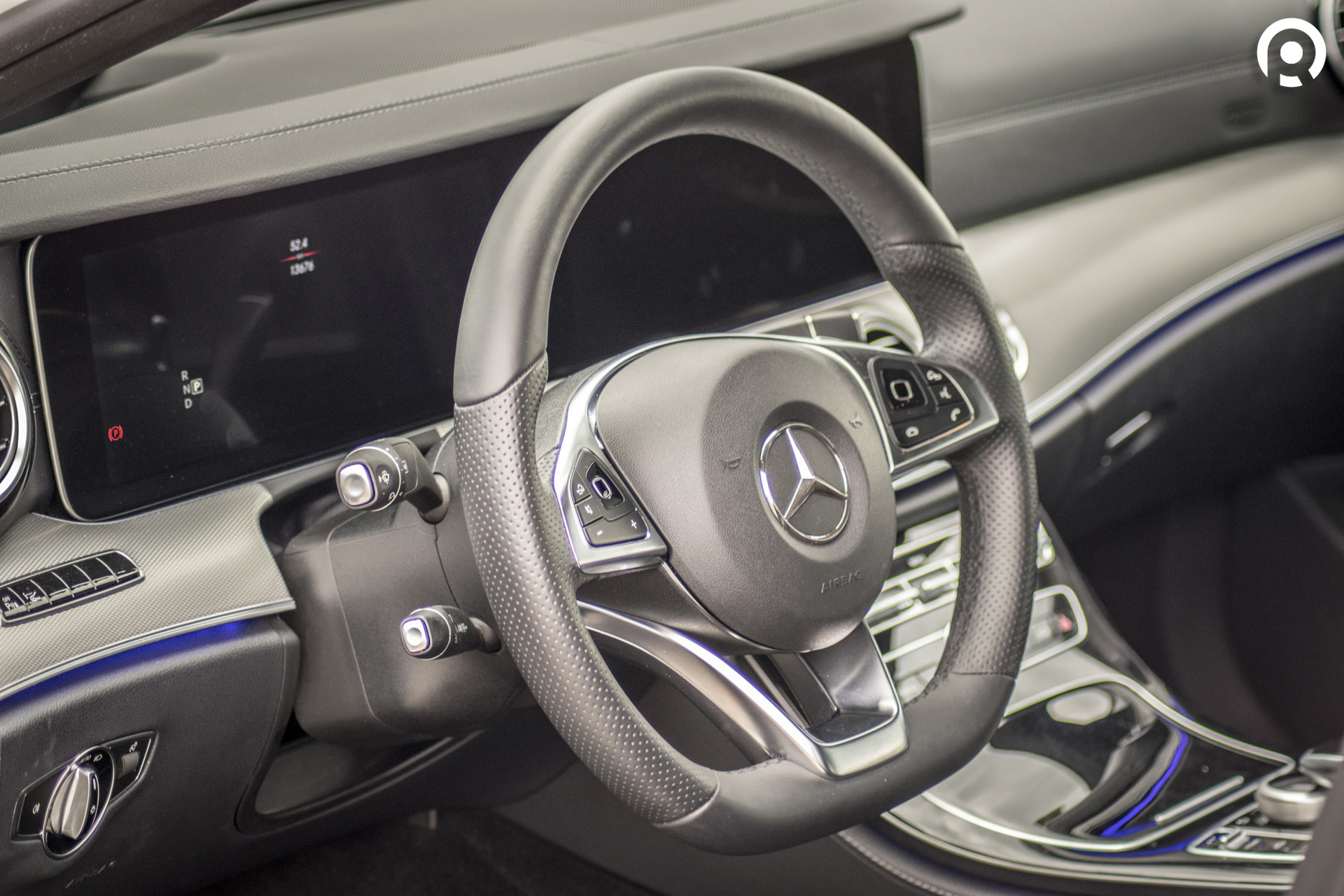
While the exterior of the E-Class relies on restrained styling, the interior is an entirely different story. Here, luxury and dramatic technology dominate the atmosphere, while the design moves much closer to the S-Class (and in my opinion even surpasses it).
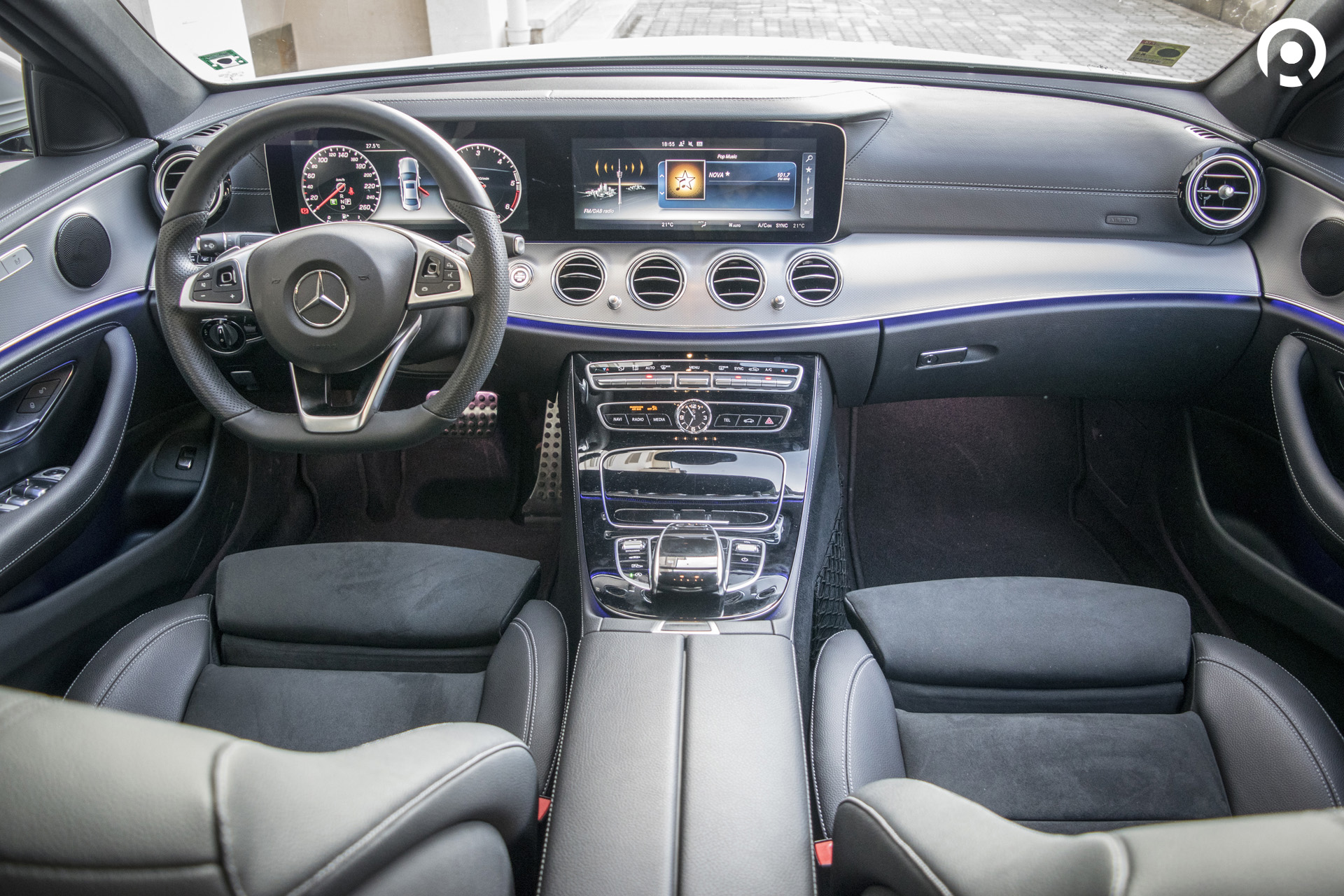
Naturally, the first thing that catches the eye are the two enormous 12.3-inch displays positioned within a single glass panel — one serves as a digital instrument cluster (optional), while the other controls the infotainment, vehicle settings and countless other functions (also optional with the Comand system, while the standard display measures 8.4 inches).
These displays offer an incredible resolution that makes Apple’s “Retina” displays look ordinary. The visual information they provide is crystal clear and beautifully designed from a graphical perspective. What I do miss, however, is a dedicated button for switching off the right-hand display because at night its brightness can become irritating. It can be turned off through the menus, but I would have preferred a quicker and easier solution.
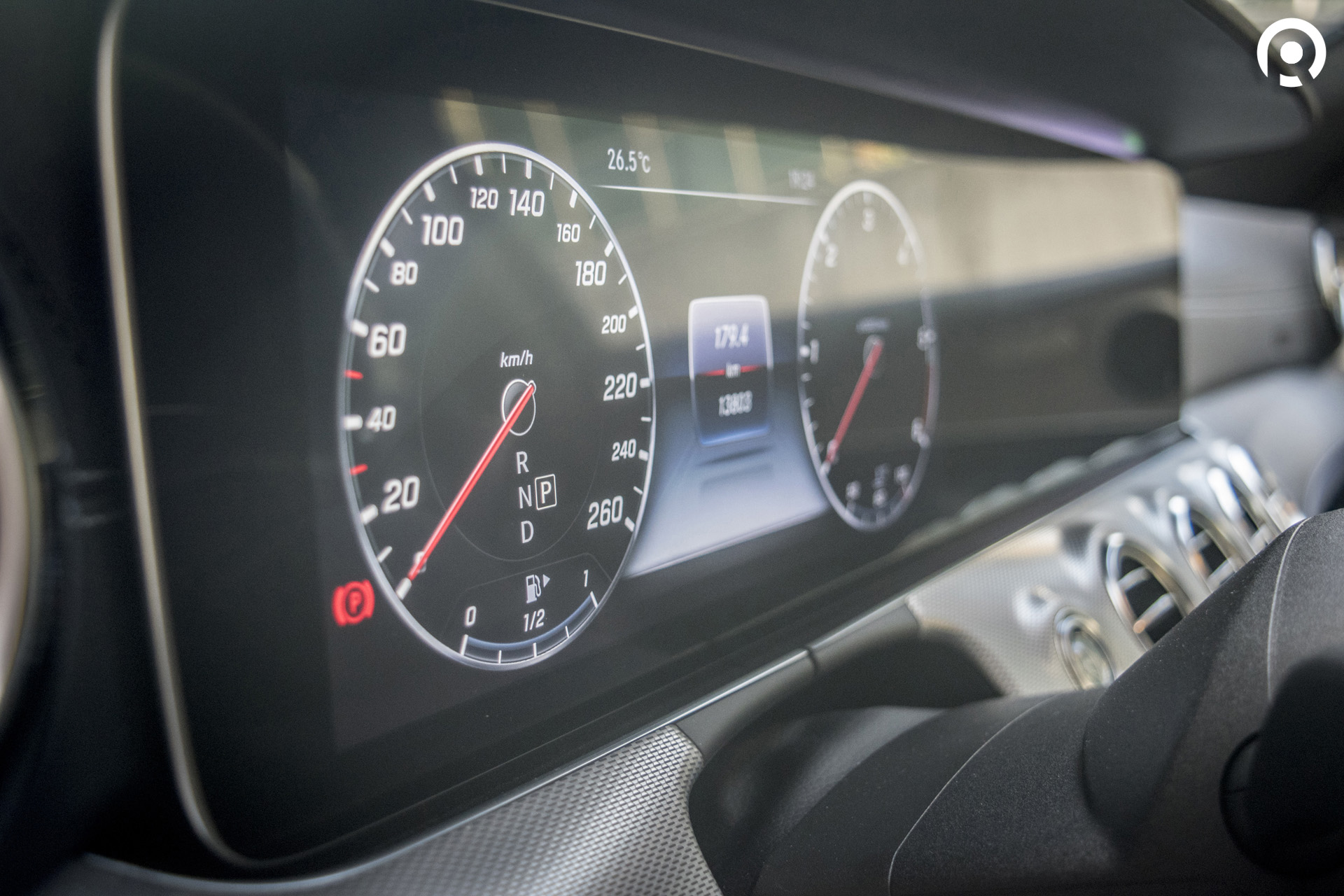
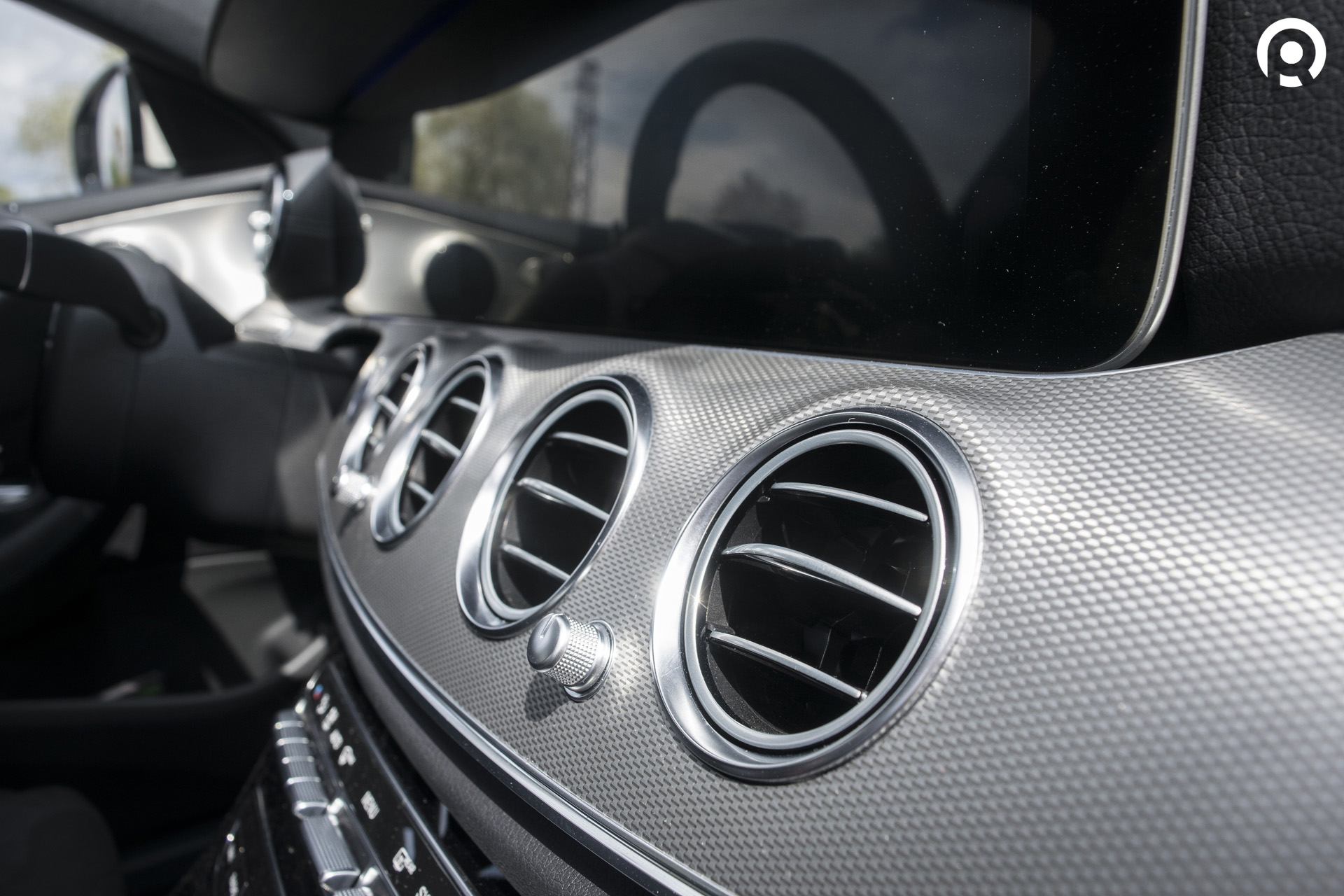
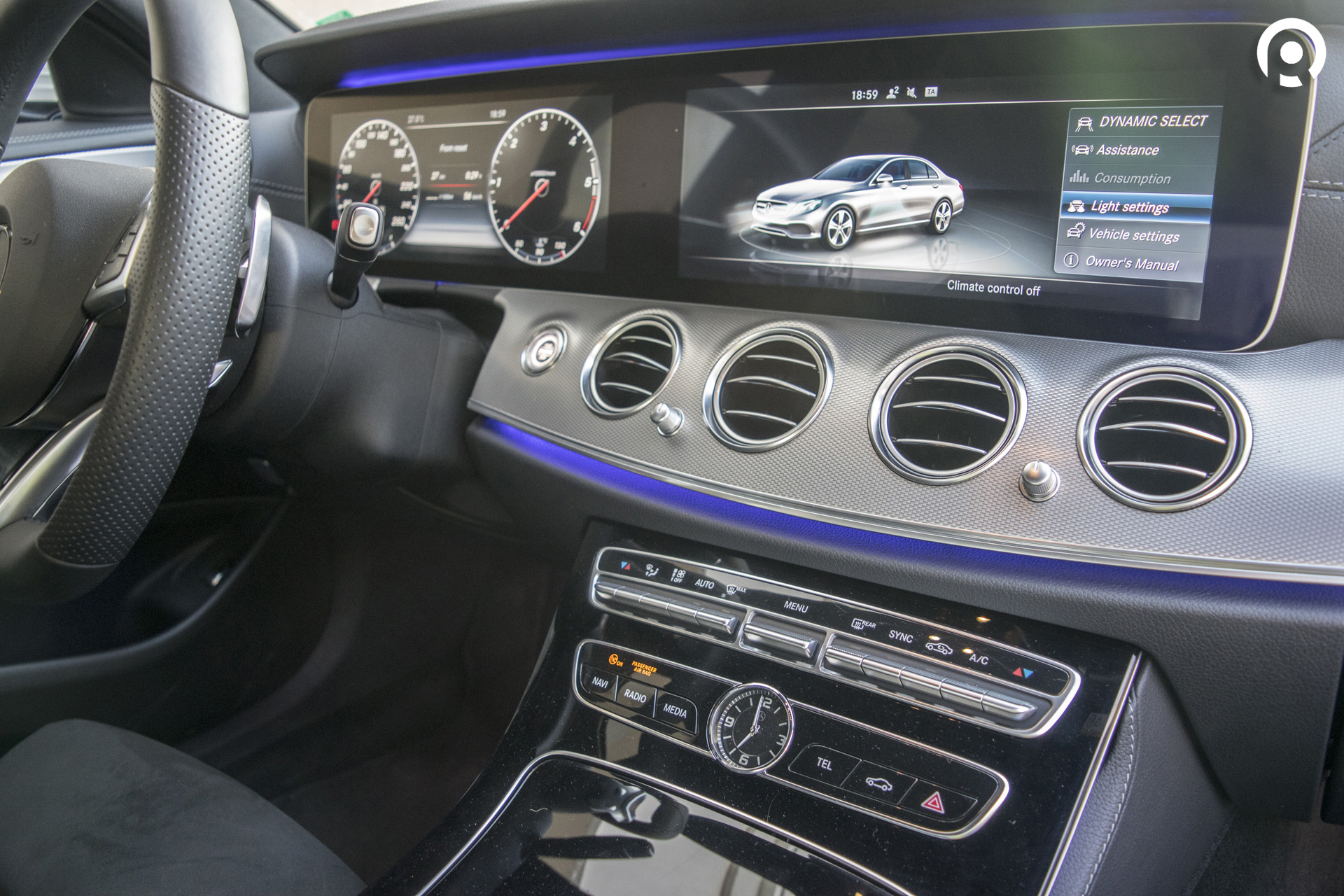
Another element that stands out are the circular air vents and their sheer number — four in the centre console alone. Personally, I really like them as a design solution because they make the interior feel more interesting and stylish. In my opinion, this is unquestionably the most impressive interior in the class compared to the other German models. In terms of appearance and feel, I also prefer it to the aforementioned Maserati and Jaguar models. The only interior in this segment capable of matching the E-Class in terms of visual richness is the new Swedish flagship — the Volvo S90.
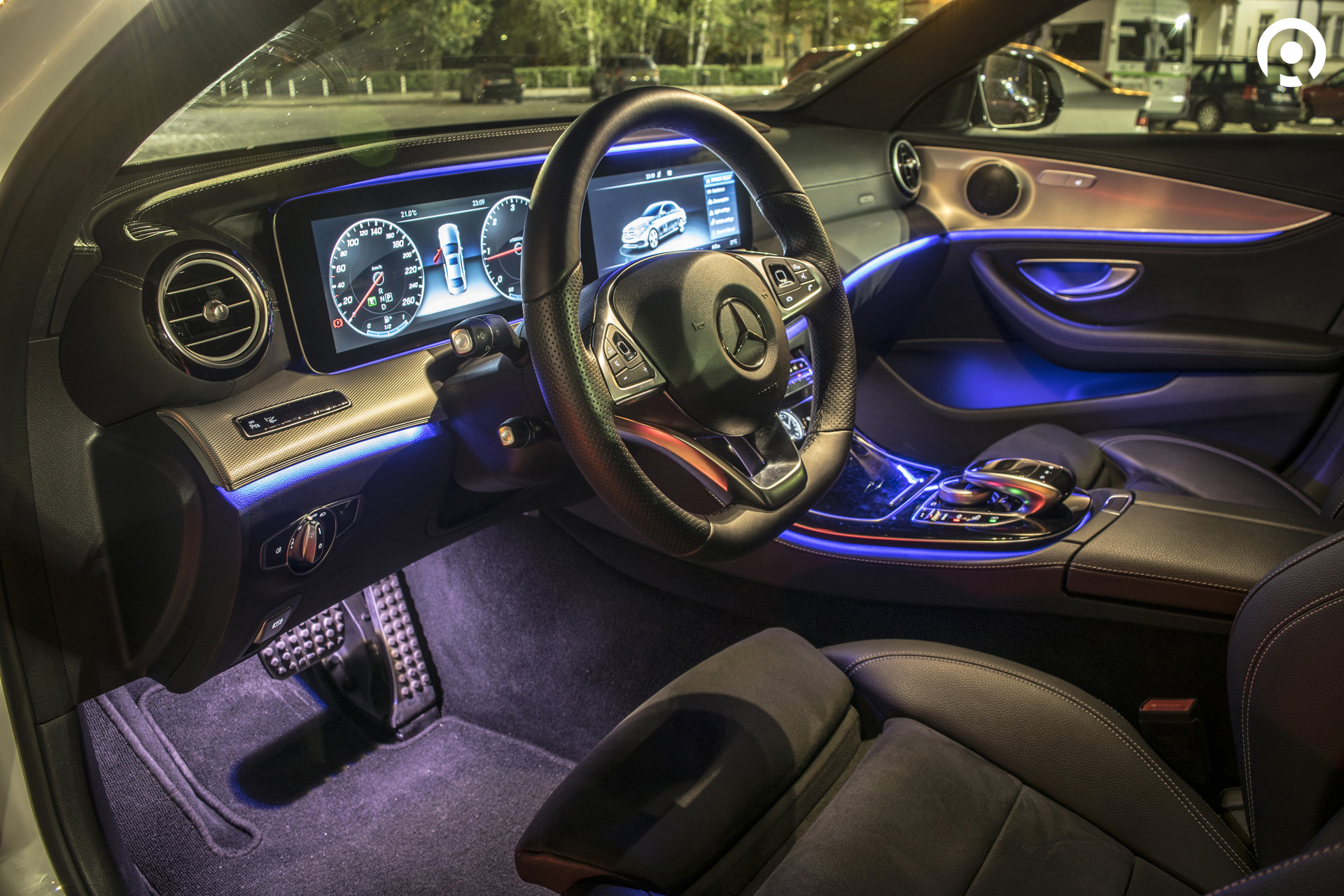
Leaving the design aside, the cabin offers exactly what you would expect from a Mercedes and what we also see in the rest of the brand’s line-up — excellent materials even in difficult-to-reach areas, solid build quality and a genuine sense of craftsmanship. This is combined with perfect ergonomics and, as expected, exceptional seats (the optional “Comfort front seats”).
In terms of space, the front row is completely sufficient for people of virtually any reasonable size. This is combined with large storage compartments and interestingly, a slightly enclosed feeling — somehow everything feels close at hand, which at least for me creates a specific sense of cosiness that I genuinely like.
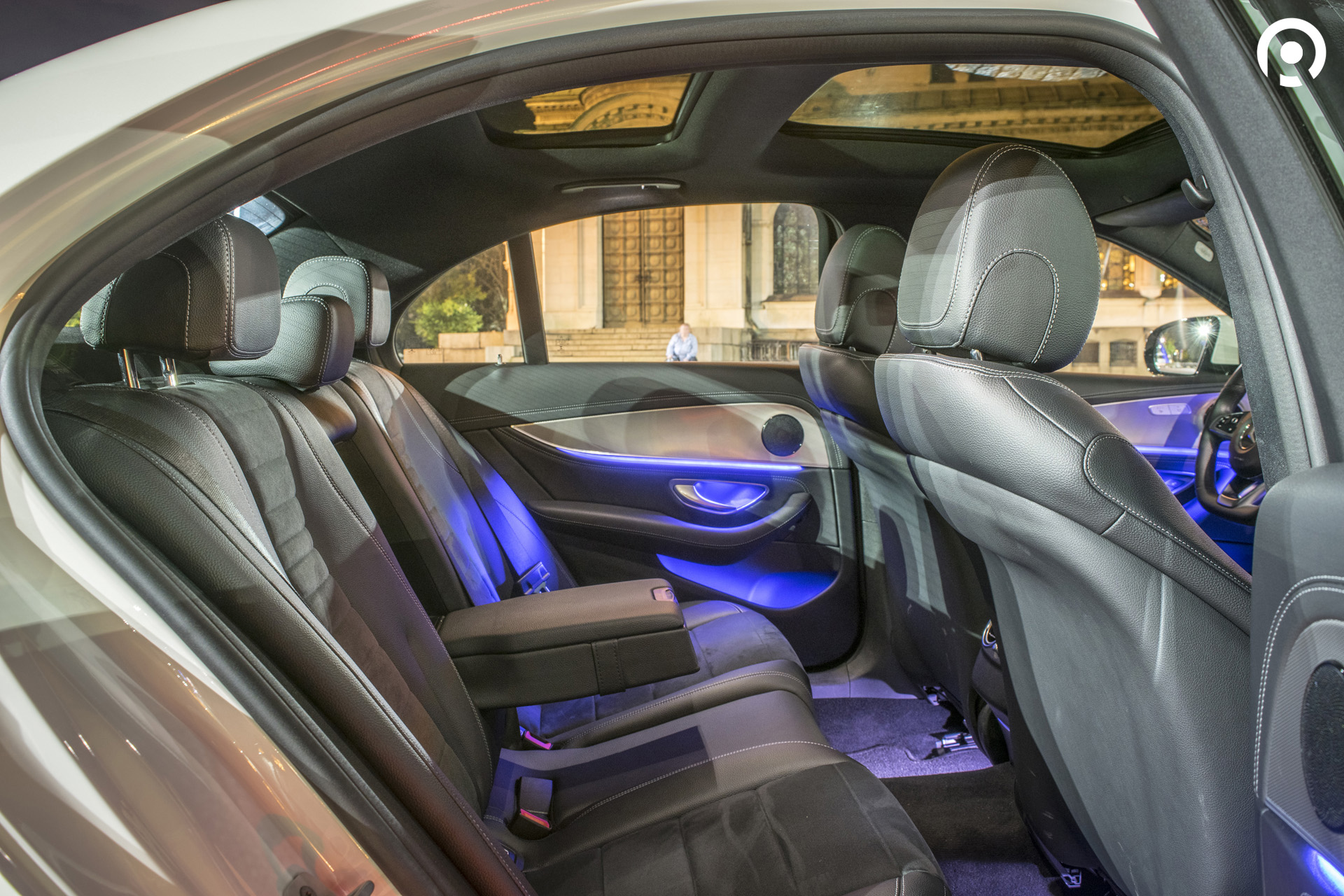
The rear row, however, does not feel quite as impressive as one might expect from a car like this. The seats are once again very comfortable and visibility forward and to the sides is good. The issue is that the front seats sit relatively low, which does not leave enough room to properly slide your feet underneath them. I would not say the rear is cramped, but subjectively the Jaguar XF feels more spacious for rear passengers.
Technologies
I rarely create a separate “Technology” section, but in the case of the E-Class there is simply no way around it. In fact, perhaps it would be more appropriate to call this section “Science Fiction”…
The car comes equipped with a whole array of impressive capabilities, which I will only mention briefly because otherwise I would run out of space.
Multibeam LED
These are perhaps the most intelligent headlights currently available. They feature 84 individually controlled LEDs and naturally perform all sorts of “magic” and lighting tricks — creating shaded zones around vehicles ahead while driving with high beams, recognising road signs and avoiding illuminating them too strongly so they do not dazzle you, preventing glare for other road users during wet weather, recognising corners before you reach them and much more.
Remote Parking
No more scratched doors in tight garages. You can now step out of the car in front of the garage while it calmly parks itself.
Autonomous Driving
Yes, the E-Class can already drive itself. It can even change lanes automatically when you activate the indicator. The autonomous driving system works at speeds up to 210 km/h. The problem is that in Bulgaria the feature is still unavailable because legislation evolves somewhat slowly. But that moment will come as well.
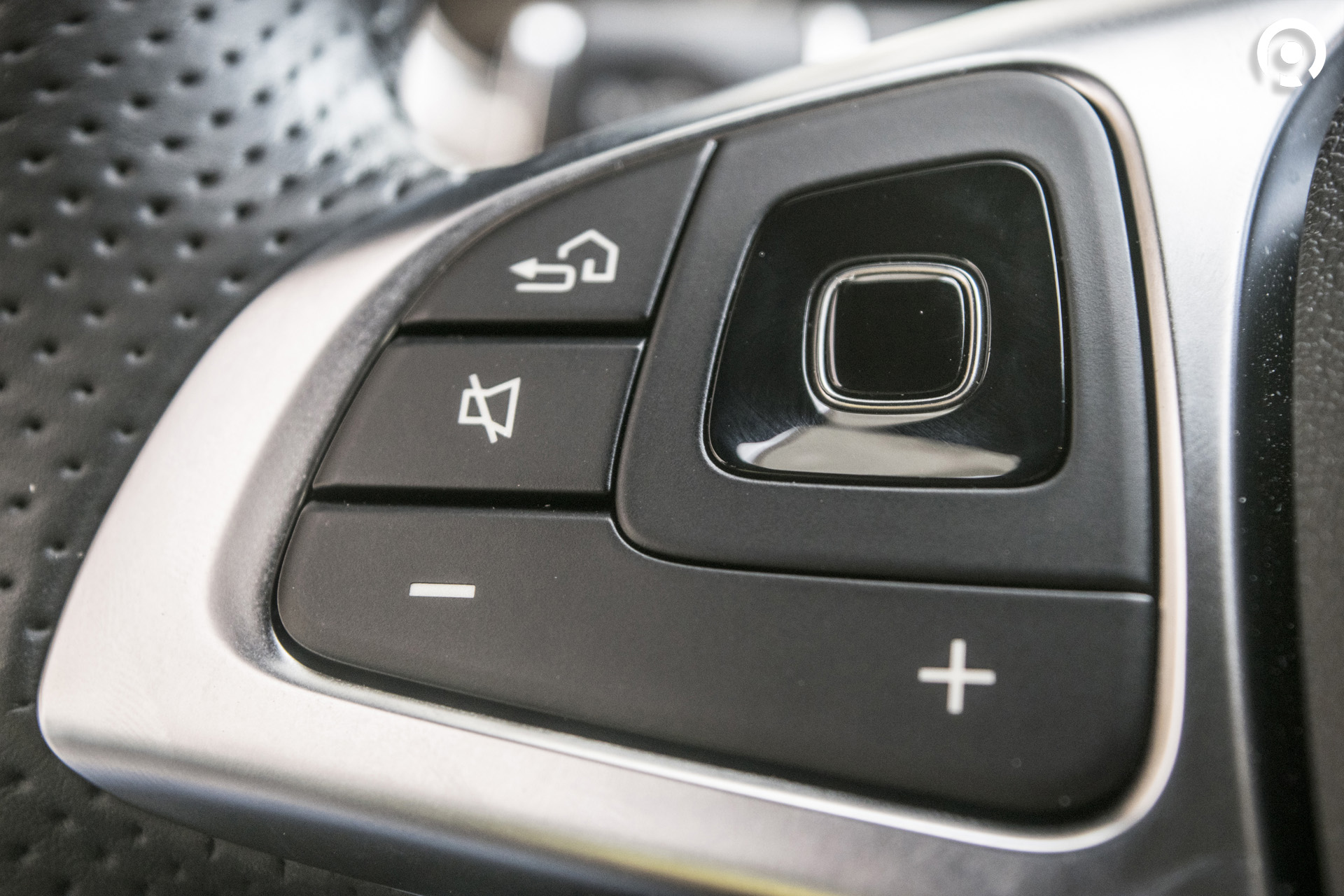
And because everything nowadays has to be highly technological, Mercedes has even replaced the conventional steering wheel buttons with tiny touchpads. They strongly remind me of old Blackberry controls, although honestly I do not find them particularly convenient.
On the road
The car I tested was equipped with the new two-litre diesel engine producing 194 hp, paired with a nine-speed automatic gearbox and officially rated fuel consumption between 3.6 and 4.3 l/100 km. It also accelerates from 0 to 100 km/h in 7.3 seconds and reaches a top speed of 240 km/h.
The first thing I noticed after leaving Balkan Star was the exceptional isolation from the outside world. Noise levels are reduced to an absolute minimum. Despite the large wheels fitted to the test car, no road noise reaches the driver’s ears in urban driving conditions. In addition, thanks to the optional air suspension, the E-Class handles urban bumps and potholes extremely well.
The calmness is disturbed slightly by the engine. Sound insulation is good, but with only four cylinders the engine is not especially well balanced and at low revs vibrations can be felt inside the cabin. Furthermore, when the start-stop system restarts the engine, the entire car shakes noticeably. Personally, this was not a major issue for me, but I believe those accustomed to complete refinement should look towards the larger six-cylinder engines.
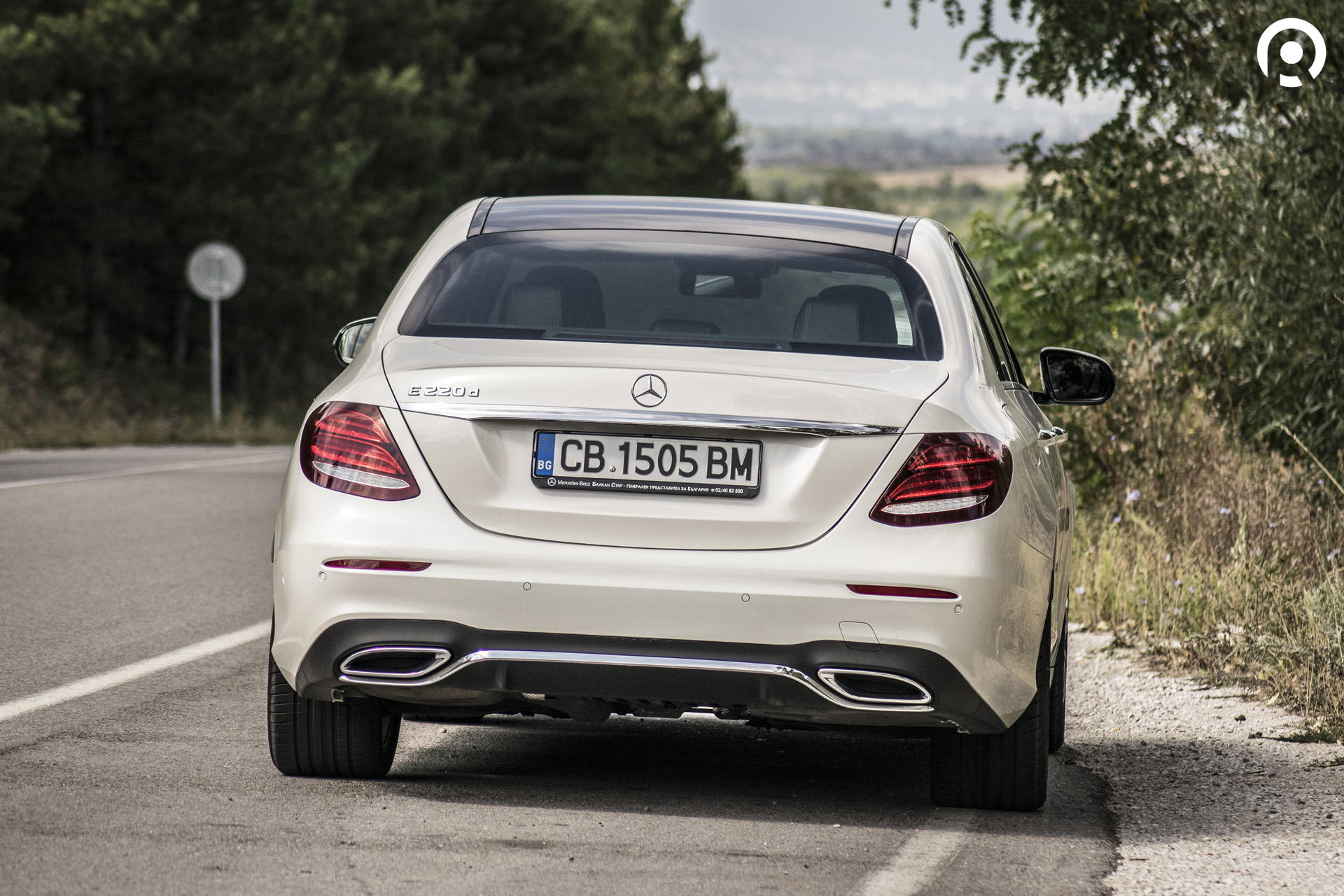
After leaving the city, I headed towards the Sub-Balkan road where, travelling at around 100 km/h, I further confirmed my impression that the E-Class was designed with comfort as the top priority. At these speeds the engine’s shortcomings disappear — at higher revs no vibrations reach the cabin. I was also deeply impressed by the lack of aerodynamic noise. Apart from a barely noticeable hiss from the mirrors, the cabin remains almost completely silent, including around the panoramic roof.
Let us not forget that the new E-Class set a class record with a drag coefficient of Cd=0.23. That figure applies with certain optional aerodynamic improvements, but even the test car’s Cd=0.26 is highly impressive.
I reached the first corners on the route in remarkable comfort and although the car does not encourage sporty driving at all, I still switched into Sport mode and accelerated harder towards the mountain section. The engine delivers excellent pulling power and feels at least 15–20 hp stronger than its official figures suggest. This is probably due not only to its flexibility, but also to the nine-speed gearbox, which always shifts precisely and seamlessly.
Otherwise, the car remains stable through corners, but it is clearly not particularly engaging during this type of driving and feels somewhat out of place. That is why I quickly returned to Comfort mode and continued the journey the way a large E-Class should be driven — calmly (and with fuel consumption of 5.1 l/100 km).
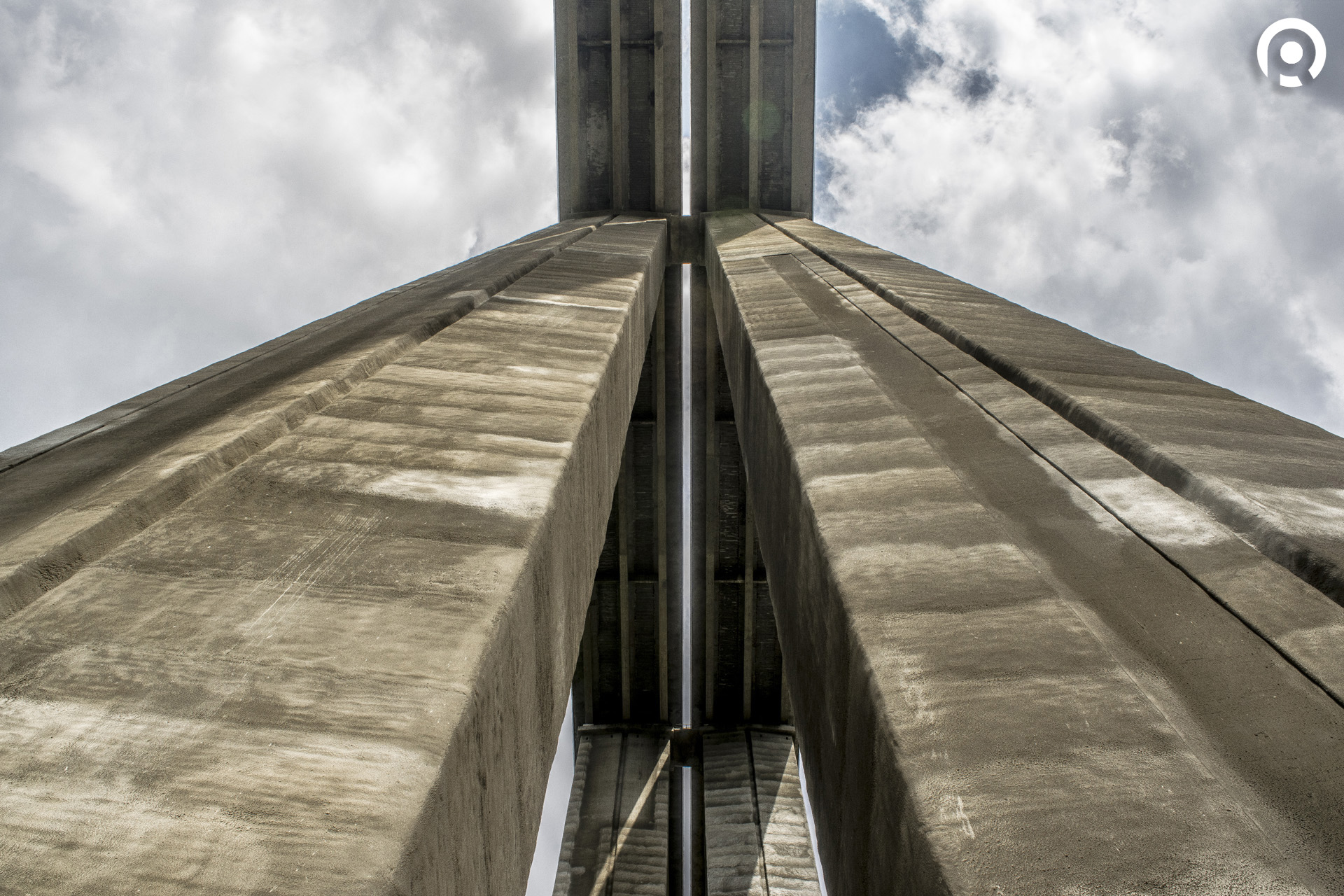
After a quick lunch in Pravets, I headed back towards Sofia via the motorway. Subconsciously, I have always considered the motorway to be the natural habitat of the E-Class and the rest of this segment. Their powerful engines, combined with spacious interiors, comfortable seats and excellent build quality, are ideal for long journeys and covering huge distances with minimal fatigue. The new E-Class may well be the leader in this discipline thanks to the remarkable isolation from the outside world I already mentioned.
At motorway speeds, the car fully confirms my impression of it being a king of comfort. Noise remains minimal and the air suspension deals well with small imperfections in the road surface. Still, over serious short transverse bumps, the car somewhat loses its composure — there is a slight floating sensation that is not especially pleasant, although certain motorway sections are genuinely terrible. Fuel consumption from Pravets to Sofia stood at 6.4 l/100 km.

Overall, I am very satisfied with what the Mercedes demonstrated on the road. The car feels mature, comfortable and delivers highly competent road manners.
Conclusion
The new E-Class is the benchmark in the executive sedan segment and exactly what a large Mercedes should be — highly technological and exceptionally comfortable. This is a car for mature individuals seeking calmness on the road and who do not wish to attract attention with extravagant vehicles.
The E-Class offers strong prestige, exceptional isolation from the outside world, a spacious cabin and large boot, a lavish interior, comfortable suspension and an abundance of high-tech options.
I was deeply impressed by the car, although what I personally dislike is that in its perfection, the E-Class somehow feels sterile. I prefer cars with a little more charm, even if they come with certain flaws (XF, S90 and Ghibli).
Eng. Tsvetan Iliev

Comments are closed.