
Lately, I find myself liking Peugeot more and more. In an era obsessed with SUVs, the French brand is doing everything possible to offer genuinely attractive non-SUV models. The latest generation of its C-segment contender, the Peugeot 308, is a perfect example.
What lies beneath the high-tech and, above all, dynamic exterior? It is time to find out in this test of both the diesel and hybrid versions.


Design

The new 308 builds upon and refines the familiar design elements of Peugeot’s current line-up in a way that creates a dynamic and distinctive appearance – something crucial in this highly competitive segment. I see the 308’s design as a skilful blend of sporty aggression and dignified elegance.
The front end is dominated by a large – but not oversized – grille. Depending on the trim level, its finish varies: from basic black, through chrome-accented versions (as seen on the white car), to the GT trim shown above, where the grille features a pronounced 3D effect with the Peugeot emblem standing proudly at its centre. Behind that emblem sits the radar for the adaptive cruise control system.

The rear design is equally dynamic, with slim tail lights and a two-tone, aggressively styled bumper even in base specification. Interestingly, there are two different rear light designs depending on trim level, yet both look equally modern and impressive.
Here, however, I encounter the one truly irritating detail in the 308’s design – the enormous fake exhaust outlets. Perhaps you guessed it. In my opinion, they look grotesque. Even on the BMW 8 Series, similar oversized exhaust surrounds feel questionable, but here I am genuinely puzzled by the decision. The rear would look far better with two properly sized, round chrome tips.

The side profile follows classic proportions for the class, but the more upright and narrower windscreen (compared to the previous generation and many competitors) stands out positively. It creates a subtle association with premium hatchbacks such as the BMW 1 Series or the Mercedes-Benz A-Class. I appreciate that.


I already mentioned the badge, but it deserves more attention. The 308 is the first Peugeot to feature the brand’s new emblem. The upright lion has been replaced by a shield bearing a lion’s head – a modern reinterpretation of the company’s logo from the early 1960s. It carries a distinct retro spirit. I have heard mixed opinions about it, but personally I like it and believe it fits perfectly with the direction Peugeot has taken in recent years in terms of design, quality and brand image.
To conclude this section, it is worth noting that the 308 recently won the prestigious Red Dot Design Award for 2022 in the Cars and Motorcycles category – recognition that further validates its bold styling approach.
What is your opinion? Does the new 308 impress you as much as it does me?
Ще завърша темата с това, че преди около месец 308 спечели престижната награда за дизайн Red Dot за 2022 г. в категория автомобили и мотоциклети.
Interior
The interior of the Peugeot 308 is just as impressive as the exterior, thanks to its modern “digital” design and original combinations of materials and textures. A particularly nice touch is the decorative trim across the dashboard and doors. In Allure specification, these inserts are textile, adding a tangible sense of warmth and contemporary style.

Peugeot remains faithful to its unconventional i-Cockpit concept. The small steering wheel is positioned below the instrument cluster, meaning you look at the gauges over the wheel rather than through it. At times, the rim can slightly intrude into the field of vision. This setup requires some adjustment, but once accustomed to it, driver ergonomics are genuinely strong.
A major contributor to this is the so-called i-Toggle system. Beneath the 10-inch infotainment screen sits a second capacitive display with five configurable shortcut “buttons”. The driver can assign frequently used functions to these shortcuts.
This is, without exaggeration, the best implementation of capacitive controls I have encountered so far. The buttons are large enough to be used comfortably and, more importantly, accurately – even on severely uneven roads, where most touch-sensitive controls become frustrating (in other words, typical Bulgarian conditions).
The infotainment system as a whole is solid, even if not every function is perfectly intuitive. The 10-inch screen is bright, sharp and pleasant to operate. Apple CarPlay and Android Auto are standard from the base trim level, and the system allows two devices to be connected simultaneously via Bluetooth.
The wireless charging pad, however, has its shortcomings. It works well when driving straight or when stationary, but on winding roads my phone tends to slide sideways and stop charging. Perhaps certain phone cases could help, but Peugeot would be better off revisiting the material or surface design of the charging area.

Moving to the instrument cluster, it is 10 inches as standard. The displayed information can be configured, and the graphics are clear and vivid. In GT trim, the cluster gains a 3D effect. This system, developed by Visteon (with engineering work carried out in Sofia), projects images on two layers to create depth. The effect is particularly useful when warnings appear, as they stand out more clearly and grab the driver’s attention faster.
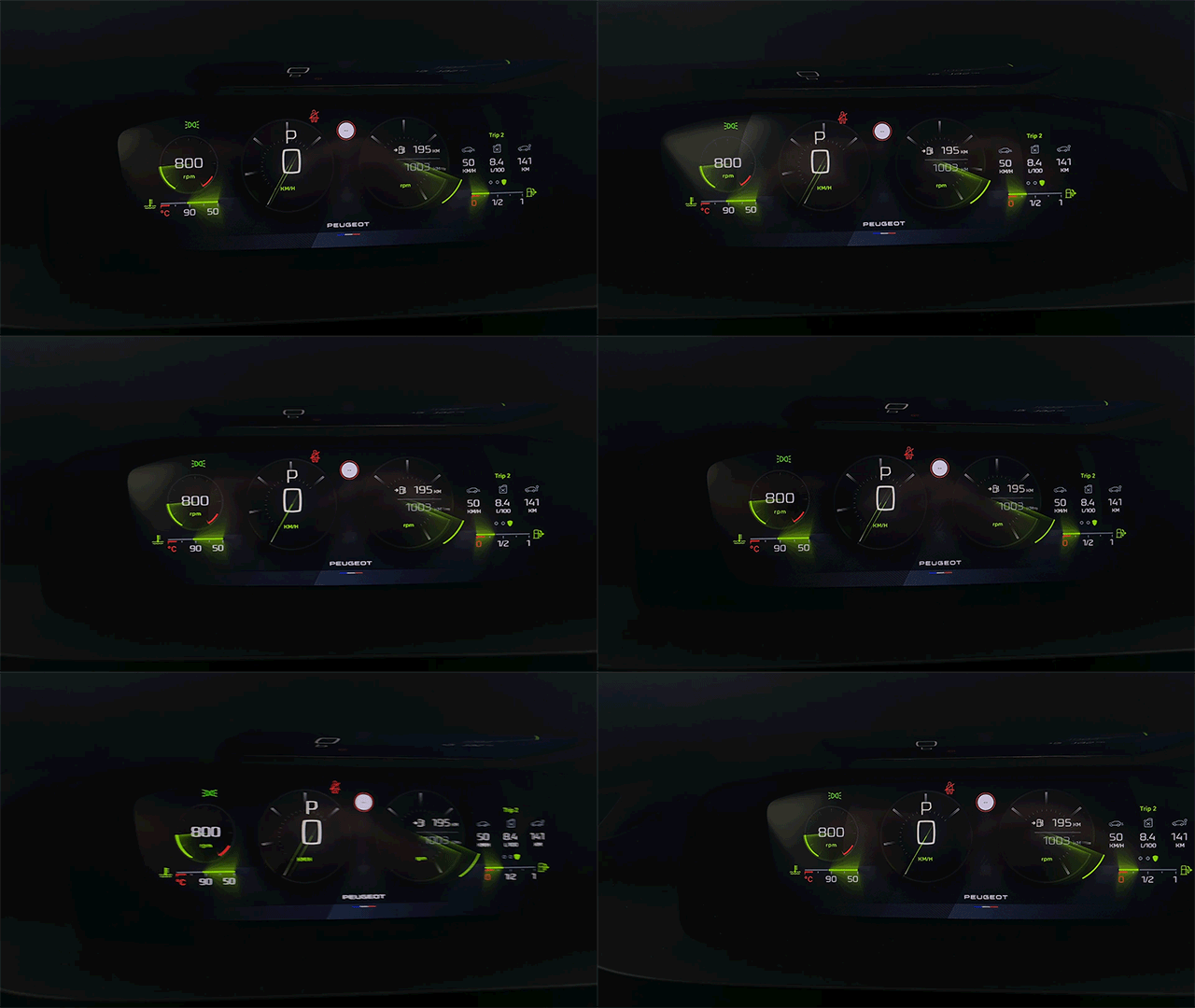
In traditional quality metrics, the 308 performs very well. Material quality, especially in the front, is impressive from Allure trim upwards. Combined with solid assembly, the cabin could easily be mistaken for that of an Audi by many occupants.
The second row, however, feels somewhat tight – even for this segment. The seat base is positioned rather low, legroom is limited and there is not enough space to comfortably slide your feet under the front seats. The window line also restricts outward visibility. For adult passengers, it is more of a compromise.
On the positive side, the boot offers 412 litres of capacity. For comparison, the practical Volkswagen Golf 8 provides 381 litres. In that regard, the 308 scores strongly.


On the road
The Peugeot 308 offers almost everything: petrol, diesel, plug-in hybrid and, very soon, a fully electric version. Power outputs range from 110 hp to 225 hp.
The entry-level engine is a 1.2-litre three-cylinder petrol unit available with 110 or 130 hp. The diesel is a 1.5-litre four-cylinder producing 130 hp. The plug-in hybrid versions combine a 1.6-litre four-cylinder petrol engine with an electric motor, delivering either 180 hp or 225 hp. Unfortunately, there are no signs of a GTi version, which would have suited the aggressive styling of the 308 perfectly.

In everyday driving, the car is impressively quiet and the suspension is very comfortable – something I have come to expect from Peugeot. Cruising along the winding road of the Iskar Gorge at a relaxed pace, the 308 feels perfectly balanced. It absorbs imperfections well without excessive body movement.

That impression changes slightly at higher motorway speeds. On Hemus motorway, the combination of speed and transverse bumps resulted in noticeable and somewhat unpleasant vertical oscillation. The car remains stable, but the softness that feels so pleasant at lower speeds becomes more evident.

The test continued around Teteven, where winter had just returned. I switched from the diesel to the most interesting version – the 225 hp plug-in hybrid.
Both hybrid variants share the same battery and electric motor, rated at 110 hp. The difference in total system output comes solely from the petrol engine tuning. Maximum torque is identical at 360 Nm. That explains why the performance difference between the two versions is minimal: the 180 hp model accelerates to 100 km/h in 7.6 seconds, while the 225 hp version does it in 7.5 seconds. With a price gap of approximately €2,300, it raises a legitimate question: who and why would choose the more expensive one?


The battery capacity is 12.4 kWh, allowing for an electric range of around 60 km officially. In real-world conditions, I would expect closer to 50 km.
In hybrid driving, refinement reaches another level. The silence and smoothness are impressive – until you press the accelerator hard and the petrol engine wakes up. Under dynamic driving, the 308 is agile and easy to control, with progressive and manageable understeer if you enter a corner too quickly.


However, outright performance is not particularly thrilling, even in the 225 hp version. More importantly, aggressive driving seems to confuse the automatic transmission, which occasionally hesitates about which gear to select. To be fair, the 308 is unlikely to be driven in this manner frequently. Manual gear changes via the steering wheel paddles are possible, but despite its dynamic looks, the 308 is not intended to be a hot hatch.
When pushed hard, the car loses some of its refined charm. The gearbox’s indecision and the rather vocal small-capacity petrol engine reduce the sense of sophistication. At that moment, I realised that the fully electric version might ultimately be the most suitable match for the 308’s elegant interior and striking design, delivering the level of finesse the car deserves.
Conclusion
The numerous awards the new Peugeot 308 has received recently are no coincidence. It is one of the strongest contenders in its segment, thanks to its high level of technology, quality interior, impressive design and calm, confident road manners.
Where it falls slightly short is rear-seat space and its less convincing performance when driven aggressively. As is increasingly common in this segment, there is no true “hot” version. At this stage, only the Volkswagen Golf 8 and Skoda Octavia offer a broader range of high-performance options.
In Bulgaria, pricing for the 308 starts at approximately €20,800 (converted from 40,700 BGN) for the base Active Pack with the 110 hp petrol engine – a rather compromised configuration. The more sensible Allure trim starts from around €23,700 (converted from 46,500 BGN).
In my opinion, if the car will be used in a balanced manner – both in the city and on longer journeys – the best choice is the Allure trim with the 130 hp diesel engine and automatic transmission, priced at just under €27,500 (converted from 54,000 BGN). The reason is simple: you get a smoother and more efficient four-cylinder engine, and the price difference is justified by the improved balance and economy.
eng. Tsvetan Iliev
