Like every other automotive manufacturer, BMW has moved towards electrification partly to meet increasingly strict emissions regulations, and partly to respond to changing consumer expectations.
The good news is that BMW does it in its own, characteristic way. For example, mild hybrids with starter-generators are not even marketed as hybrids, while other manufacturers proudly highlight such systems even when they add just a handful of electric horsepower.
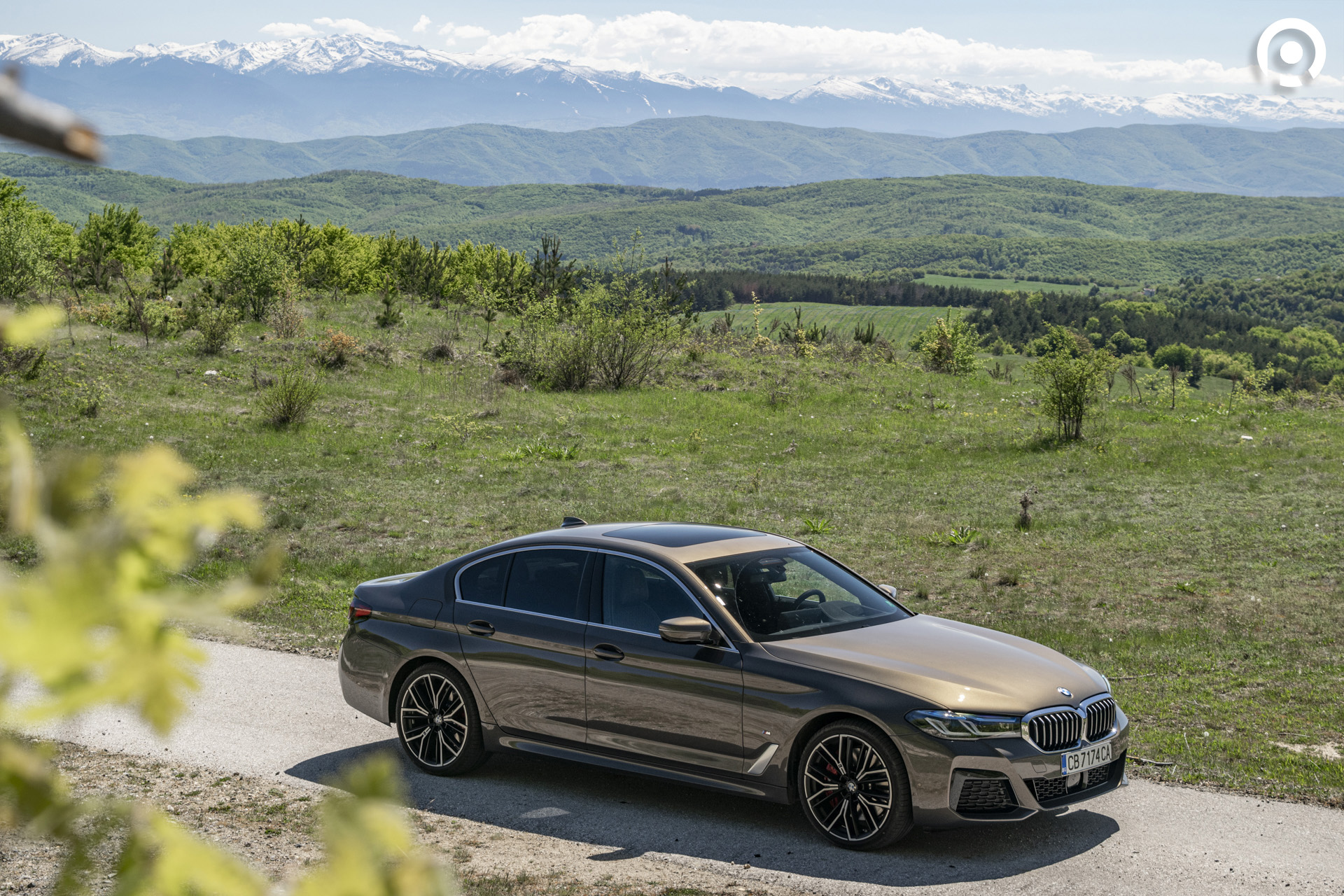
The facelift of the 5 Series brought not only visual updates, but also more serious hybrid variants – capable of driving up to around 50 km purely on electricity. The range-topping plug-in hybrid carries the 545e badge and combines batteries and an electric motor with a classic inline six-cylinder petrol engine.
Design
Traditionally, the BMW 5 Series relies on a harmonious, understated design with classic proportions – exactly what you would expect from a business sedan.
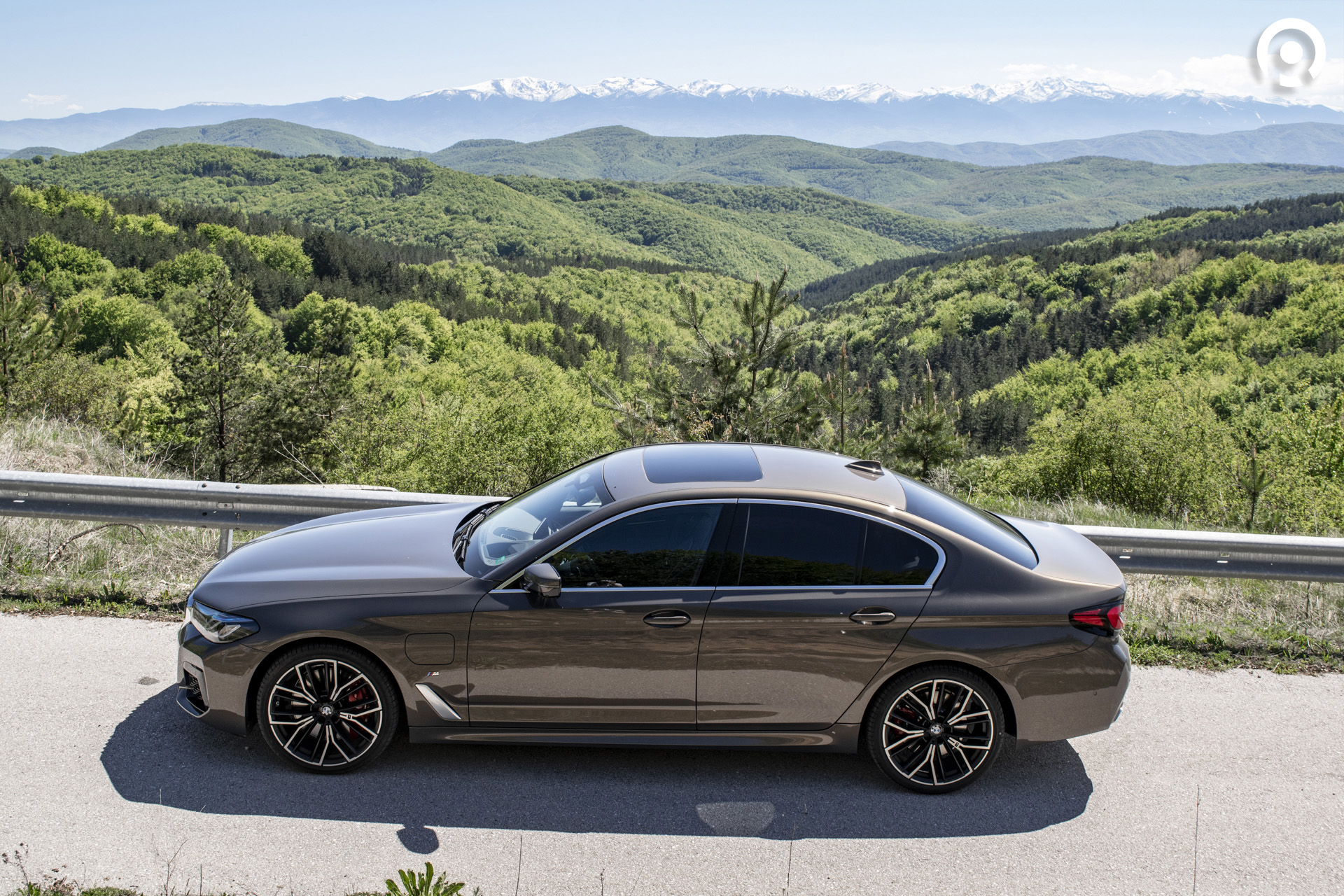
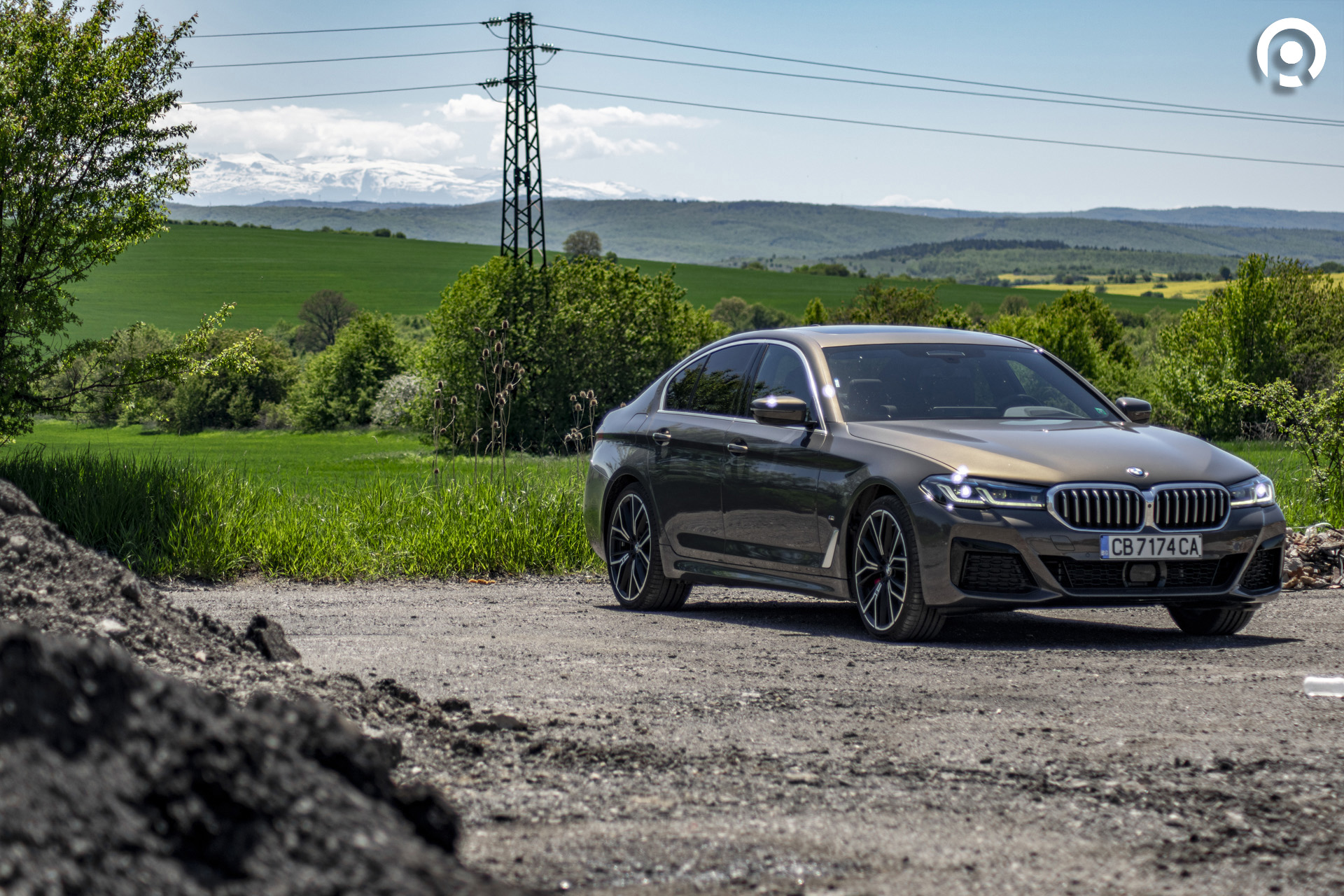
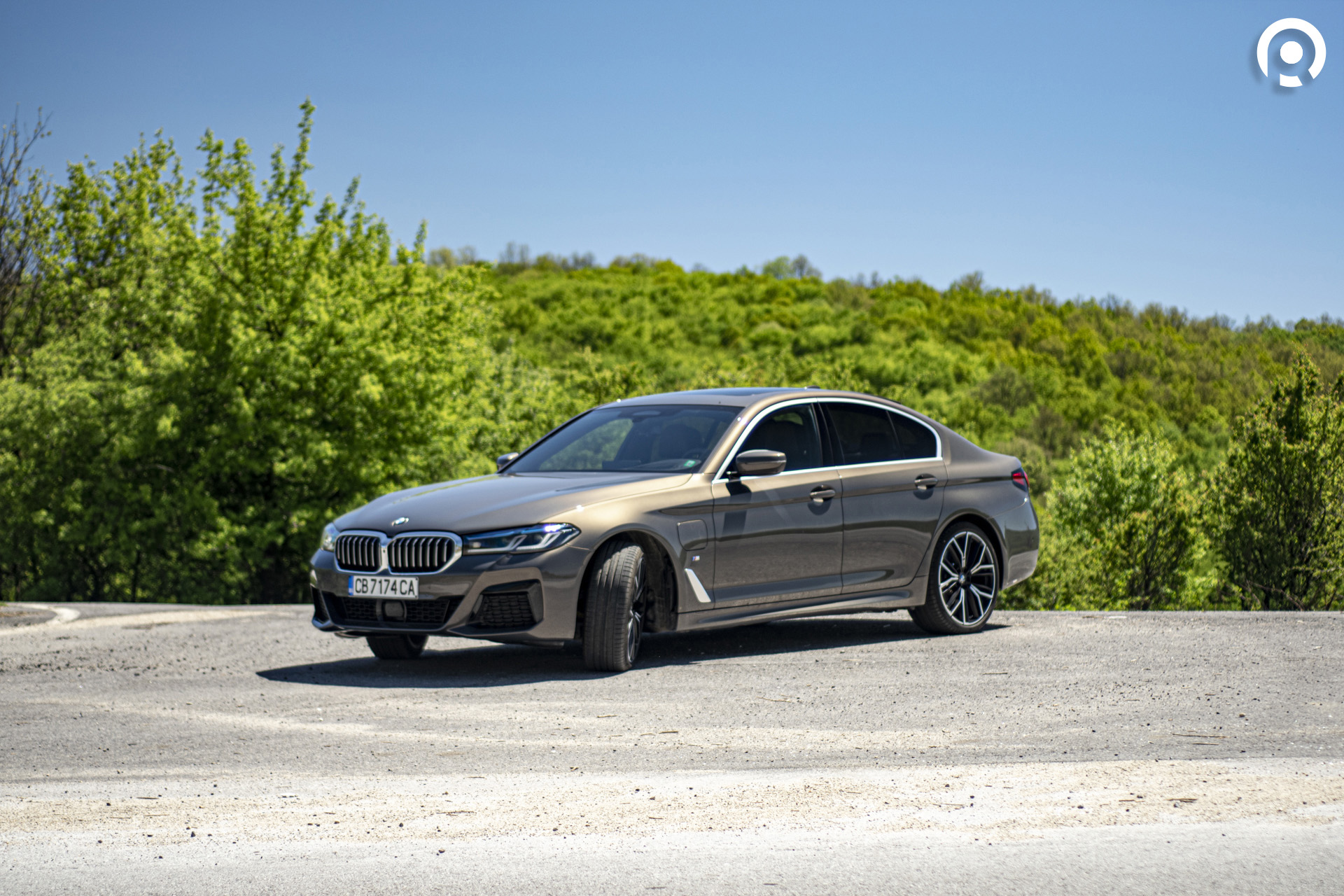
What we see here is the facelifted version of the G30 generation, introduced in 2020. The updates affect the front and rear bumpers, lighting elements, and the kidney grille. In my opinion, these changes bring a slightly bolder presence and a bit more character, although the car remains discreet — as it should.
The kidney grille deserves special attention. Unlike some recent BMW designs, there are no oversized or controversial elements here. We don’t see the massive proportions of the X7 or 7 Series, nor the polarising vertical grille of the 4 Series and M models.
Instead, the grille appears visually more connected, which should add character to the front end. That said, in combination with the headlight design, it somewhat reminds me of the current Skoda Octavia — especially from a distance.

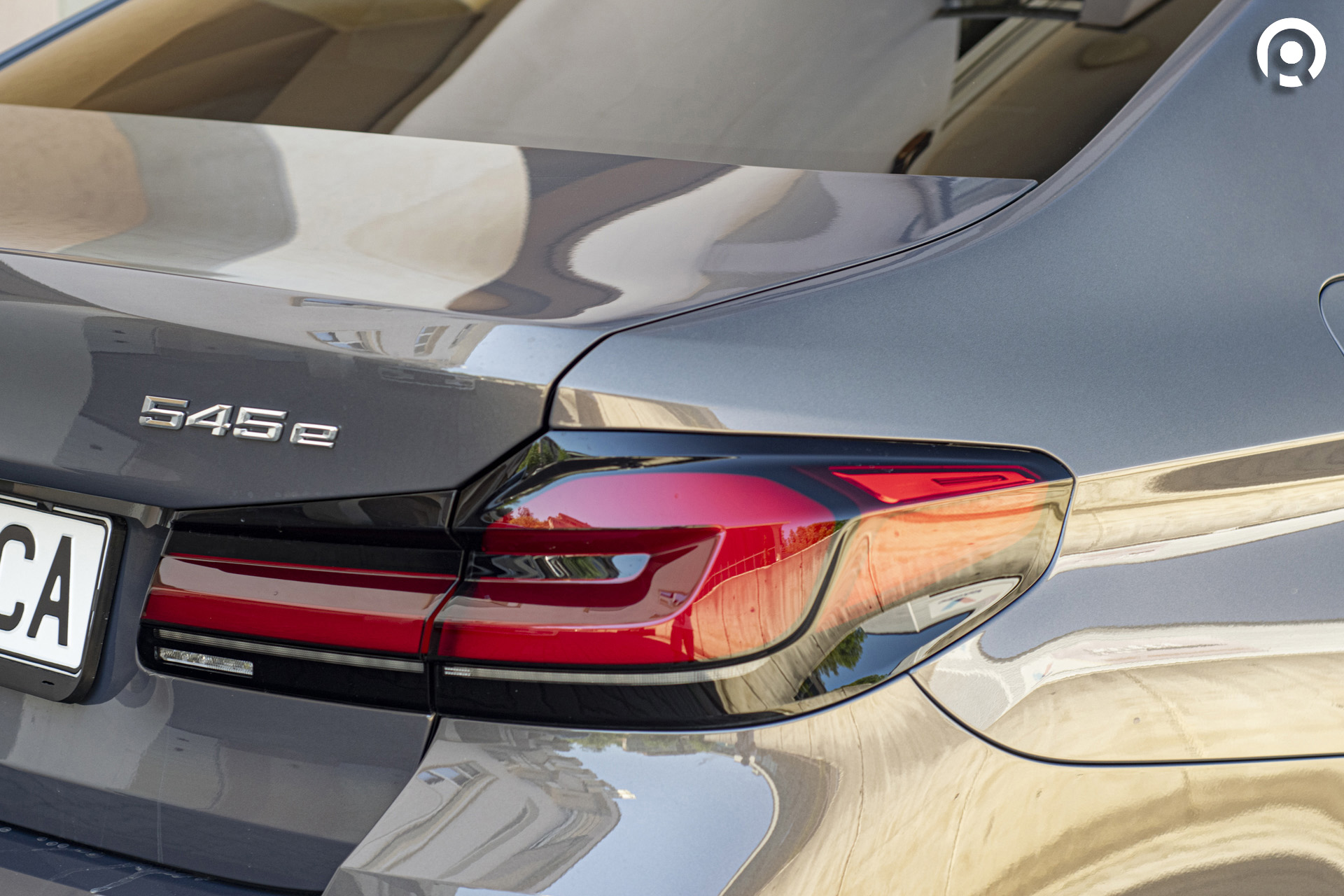
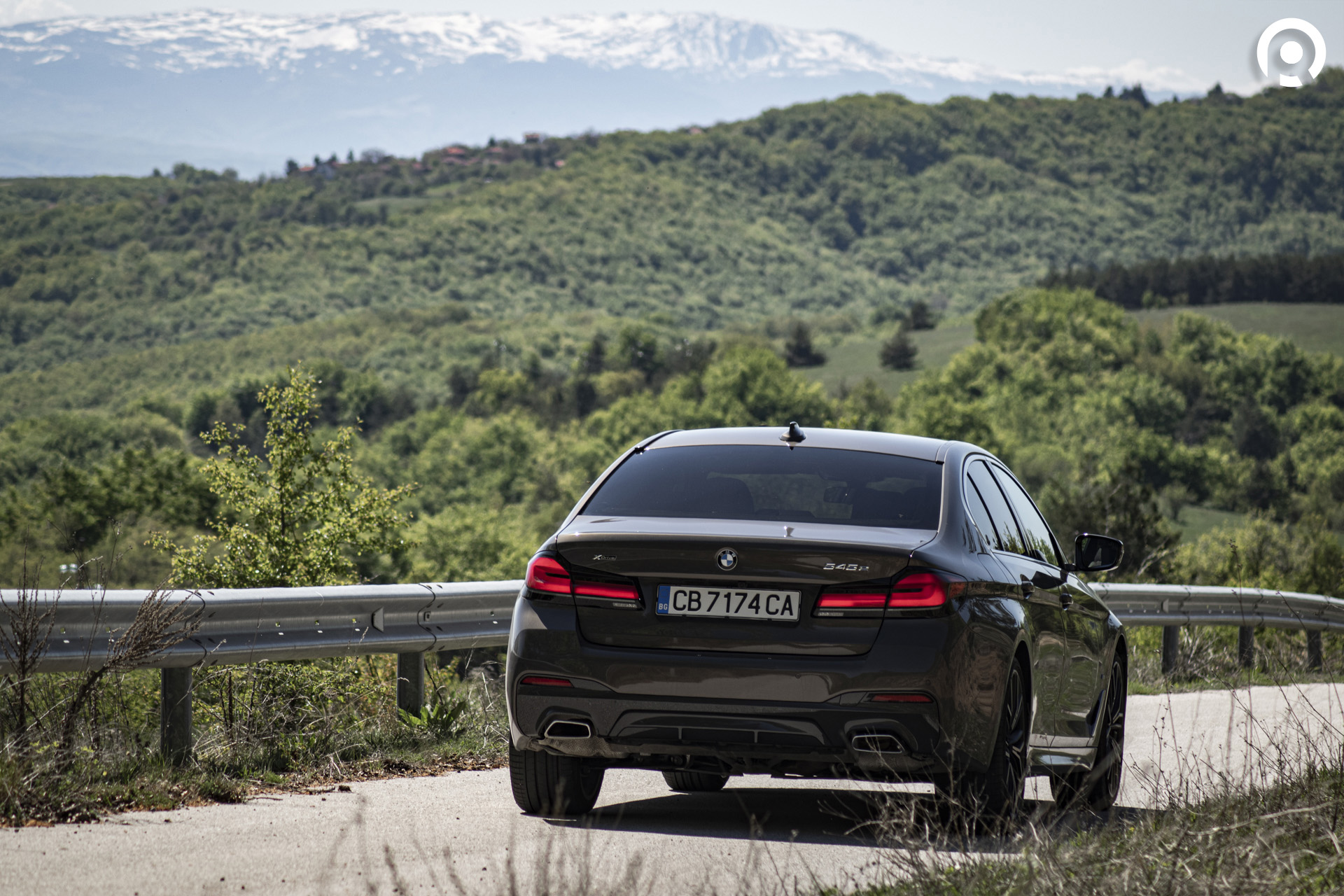
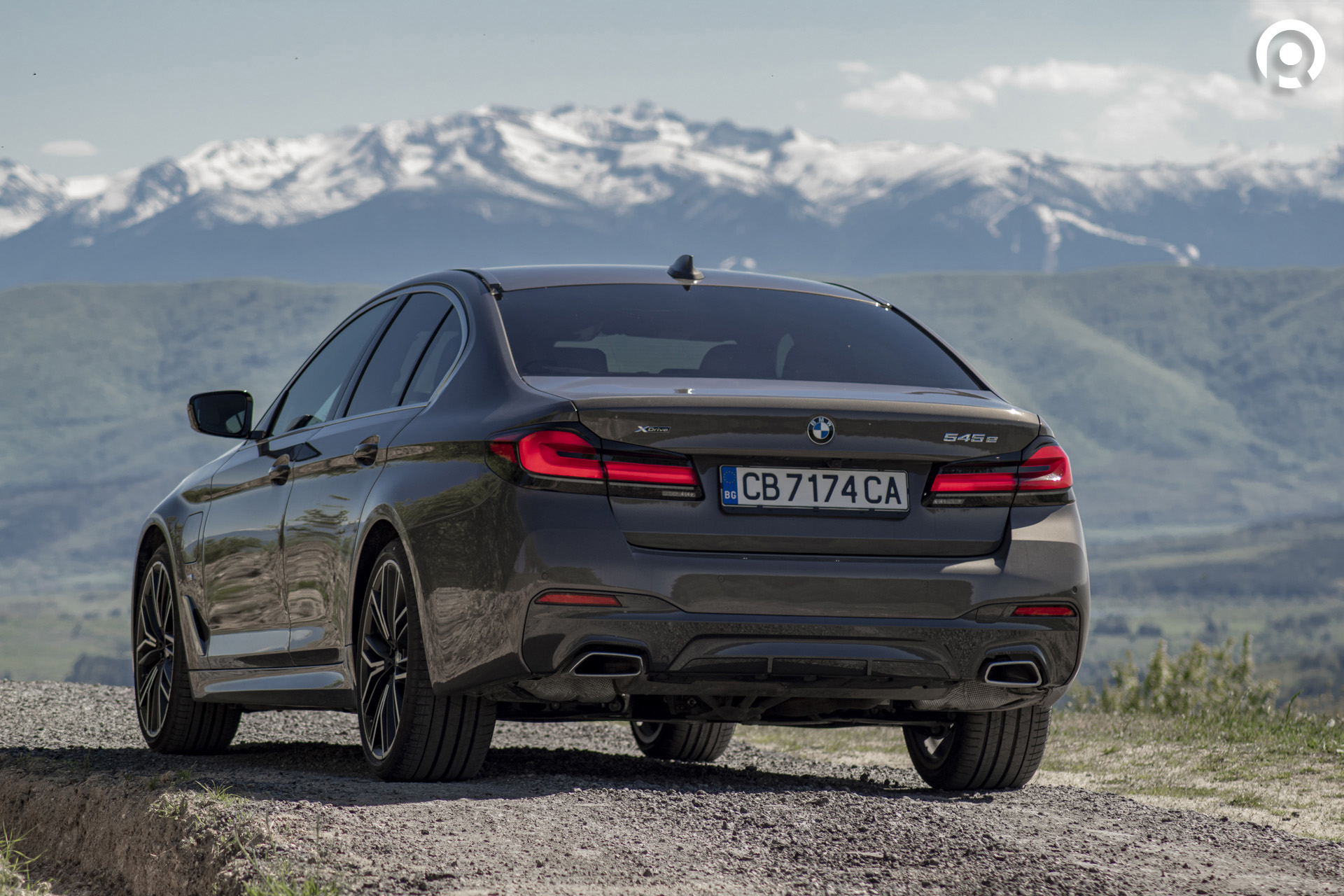
At the rear, the updates include redesigned taillights with darker accents and trapezoidal exhaust outlets, which are thankfully real – unlike the decorative imitations seen in many modern cars.

Despite the model’s typical discretion, our test car is configured to stand out. The M Sport package adds more aggressive bumpers and sport brakes with red calipers. The 20-inch two-tone wheels are far from subtle, and the overall look is completed by the Alvite Grey paint, which reveals different tones depending on the lighting.
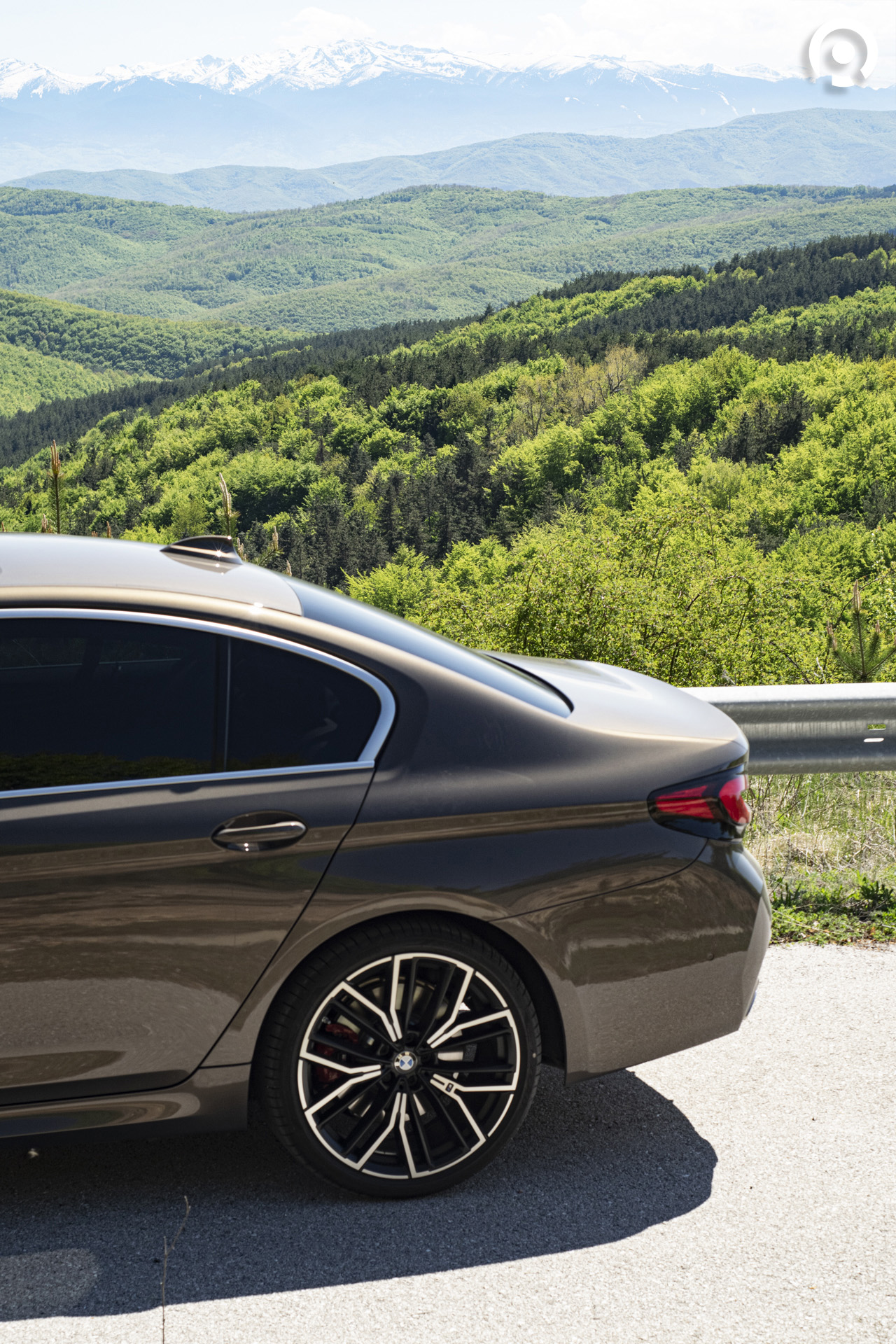
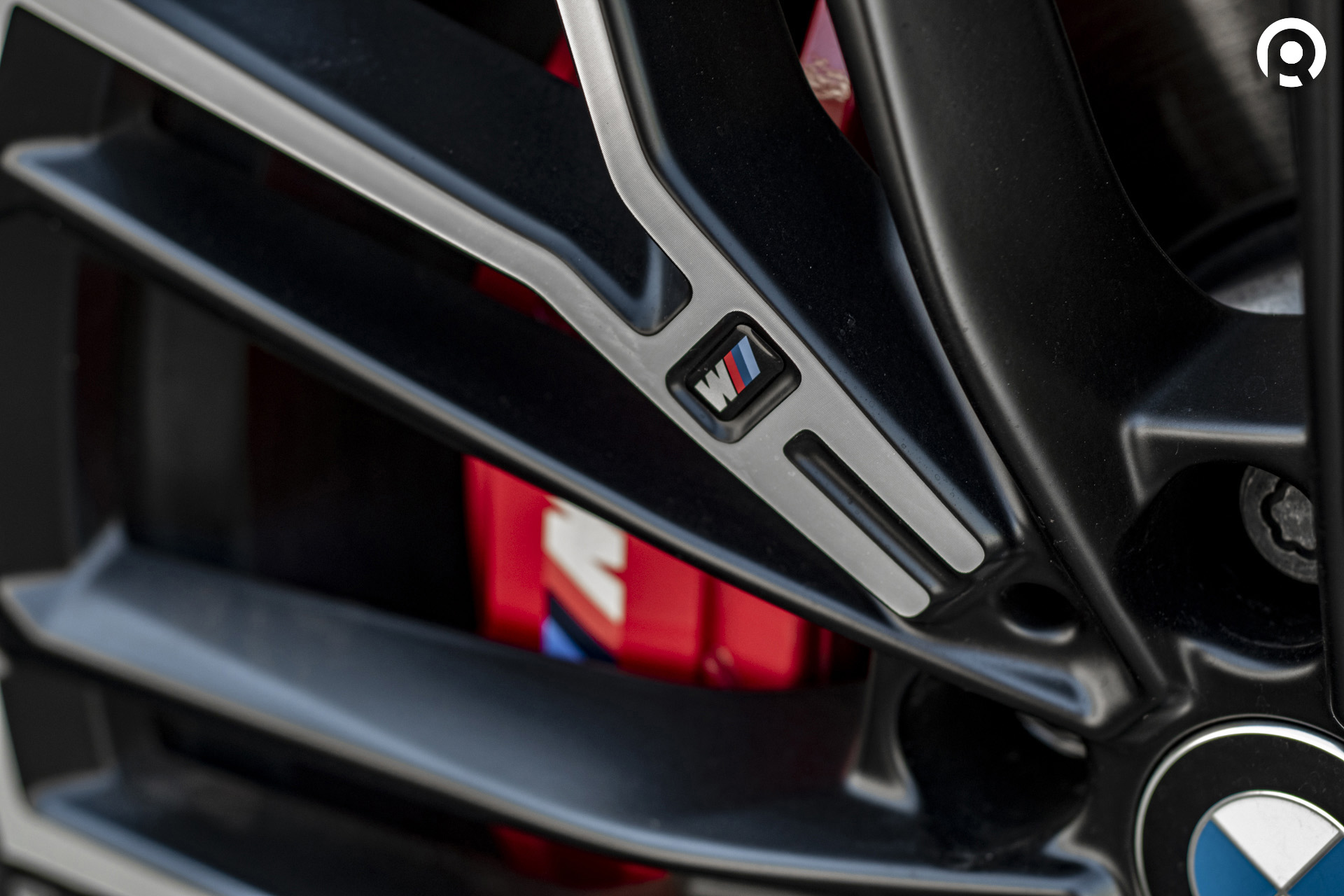
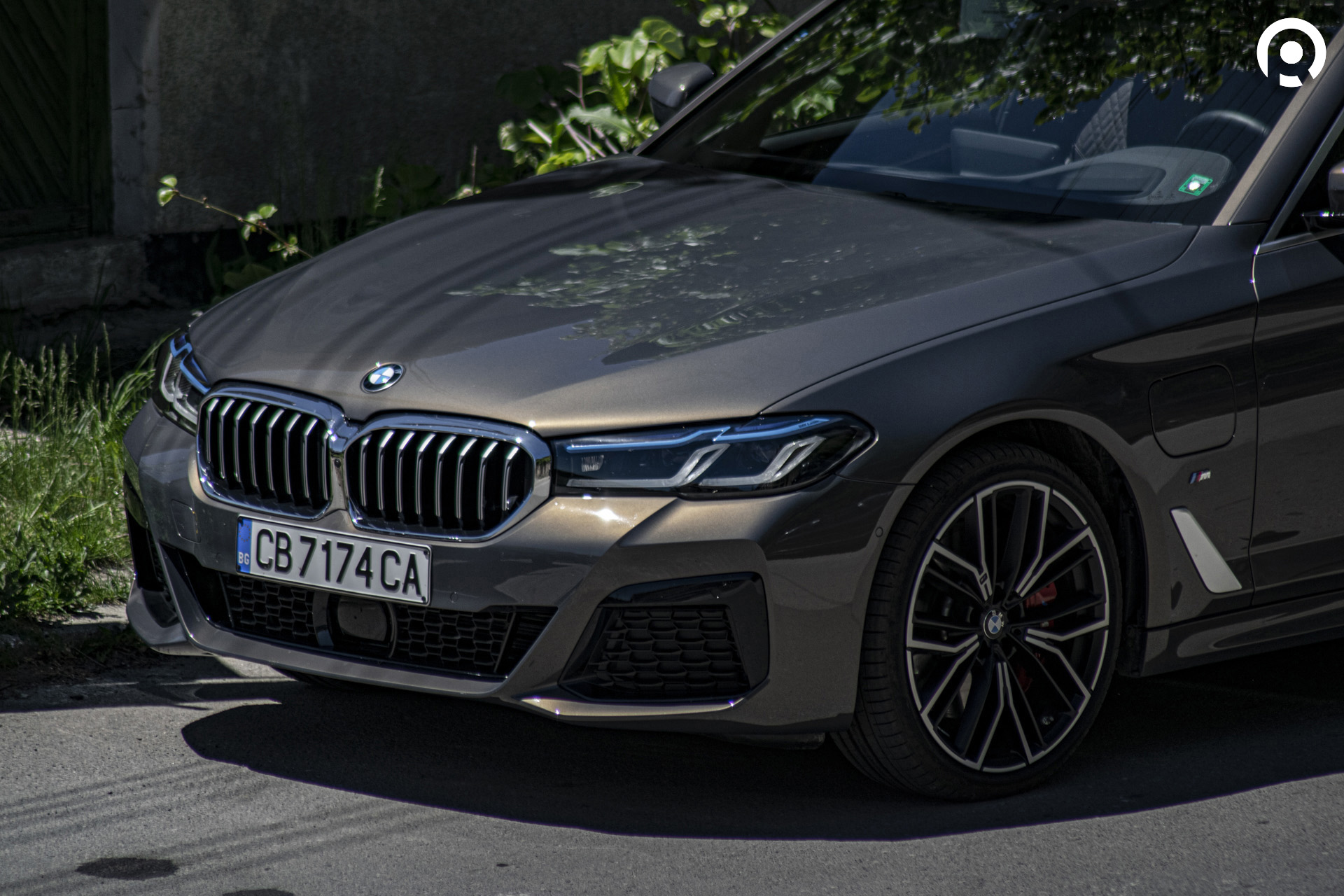
In this configuration, the 5 Series looks fantastic and arguably shows the model at its best, although even in a more restrained setup, it remains appropriately elegant.
Interior

The interior of the 5 Series follows the familiar BMW philosophy, a layout that can be found across almost the entire lineup, from the 1 Series to the 8 Series.
It’s a pragmatic design, free from unnecessary experimentation, focused on usability and broad appeal.
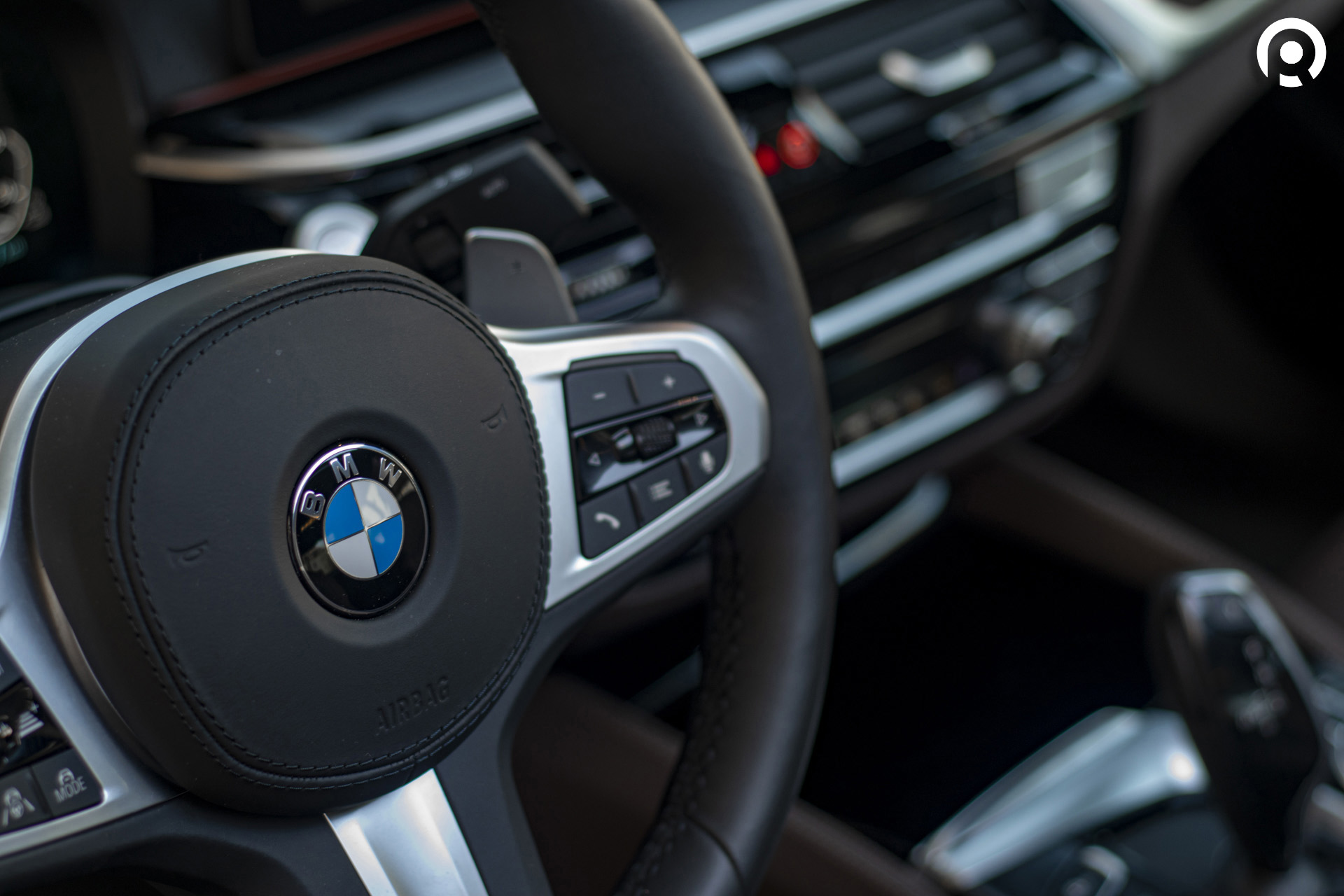
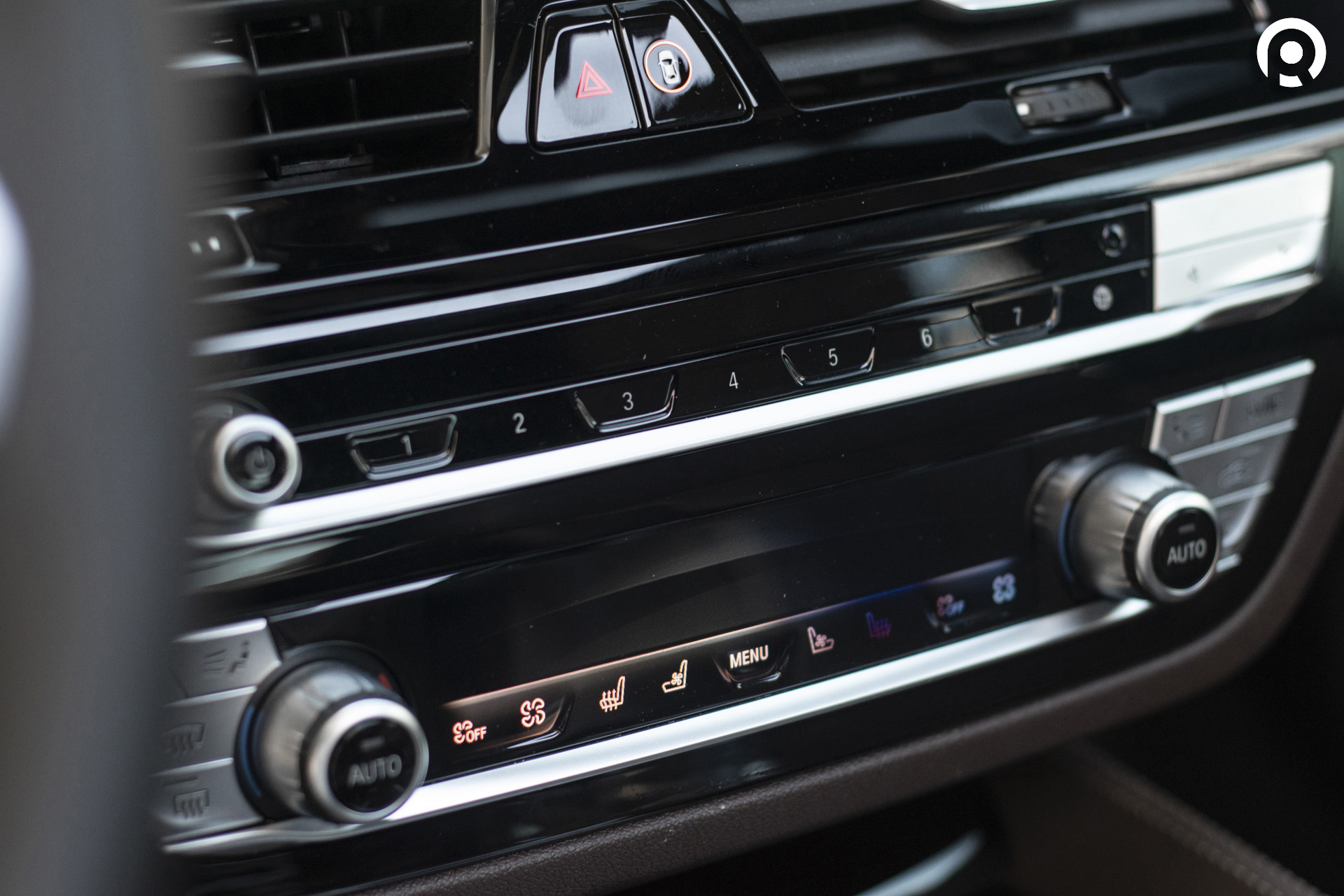
Quality is exactly where it should be for a car in this segment. Materials and build are excellent throughout, going well beyond what could be considered standard.
Let’s start with something small but impactful — the galvanised controls (around €200). Despite the relatively modest price, they noticeably enhance the perceived quality of the interior, affecting window switches, mirror controls, and many of the buttons on the centre console.
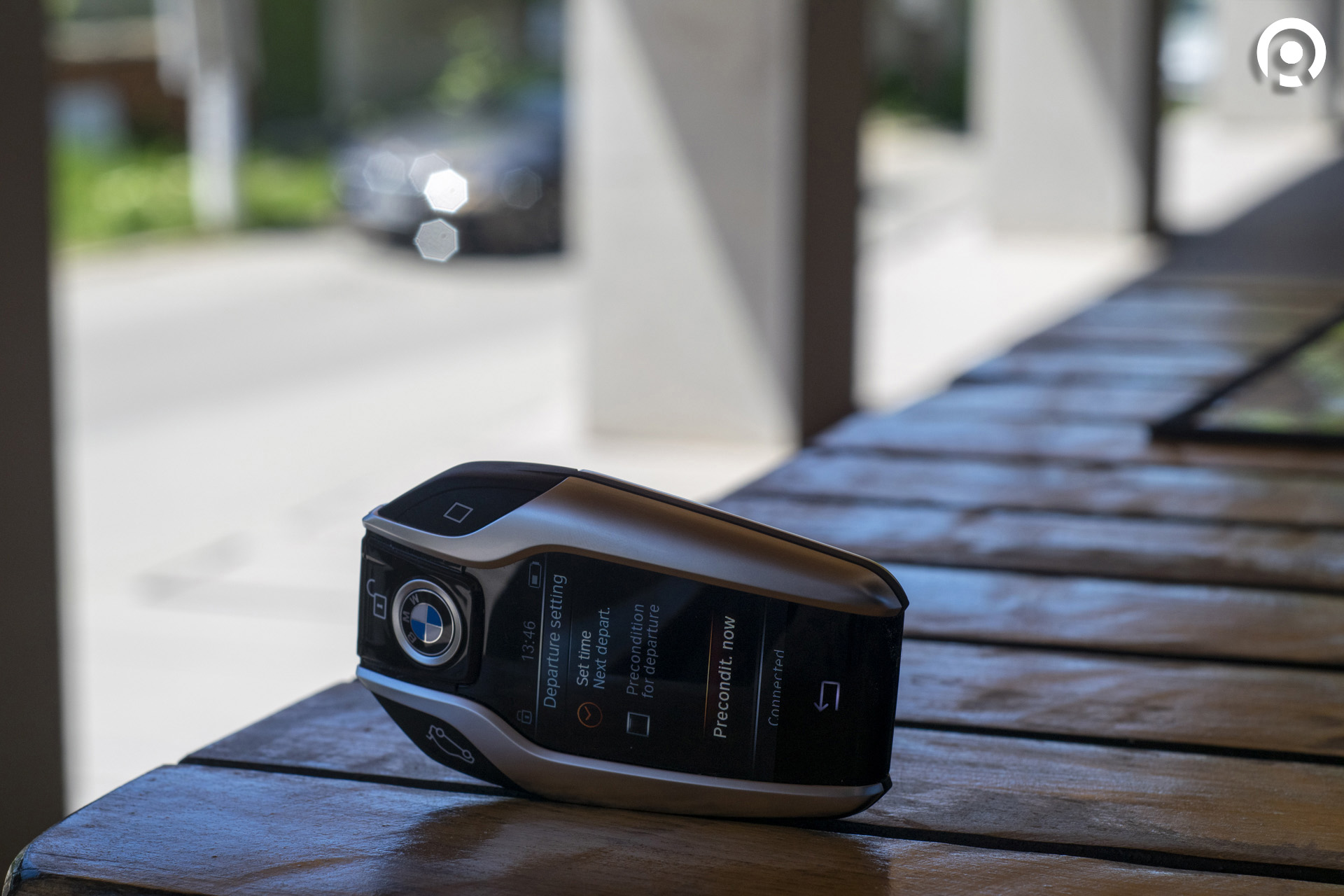

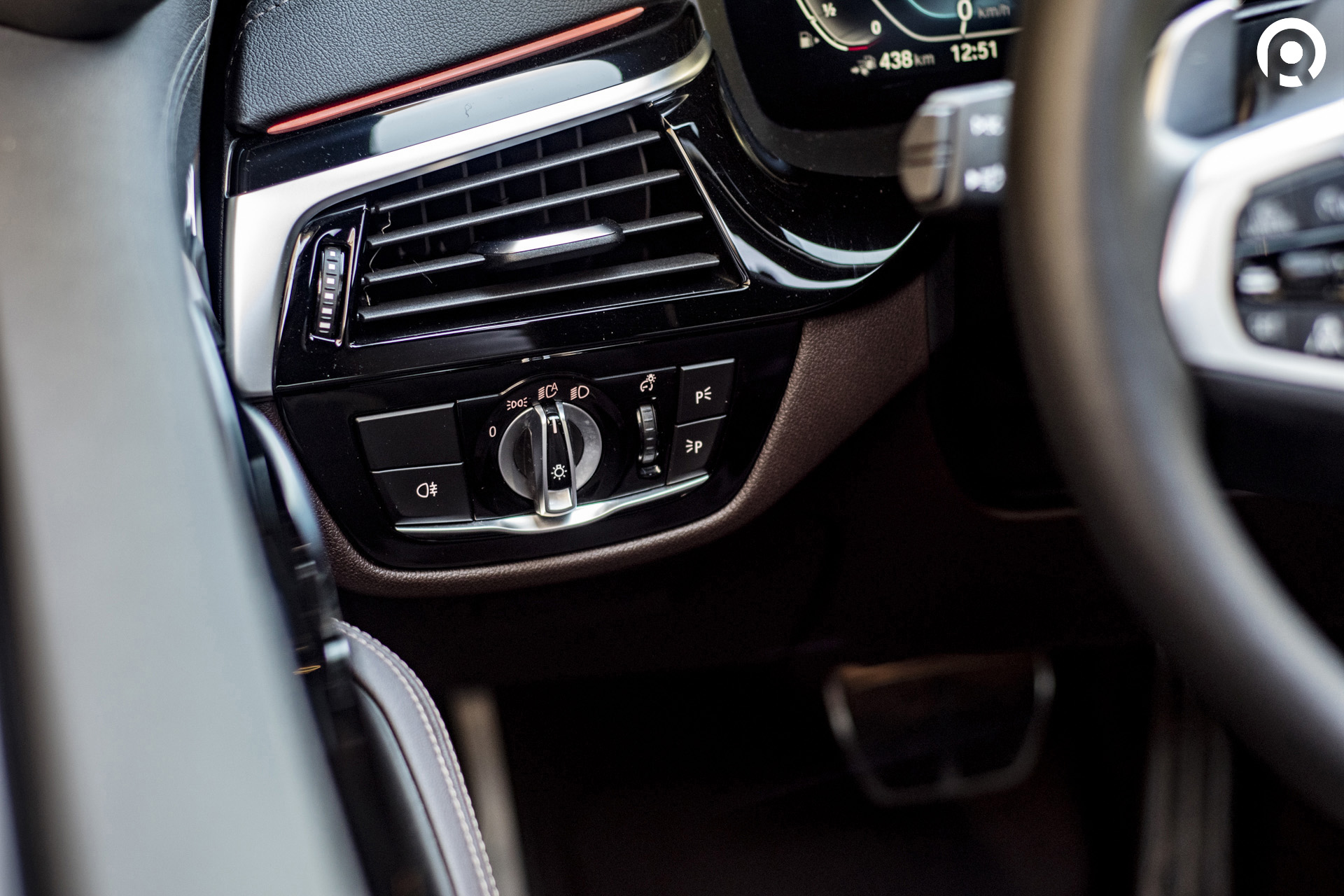
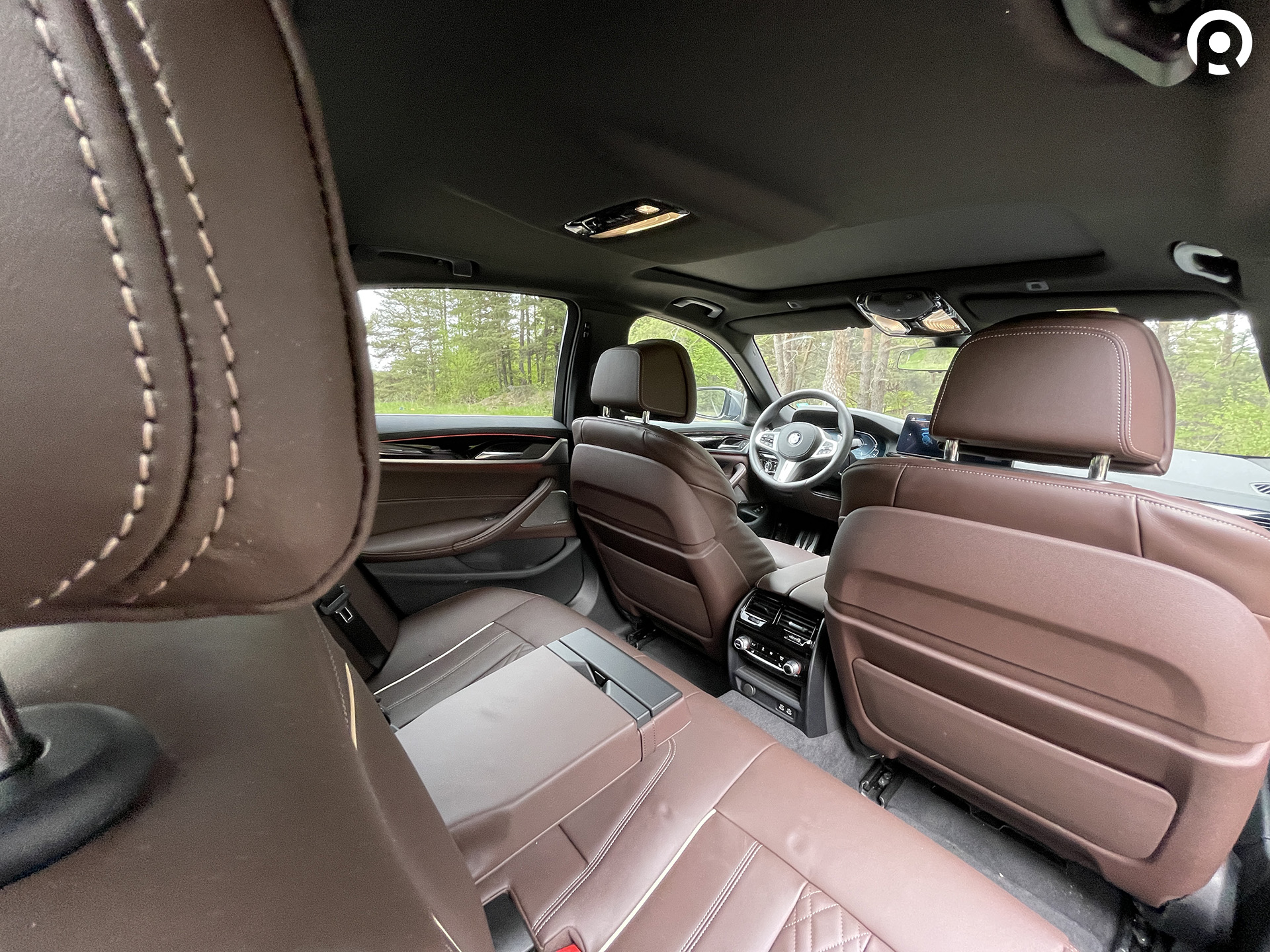
The real highlight, however, is the BMW Individual Merino leather interior in Tartufo. This is the finest leather BMW offers, extending across the dashboard and door panels. The option comes at a price of just over €5,000, but in reality, it requires additional options such as ventilated comfort seats, bringing the total cost increase closer to €9,500. Still, for those seeking the best BMW can offer, it’s worth it.

The comfort seats themselves are excellent, offering extensive adjustment options, including backrest width. They are ideal for long journeys, especially with ventilation and massage functions. However, enthusiastic drivers may prefer the sport seats, as lateral support here is more limited.
Storage space in the front is somewhat average, with relatively narrow door pockets, although the central storage compartment is quite spacious.
In the rear, the level of luxury is comparable to the front. Materials and build quality remain high, and there is optional multi-zone climate control, along with a central armrest and cup holders. Visibility is also good, thanks to the large windows.
Where the 5 Series doesn’t excel is space. It’s not cramped, but the seating position is slightly low, and space under the front seats is somewhat limited. Knee and headroom are sufficient, but overall, competitors — particularly SUVs — may feel more spacious.
This applies to the boot as well. In the 545e, it offers 410 litres — 120 litres less than non-hybrid versions, due to the higher floor required for the battery. The rear seats can still be folded, which helps practicality.
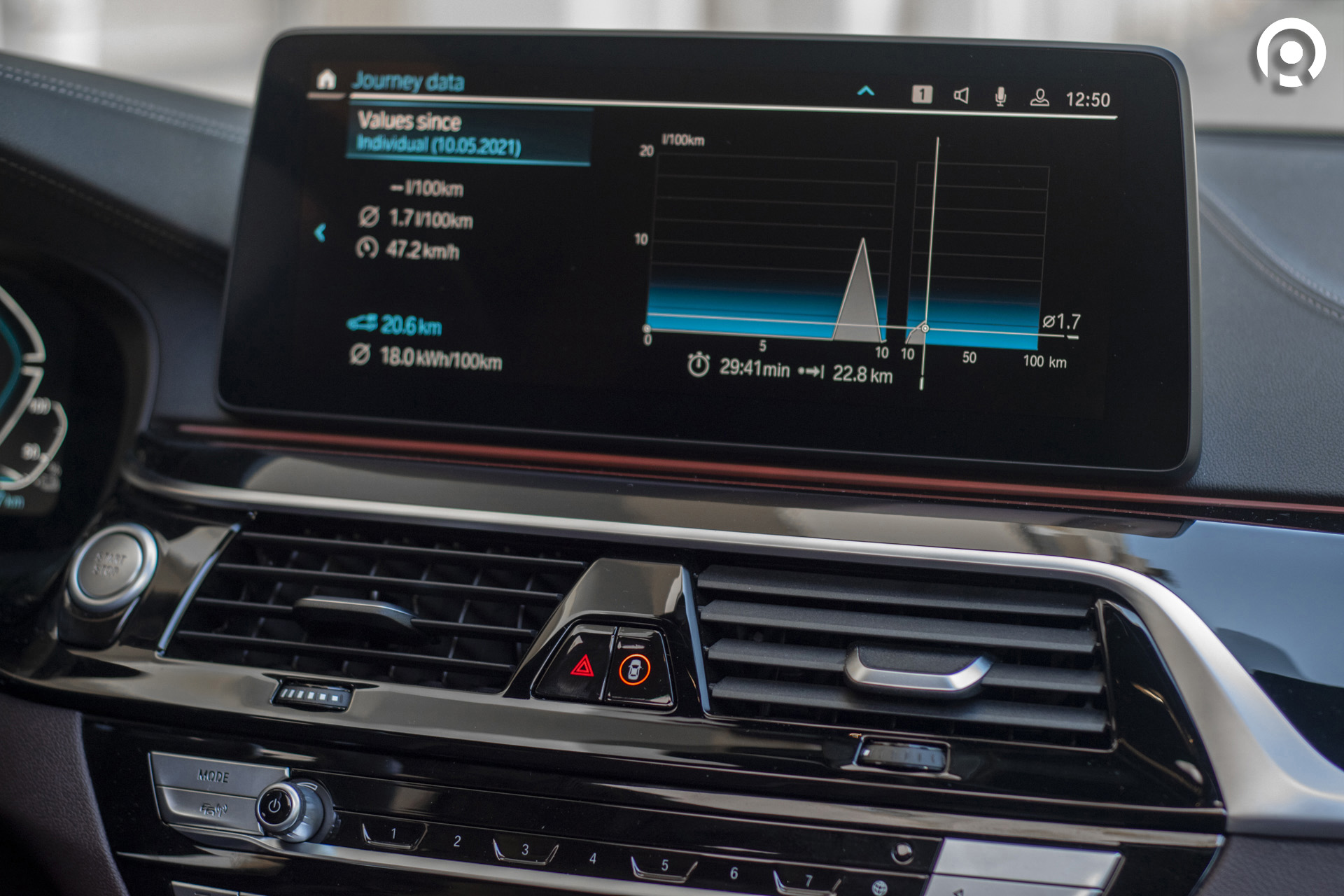
Finally, the infotainment system. After the facelift, the screen has grown to 10.25 inches arguably unnecessary, but in line with current trends.
The system itself remains one of the best on the market. It’s fast, intuitive, and crucially, still features the rotary controller — yes, even in 2021, physical controls are still present. Personally, I use a combination of both the controller and the touchscreen.
Gesture control is also available, allowing you to adjust volume or accept calls with hand movements. While occasionally useful, it feels more like a novelty than a necessity and at around €300, it’s an option I would skip.
On the road

BMW offers the 5 Series with a wide range of powertrains from a 150 hp four-cylinder diesel to inline six-cylinder petrol and diesel engines, all the way up to the 635 hp V8 in the M5 CS.
Today, however, we focus on what is arguably the most relevant drivetrain in today’s European context – the plug-in hybrid 545e.
It features two charging points – one for petrol and one for electricity. The system includes a 400-volt lithium-ion battery with a capacity of 11.15 kWh. Total system output is 394 hp, with 286 hp coming from the inline six-cylinder engine and the rest from the electric motor.
The electric motor is positioned between the engine and the transmission, replacing the torque converter and simplifying the gearbox layout. It also benefits from the ratios of the eight-speed automatic transmission.
The car features all-wheel drive, accelerates from 0 to 100 km/h in 4.6 seconds, and has an official fuel consumption of 1.6–2.2 l/100 km. Naturally, this is not realistic on long journeys once the battery is depleted.
In pure electric mode, consumption ranges between 17.2 and 19.2 kWh/100 km, with an electric range of 47–57 km. In practical terms, if you drive up to around 40 km daily in the city and charge the car overnight, your energy cost per 100 km can be extremely low.
Starting the car is a silent affair — as expected, it defaults to electric mode. Driving around the city in hybrid mode, which prioritises battery usage, it quickly became clear that the 545e feels quite different from other BMWs I’ve driven.
Comfort is the main priority here. Despite the large wheels, the car handles urban imperfections with ease, even displaying a slight floating sensation over bumps. In fact, the driving experience strongly remind something from Stuttgart.
The drivetrain operation is smooth and natural, with seamless transitions between electric and combustion power. The inline six-cylinder engine, as always, is inherently well-balanced.
I’m generally sceptical of driver assistance systems, especially in Bulgaria, where infrastructure and road markings often create confusion. However, the Driving Assistant Professional package — particularly its Stop&Go function — impressed me.
In heavy traffic, the system handled stop-and-go driving competently, maintaining proper distance and trajectory even in areas with poor markings. It genuinely reduces stress in traffic.
At the end of the day, with an empty battery, I recorded 5.5 l/100 km plus 18.0 kWh/100 km. Charging from a standard 230V outlet takes around six hours — although current limitations may extend that time depending on your setup.
The next day, fully charged, I headed out of the city. At 90–100 km/h, the car continues to impress with its comfort. The drivetrain remains refined, aerodynamic noise is minimal, and road noise becomes the dominant factor — something that could be improved slightly.
When it comes to overtaking, however, there is a noticeable delay in response when you press the accelerator hard. I’m not entirely sure why, but it’s not ideal. Once it gets going, though, the performance is impressive — especially from a standstill, where acceleration can feel genuinely rapid.
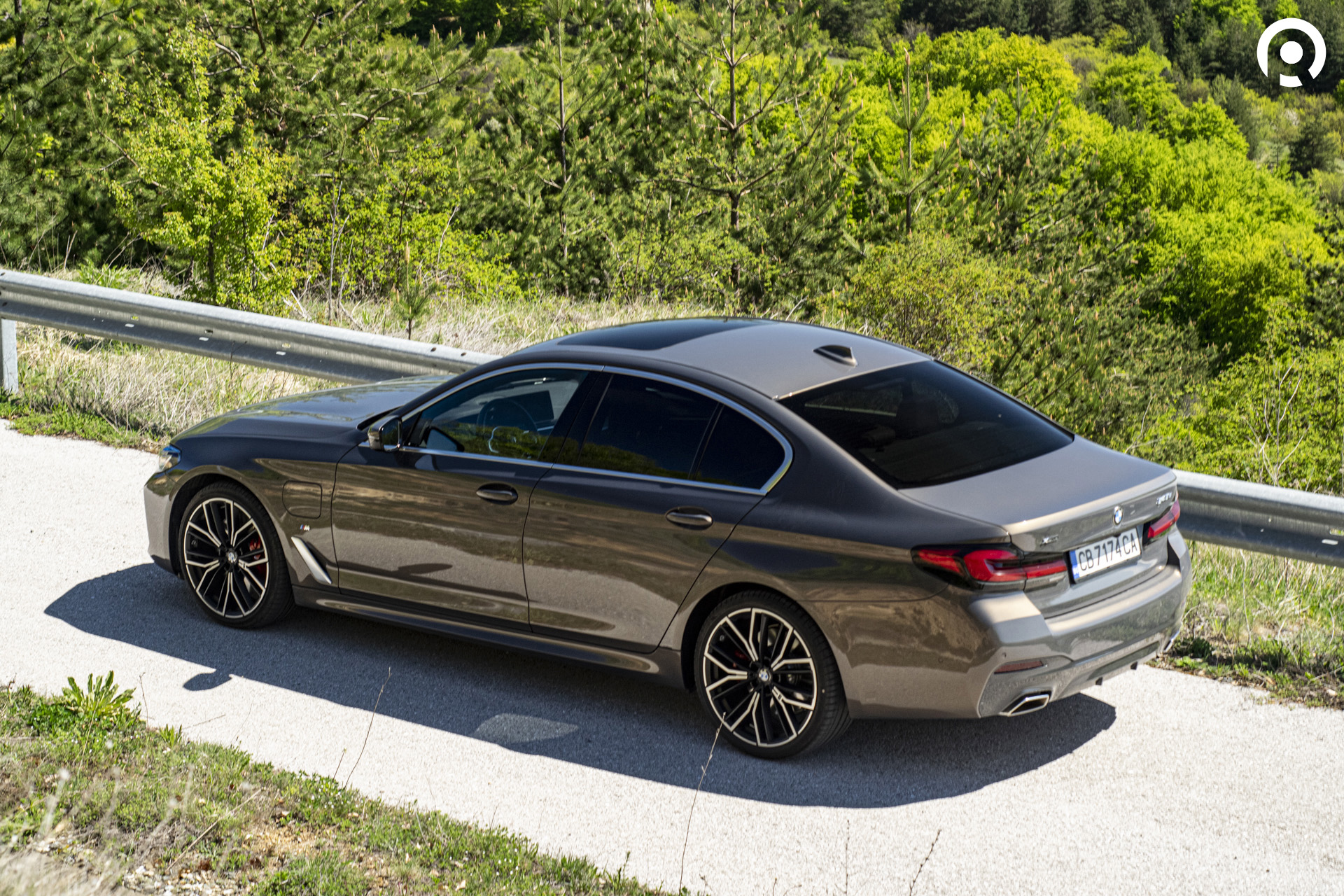
In Sport mode, the car remains relatively comfort-oriented. It is stable in corners, but the additional weight — around 200 kg more than a 540i xDrive — is noticeable. Combined with less communicative steering, the result is a capable but not particularly engaging driving experience.
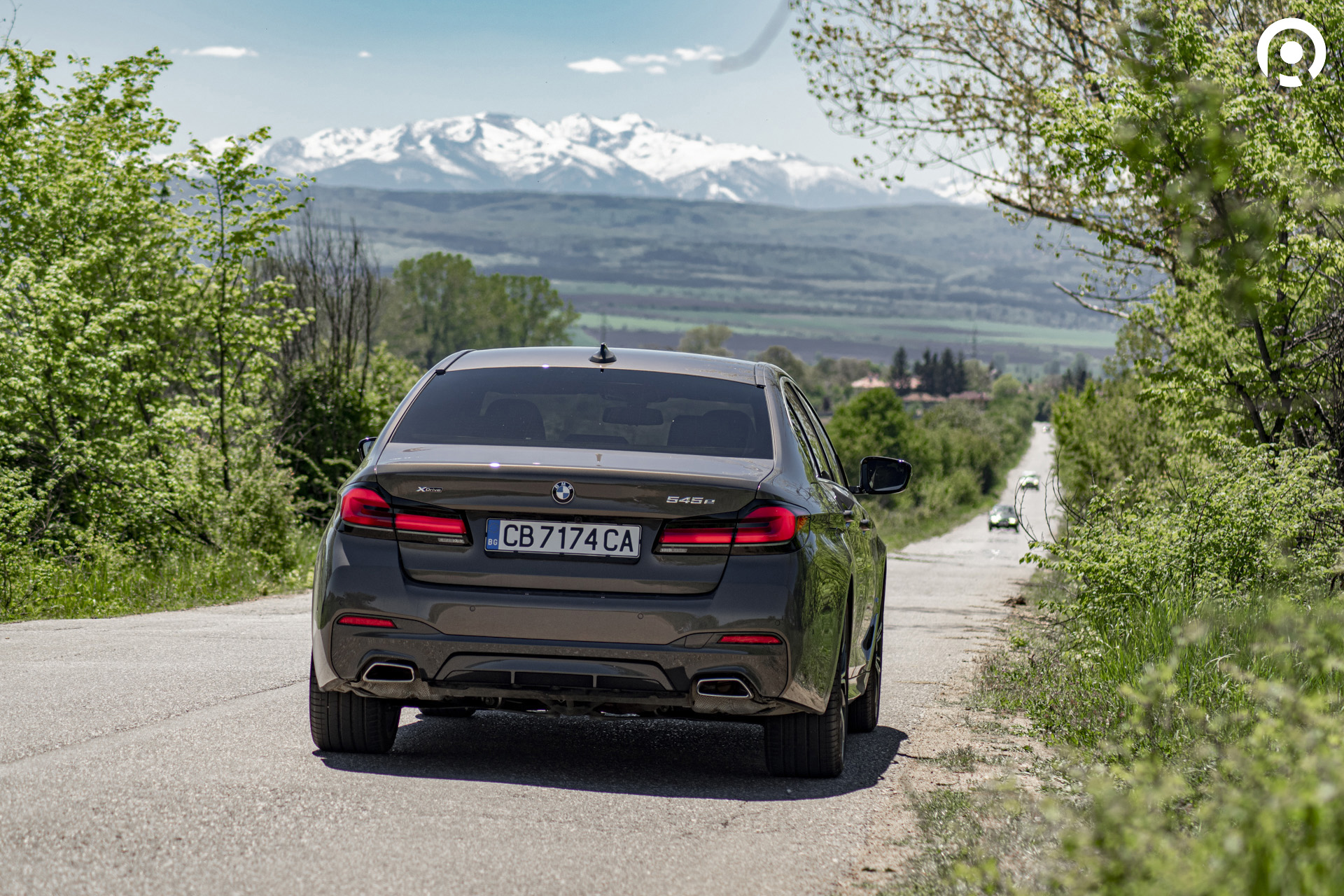
Fuel consumption varies greatly depending on usage and battery charge. Over my mixed driving — including city traffic, dynamic sections, and motorway cruising — I recorded 7.7 l/100 km and 7.3 kWh/100 km.
Conclusion
The BMW 5 Series remains a highly competent business sedan, impressing with its quality, comfort, and refinement. Everything works as expected, delivering a consistently positive experience.
Where it loses points is practicality — particularly rear-seat space and the reduced boot capacity in hybrid versions.
The 545e is best suited for buyers who prioritise comfort and have high expectations from their car. Many people choose SUVs for comfort, but that’s often a misconception. If comfort is your goal, a 5 Series is a better choice than an X5 — and this applies across most sedan vs SUV comparisons.
This plug-in hybrid combines the best of both worlds — offering zero-emission city driving alongside the emotion and balance of a classic inline six-cylinder engine. It’s an appealing solution for those who drive regularly in urban environments and have access to charging.
In markets like ours, however, the choice may not be entirely rational due to the higher price. The 545e starts at approximately €71,700, compared to €65,600 for the petrol 540i and €68,500 for the diesel 540d. Without tax benefits or parking incentives, the financial argument becomes less convincing.
Still, for the right buyer, the 545e represents a fascinating blend of past and future.
Eng. Tsvetan Iliev