
I assume many of you are familiar with the origins of the Jeep brand. During the Second World War, the Americans needed a new military off-roader. The army invited more than 100 automotive manufacturers to participate in the tender for developing and supplying the vehicles, and the winner was Willys-Overland Motors with its MB model.

The Willys MB was also the first vehicle to unofficially carry the Jeep name. And perhaps you are now wondering why I’m bringing history into a review of the Renegade.
The reason is that the Willys MB was the first representative of the brand to set foot on Italian soil, while the Renegade is the first representative of the brand to be produced on Italian soil. But the parallels do not stop there – the smallest modern Jeep also tries to resemble its ancestor in terms of character and appearance (although in a far more restrained way compared to the Wrangler). That is exactly what leads to its more distinctive design, which is its main weapon against the numerous rivals in the subcompact urban SUV segment. In my opinion, this is also one of the qualities that gives the car the potential for a long life on the market, while ensuring it will still look distinctive even ten years from now.
Design
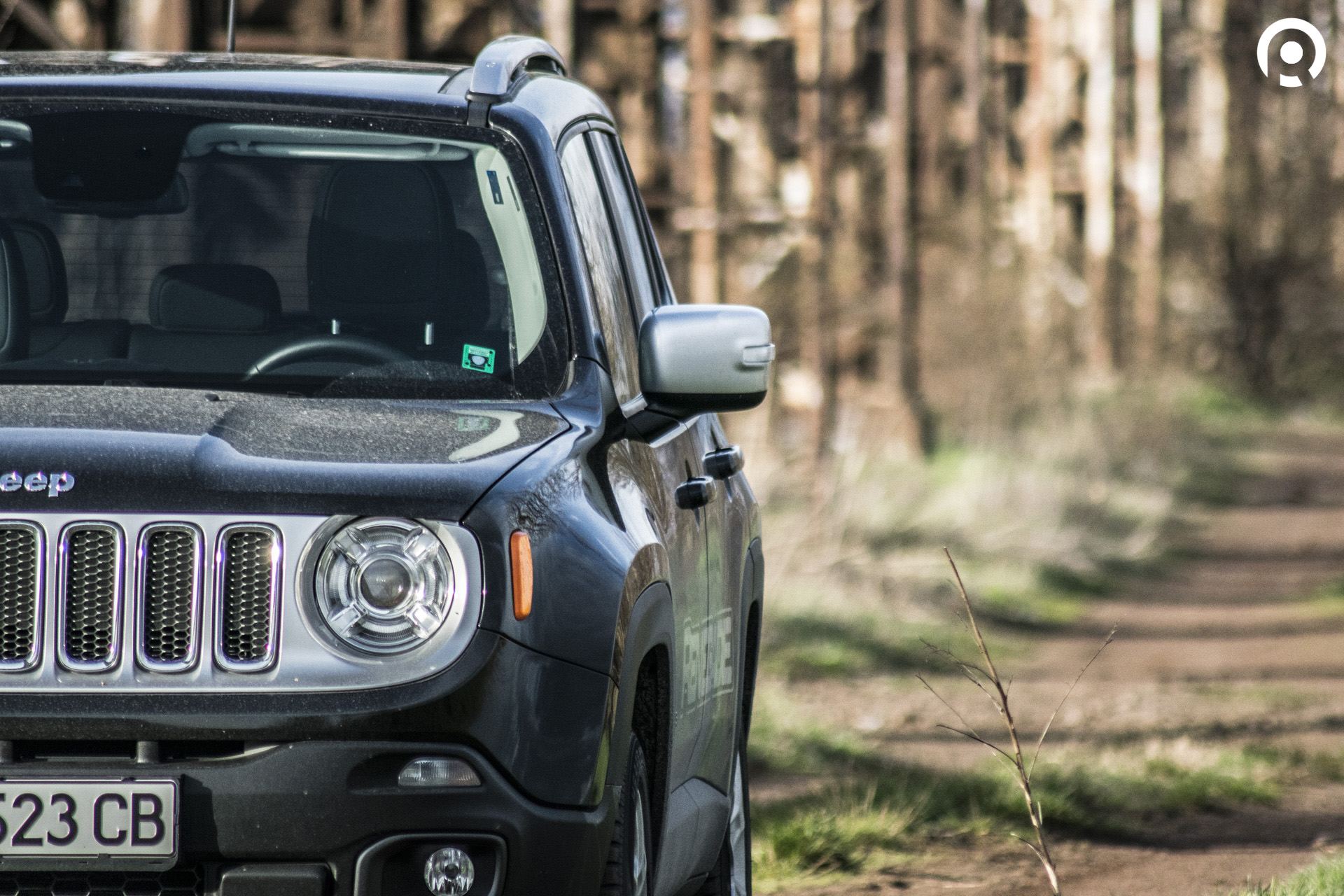
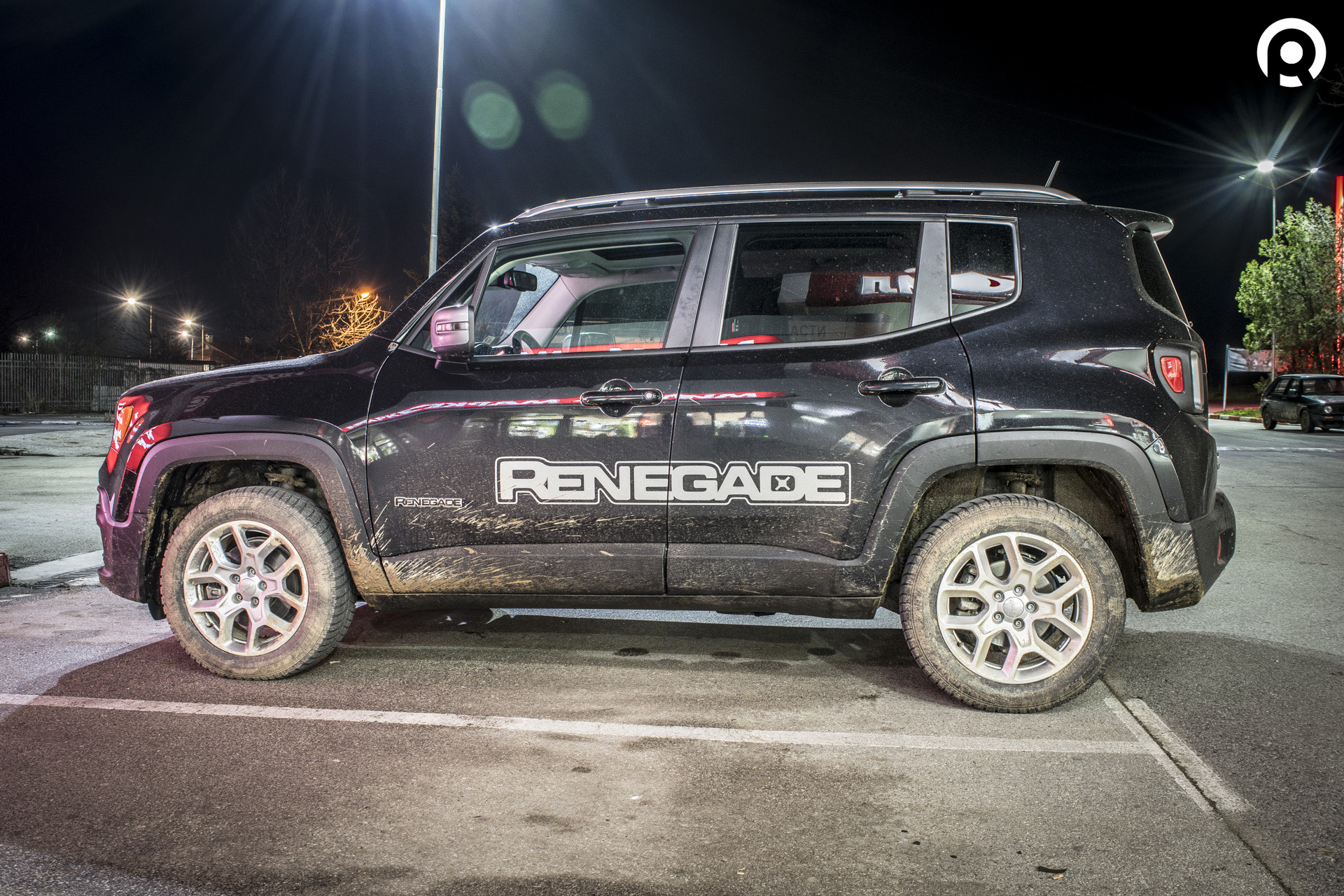
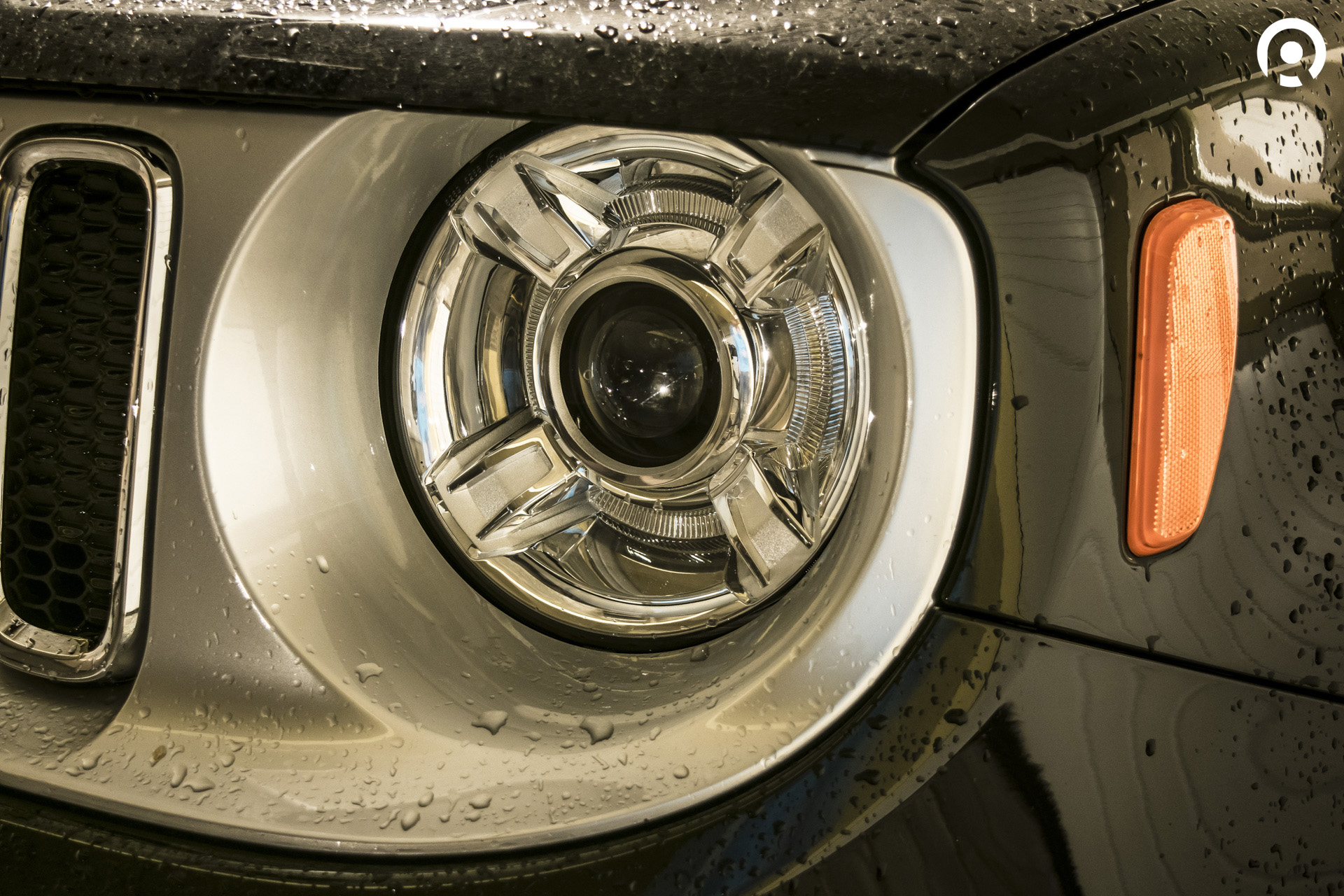
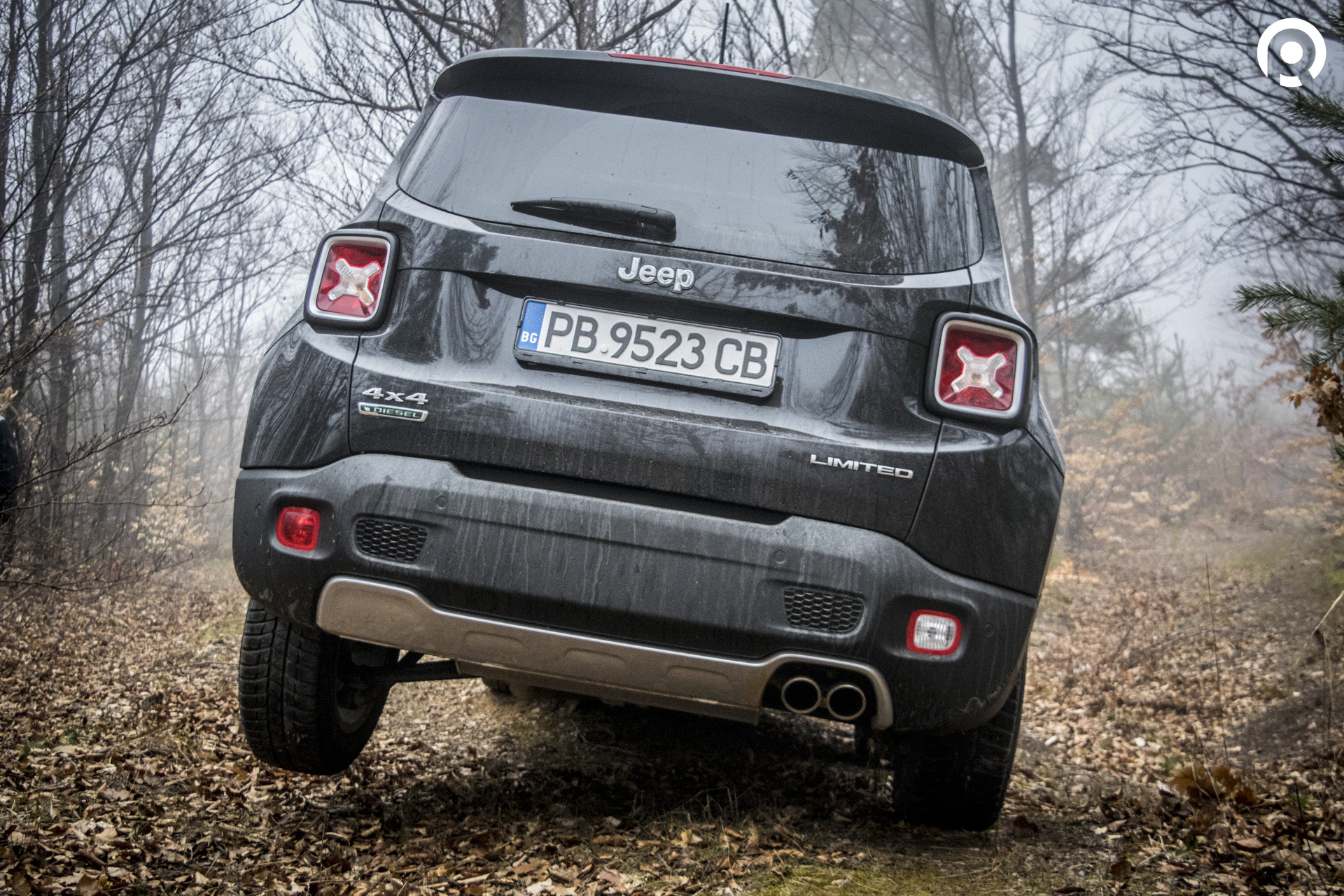
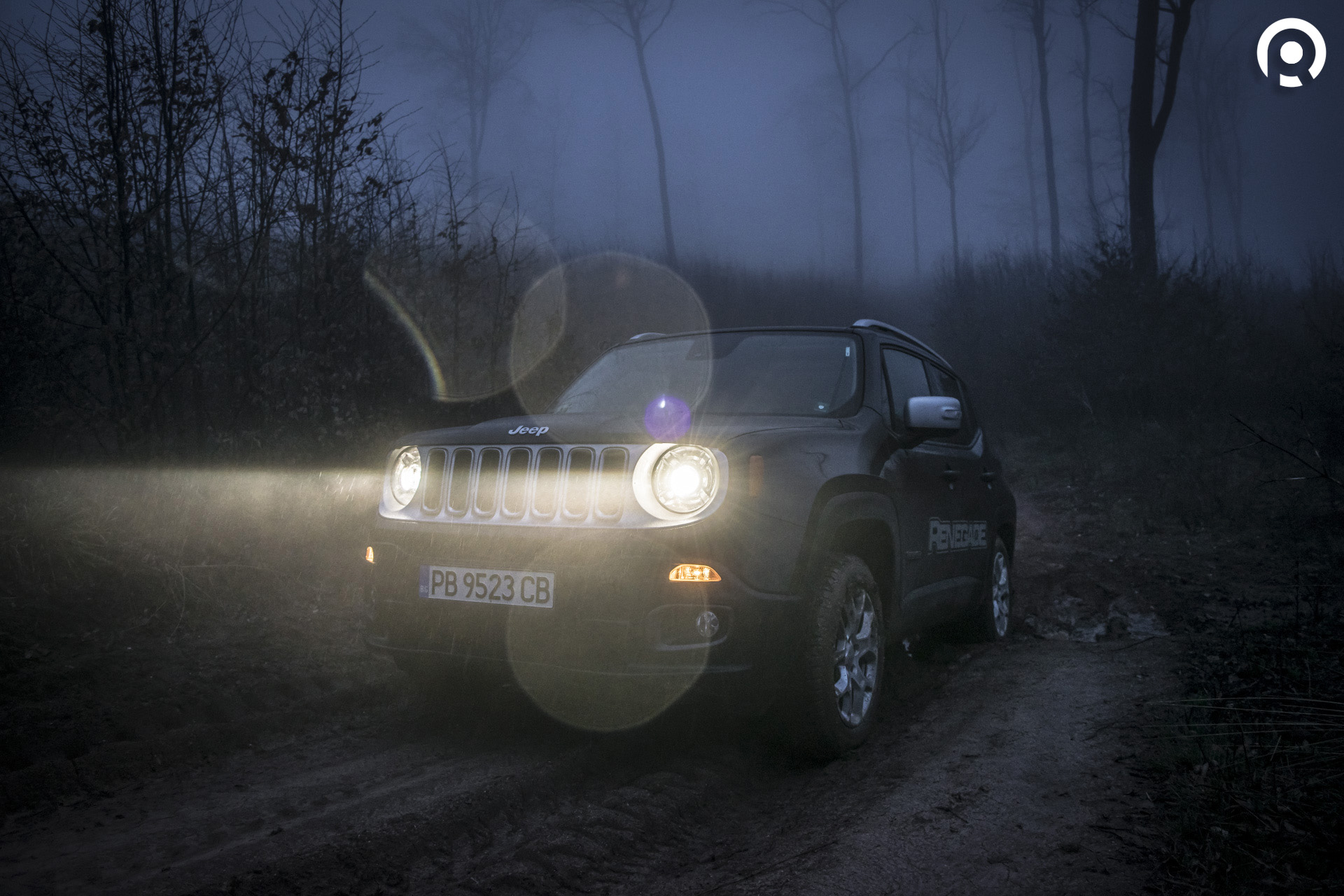
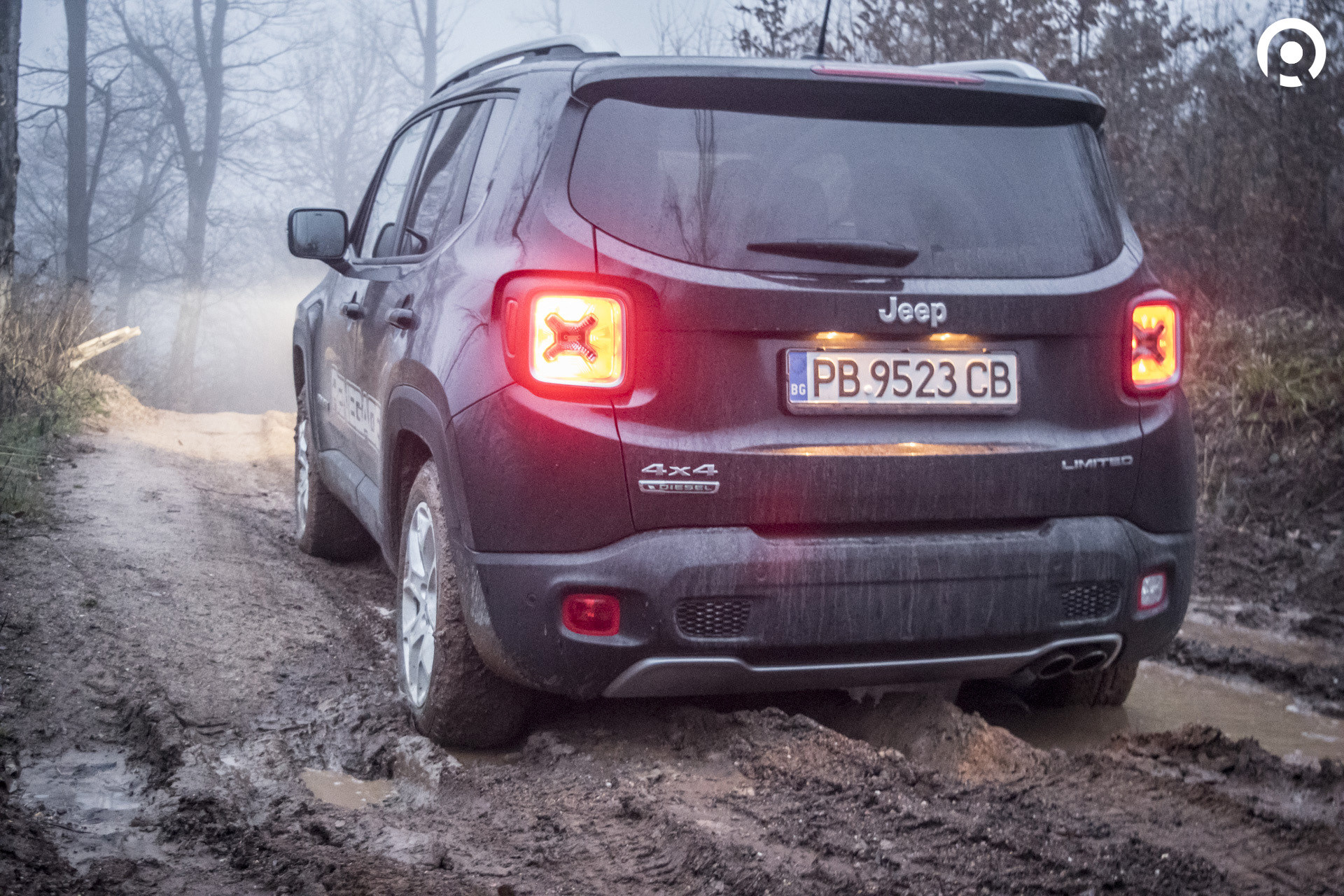
Visually, the Renegade stands out with its rugged silhouette, full of square shapes reminiscent of classic off-roaders from the past. At the same time, the car features a large number of retro-inspired details that add charm – the round headlights, the small triangular window in the front door, the square-shaped rear lights and the X-shaped graphics inside them.
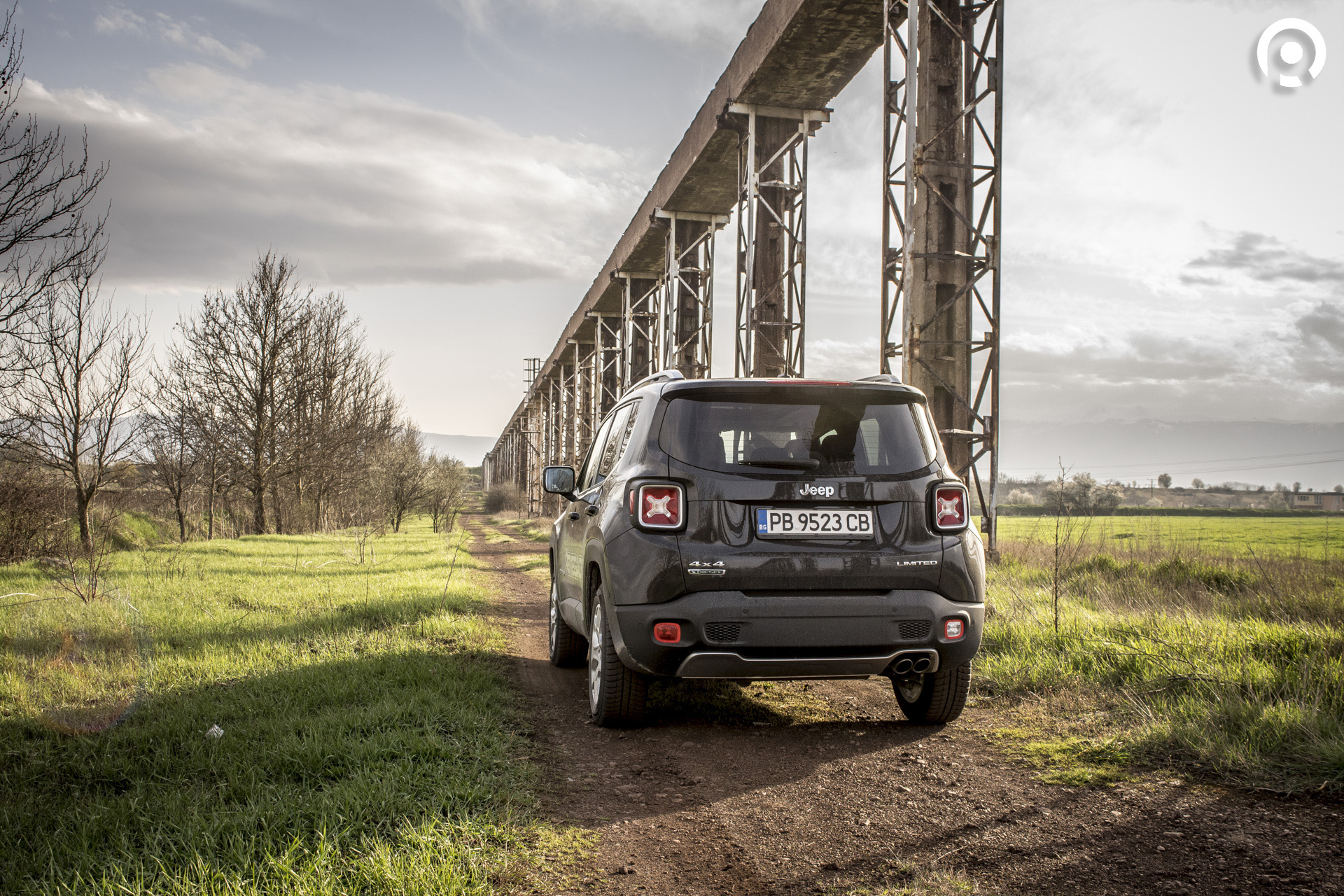
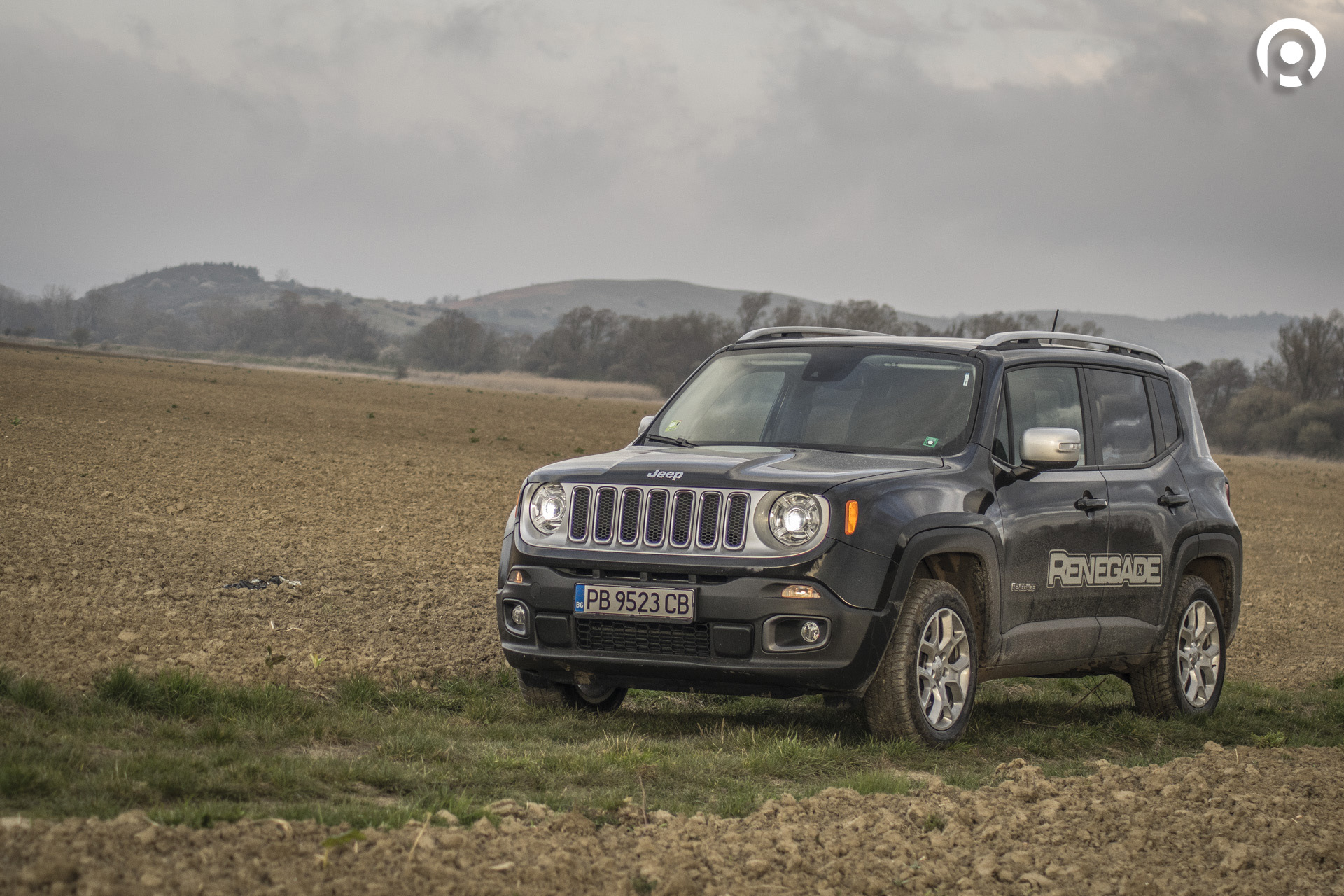
Overall, Jeep clearly aimed to appeal to younger buyers who want to appear fashionable – the sort of people who buy cars like the Nissan Juke, Fiat 500, MINI or the Volkswagen Beetle.
Personally, I like the design of the car, especially the front end, the upright windscreen and the wide wheel arches. The rear design, however, feels a little more rushed and somewhat lacks presence.
Interior
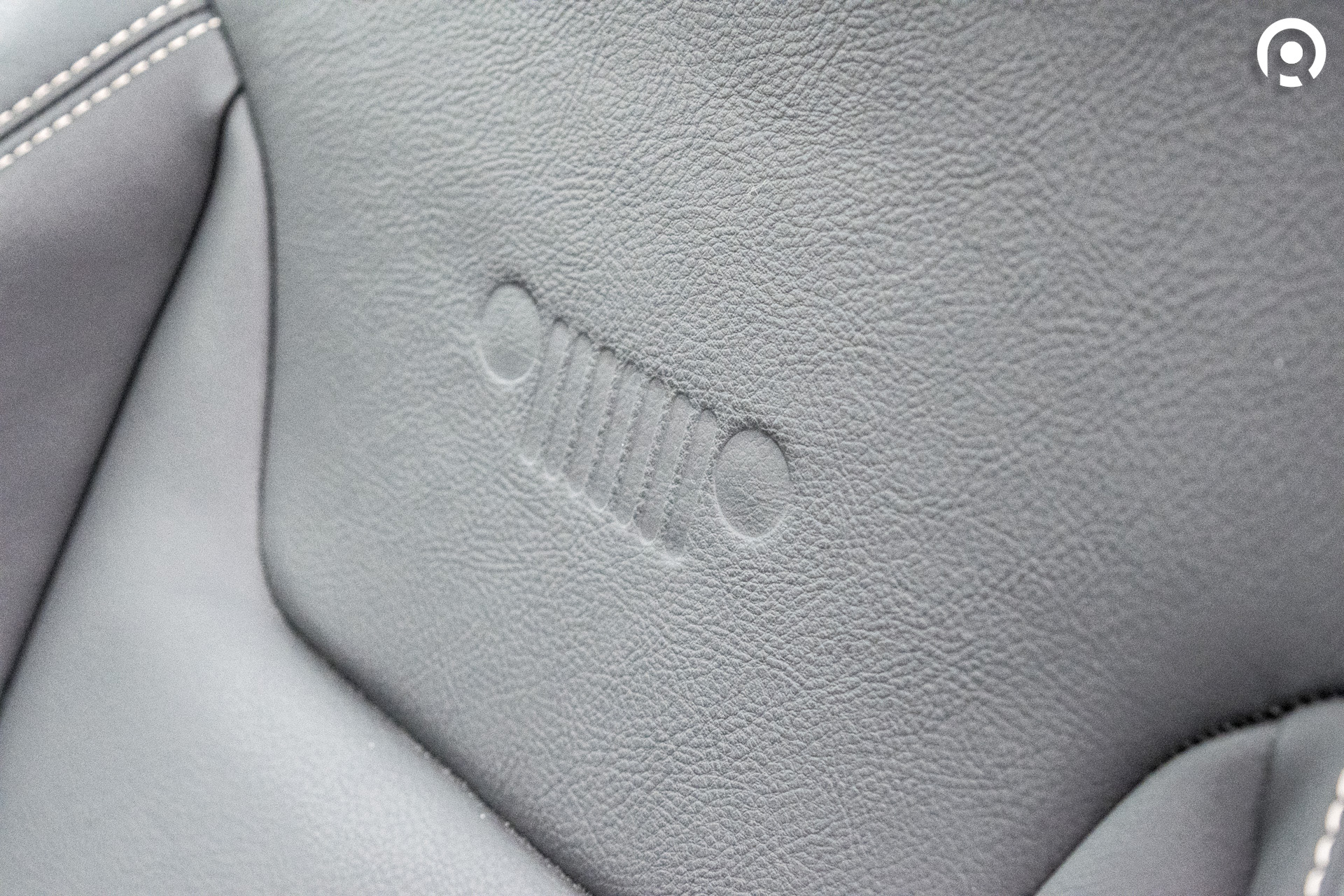
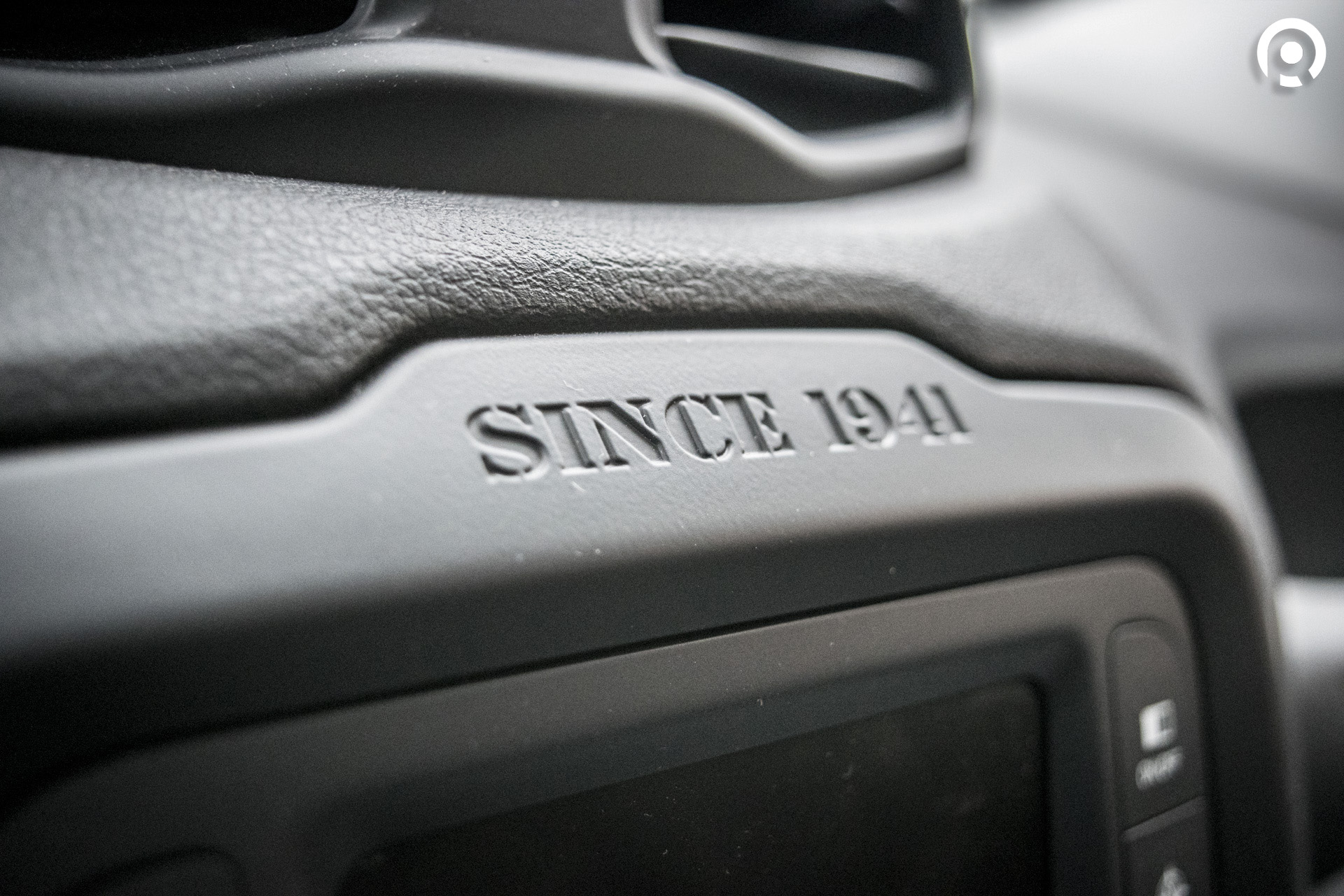
Inside, the story is similar – there are many unconventional, retro and slightly theatrical details, such as the “SINCE 1941” inscription “engraved” around the infotainment screen. The screen itself has rounded corners – exactly like your grandmother’s television from 1982. And to top it all off, the seats feature an embossed Willys face. Honestly, I quite like details and touches like these.
Beyond those elements, the Renegade’s cabin is exactly what you would expect from Jeep’s more affordable models – enough space, good ergonomics and a rather serious amount of hard plastic. Despite that, I cannot say I was disappointed by it, simply because it fits the Renegade’s character well, while the overall build quality is decent.
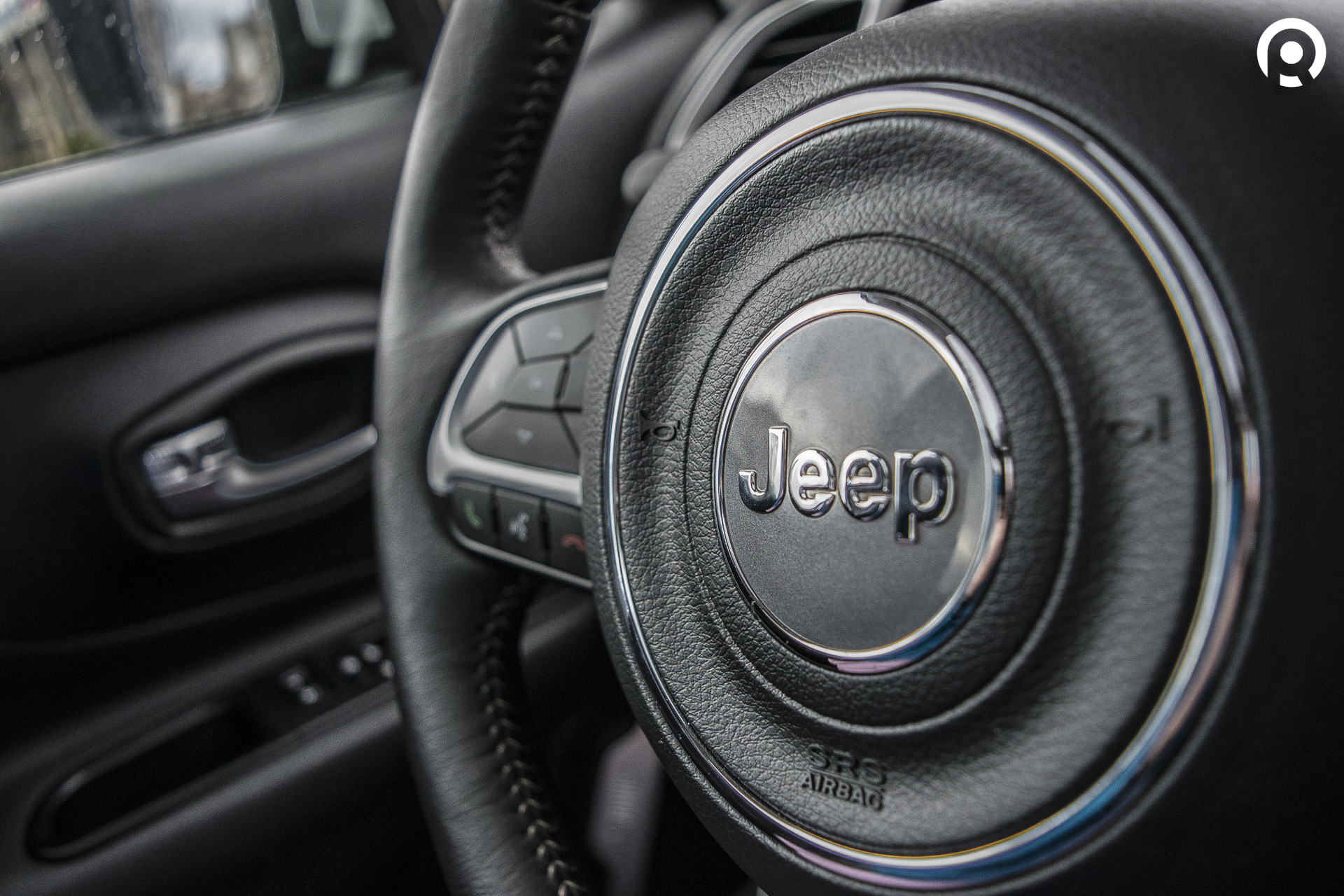
The exception is the steering wheel buttons, which irritated me slightly because they feel loose. Since these are among the most frequently used controls in the car, they should provide a better sense of quality. Another downside was the creaking of the panoramic roof mechanism over bumps, although this is a very common issue in cars with opening panoramic roofs – mainly because our roads are simply too uneven.
An interesting fact related to those steering wheel buttons is that there are exactly 20 of them – almost like in Formula One.
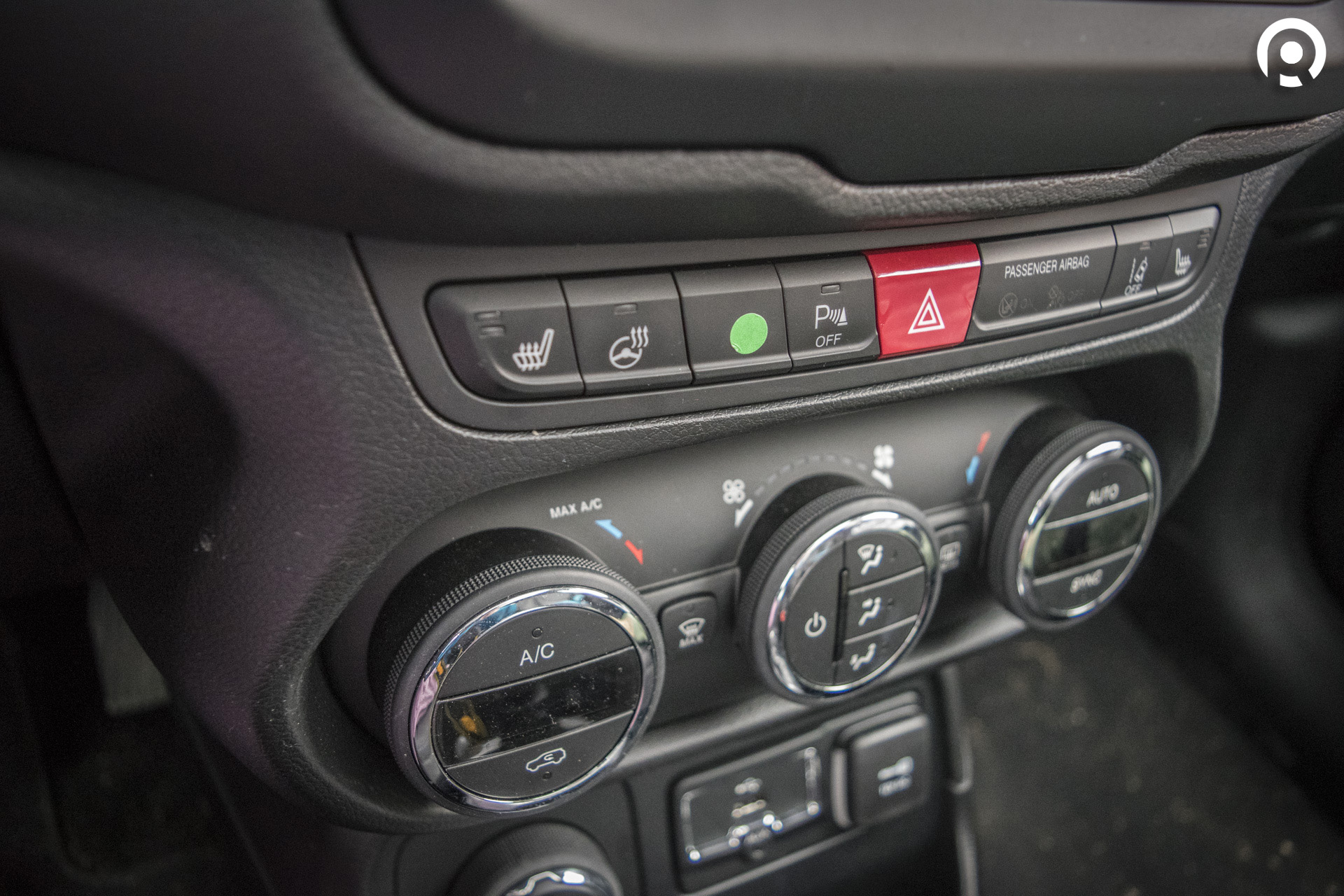
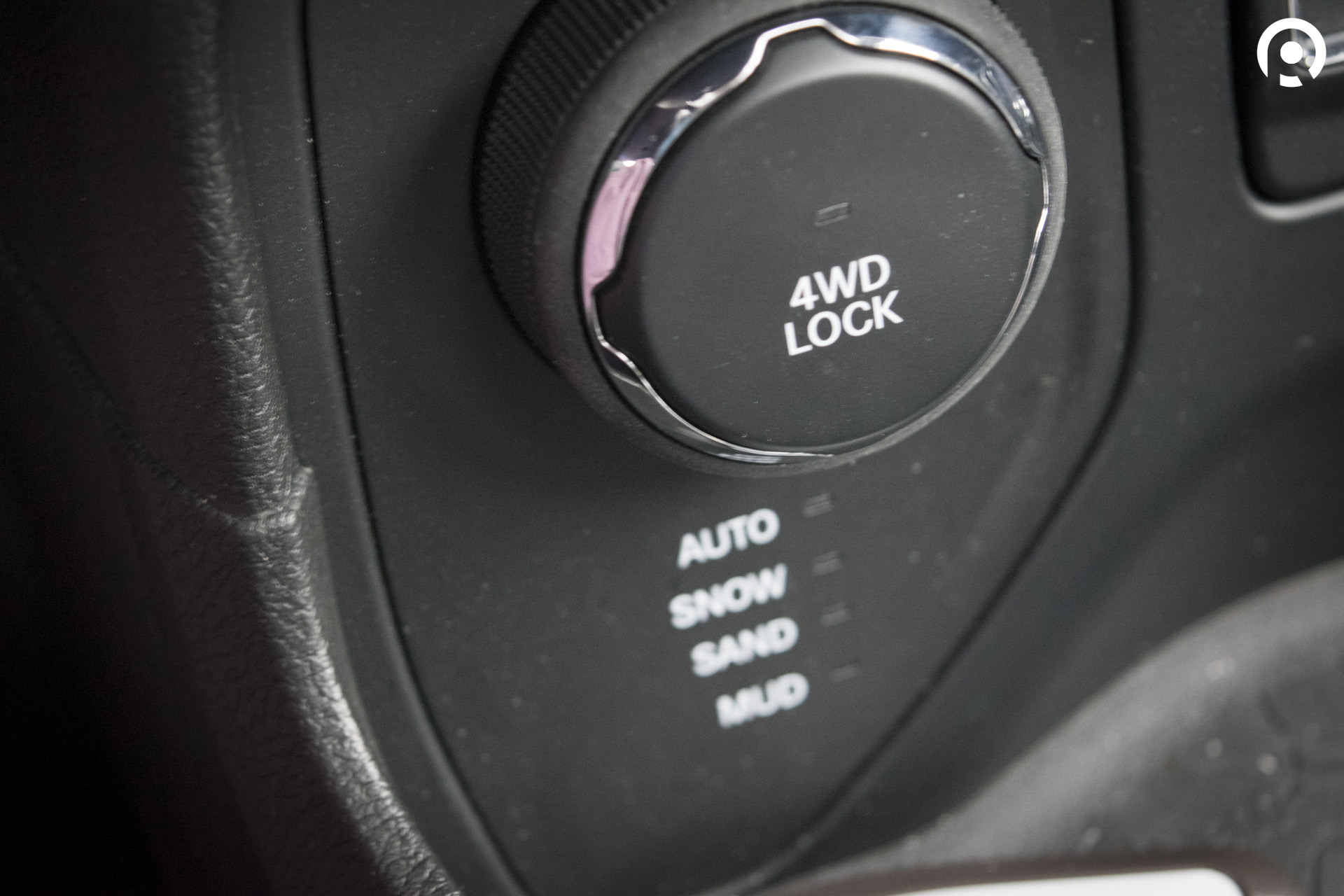
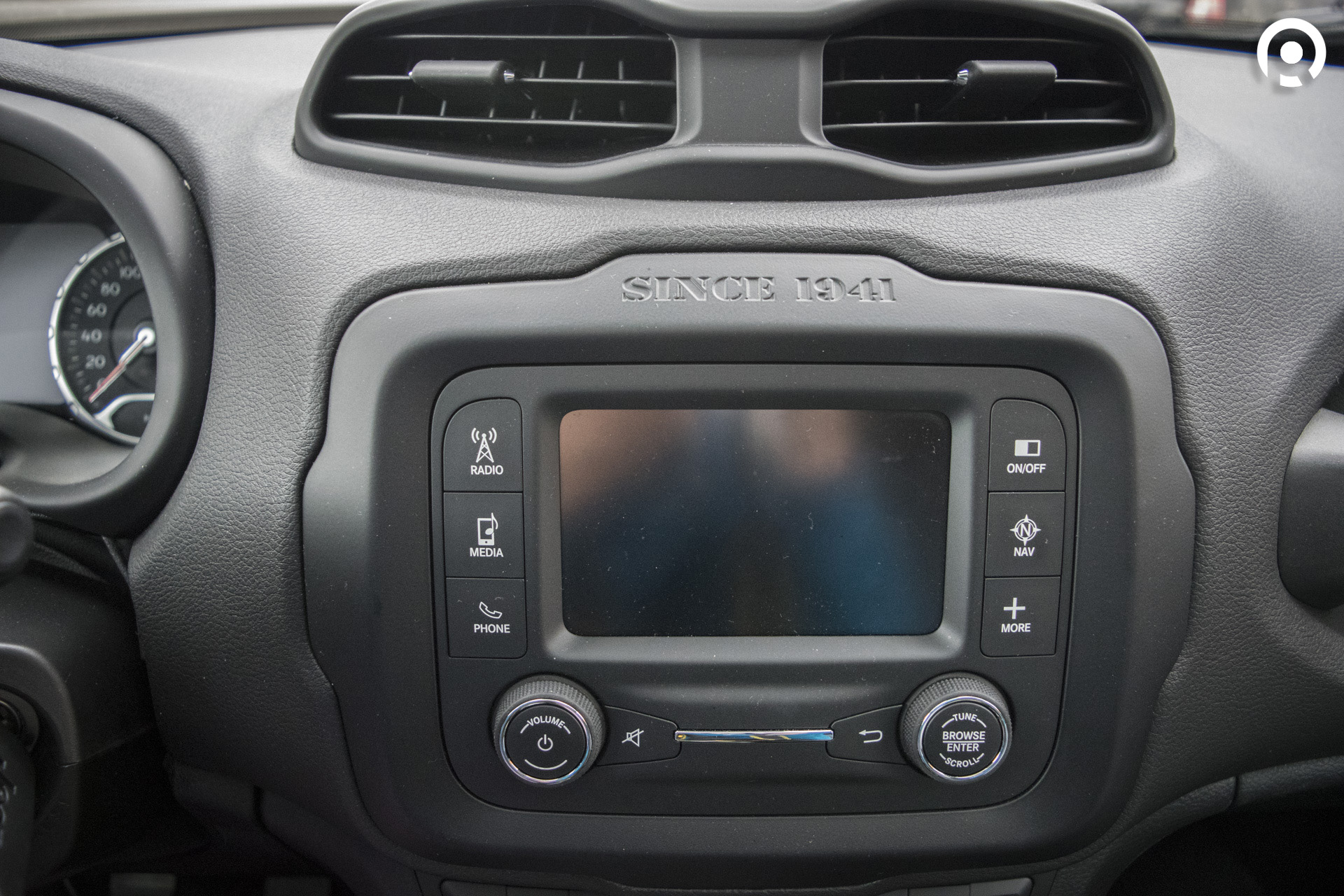
Looking from the inside out, what I personally liked most was the high driving position (the seats are comfortable as well), combined with the upright windscreen positioned quite far away from the driver. It creates a very specific sensation that I cannot really describe in words, but one that I enjoy a lot (the same applies to MINI and the Toyota FJ Cruiser).
On the road
The car I drove was equipped with a 2.0-litre diesel engine producing 140 hp and 350 Nm of torque, paired with a six-speed manual gearbox. It also featured four-wheel drive with dedicated snow, sand and mud modes, while 0-100 km/h takes 9.5 seconds.
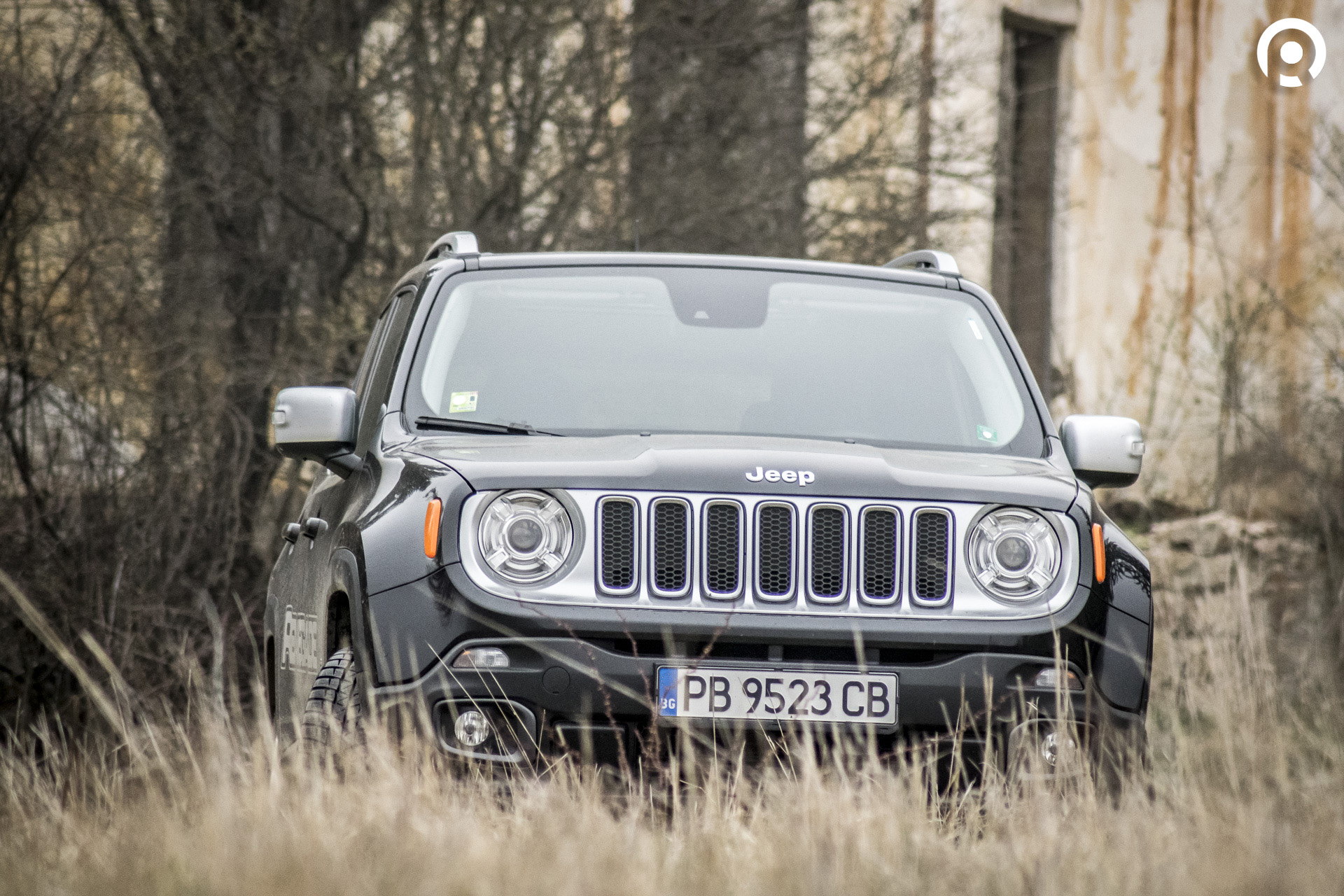
That engine left a positive impression on me and suits the car well – it offers good performance, feels flexible, and is not overly noisy. I also suspect it is better suited to the car than the turbocharged 1.4-litre petrol engines available for the model. Fuel consumption exceeded the official figures quite significantly, but considering the car’s aerodynamics and four-wheel-drive system, the results were reasonably good – 6.8 litres per 100 km in the city with two cold starts, 7.8 litres during mixed extra-urban driving, mountain roads and no roads at all (meaning mud), and 8.3 litres on the motorway.
My first impression after collecting the Renegade from Balkan Star was that I was sitting in a classic “Jeep”. That feeling came mainly from the firm suspension, which reminded me of a Spartan pickup truck. Nevertheless, thanks to the high-profile tyres, the car is not uncomfortable and handles the thousands of imperfections, potholes, bumps, trenches and other obstacles commonly found on Sofia’s streets quite well.
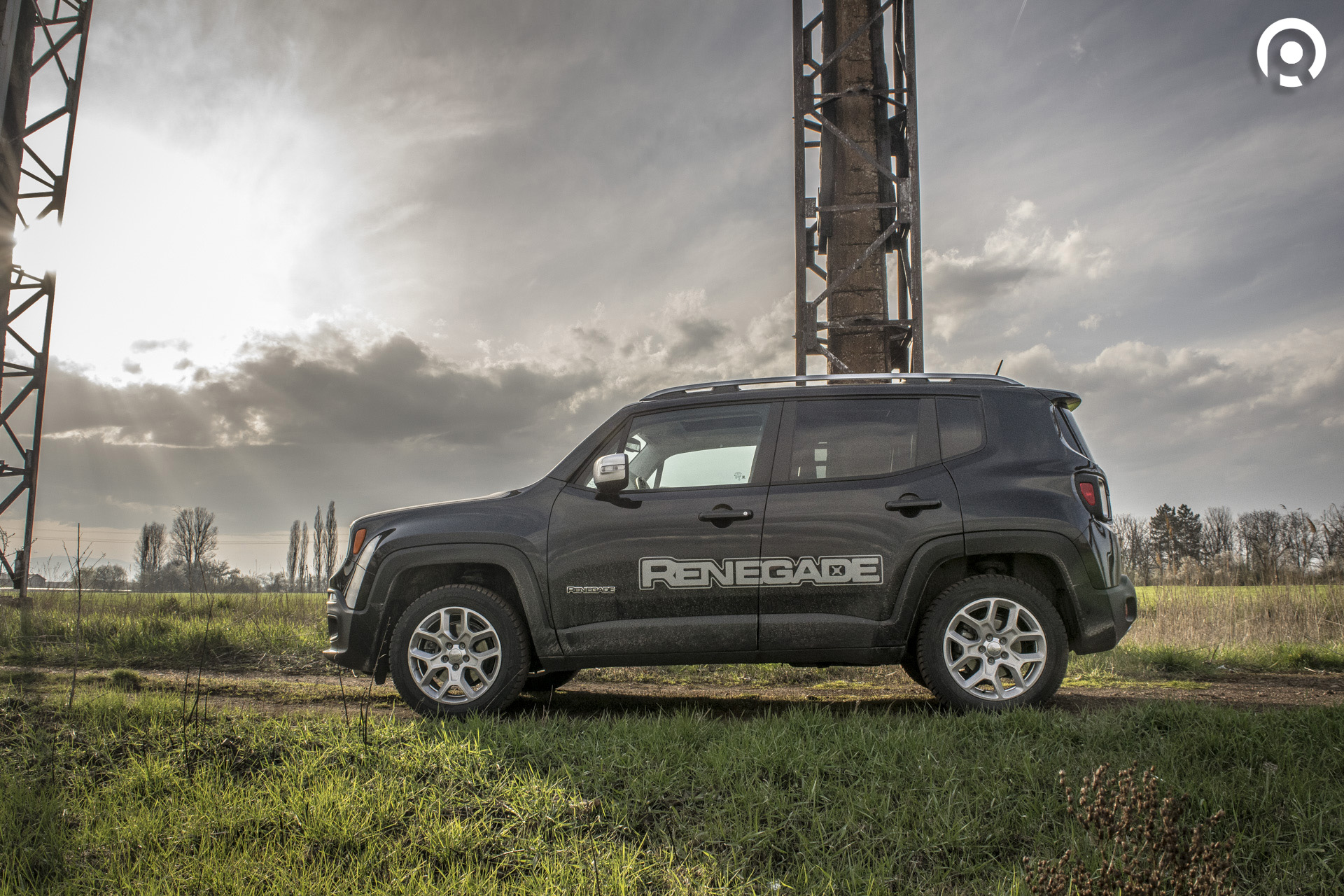
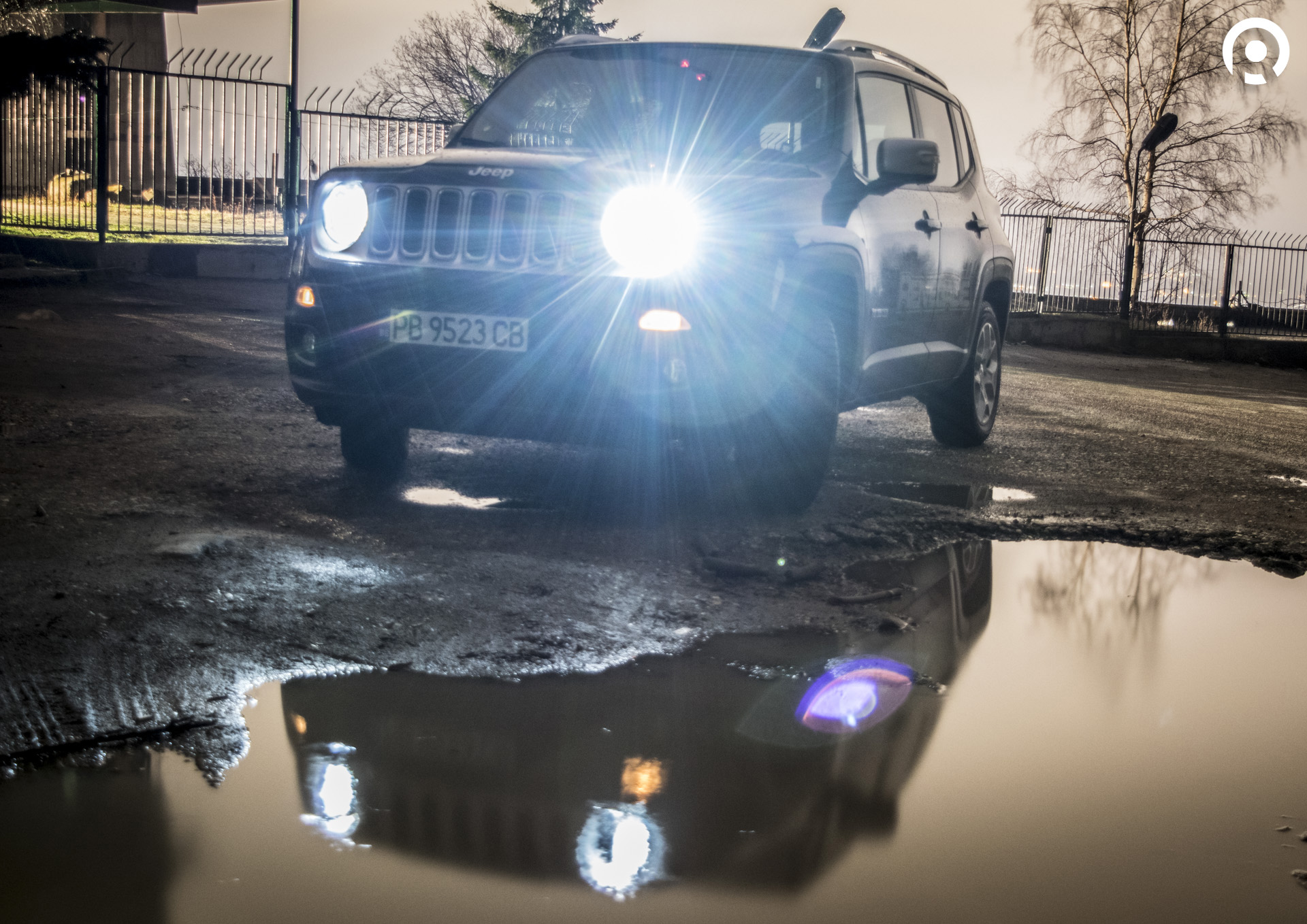
For the main drive, I decided to head towards Pravets via a more alternative route – the Sub-Balkan road, Gorno Kamartsi, then the old road around the Hemus Motorway, before returning via the motorway itself.
At speeds of around 100 km/h, the Renegade behaves in a perfectly civilised manner. Road and aerodynamic noise are moderate and not tiring. The engine provides adequate overtaking performance and, overall, travelling is pleasant. The panoramic roof is also quite large and driving along a nice road with the roof open is undeniably enjoyable. In the corners after Sarantsi, I pushed the Jeep a bit harder to test its behaviour during more dynamic driving. As you might expect, the car tackled the bends with significant body roll, but always felt stable and planted. The seats also lack strong lateral support, although realistically the Renegade is not intended for this kind of driving.
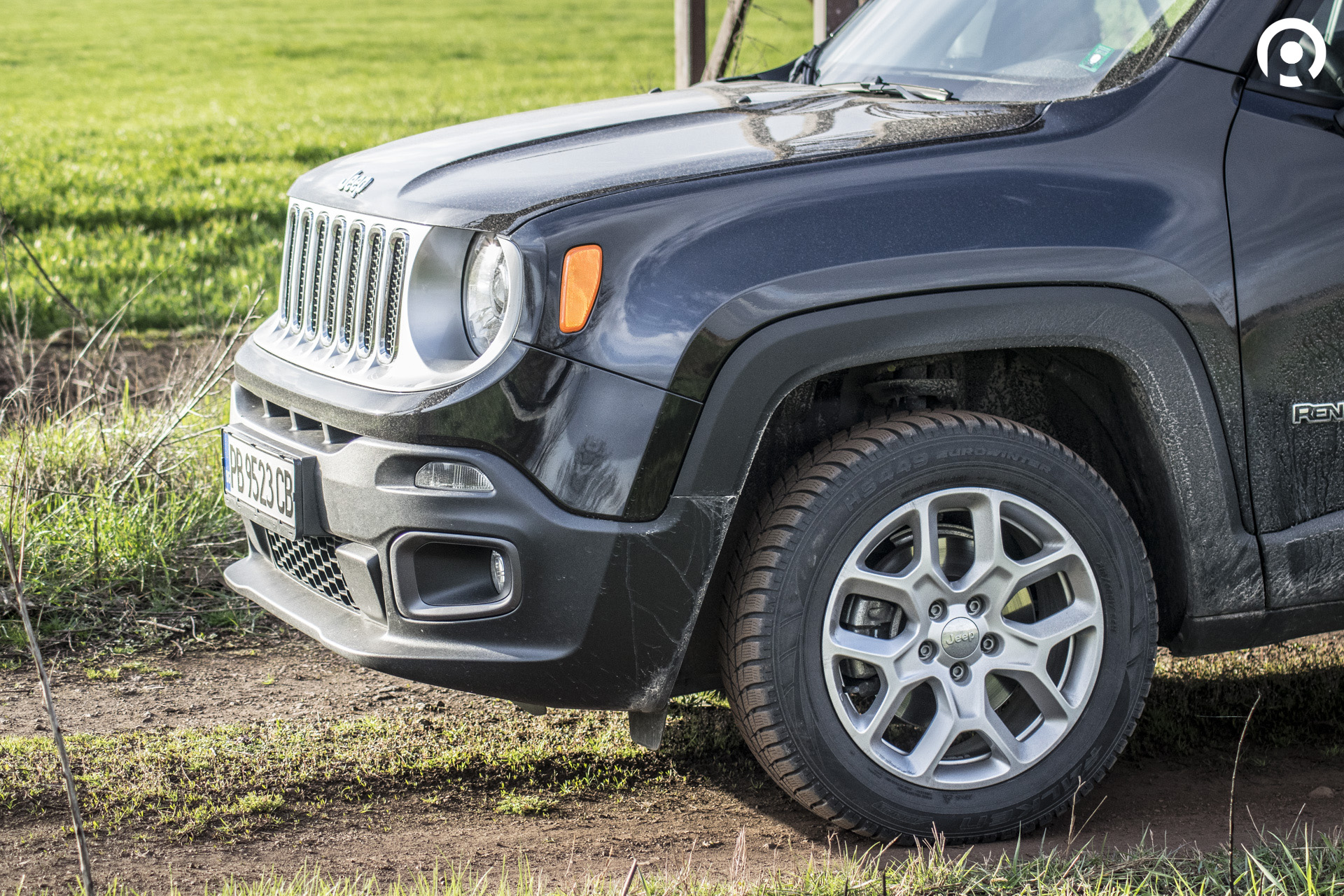
Afterwards I entered the third-class roads around Gorno Kamartsi and started looking for dirt tracks to test just how worthy the Renegade is of the Jeep badge. Fortunately, I managed to find several good opportunities.
The first more interesting section was a dry forest trail covered in autumn leaves with moderate inclines. For that, I simply pressed the Lock button of the four-wheel-drive system to activate permanent four-wheel drive. The car had absolutely no difficulties, and I was further impressed with the system after deliberately putting the Renegade into a wheel-lift situation. In such conditions, the system successfully cuts torque to the wheel hanging in the air, allowing the car to continue moving forward without issues. Not bad at all for an urban SUV, whose toughest obstacle in 99% of cases will probably be the speed bumps at a shopping centre entrance.
The more interesting part came later, when I found a properly muddy track with deep ruts and tyre marks left by serious heavy machinery. In fact, I only managed to find such a road on my third attempt. The first attempt ended in front of the gates of some military facility in the forest, from which I escaped quickly before anyone decided to shoot me. The second attempt once again ended at some gates in the forest, probably belonging to the forestry service, while the third attempt was successful.
I selected Mud mode and headed up the steep trail. In some places it was so deeply rutted that I had to drive extremely carefully to avoid dropping the wheels into the grooves, because then the Renegade’s 210 mm of ground clearance would have proven completely insufficient and I would probably have ended up stranded in the middle of nowhere. In the end though, I enjoyed plenty of mud driving without any problems whatsoever and remained genuinely impressed both by the experience and by the Jeep’s abilities.
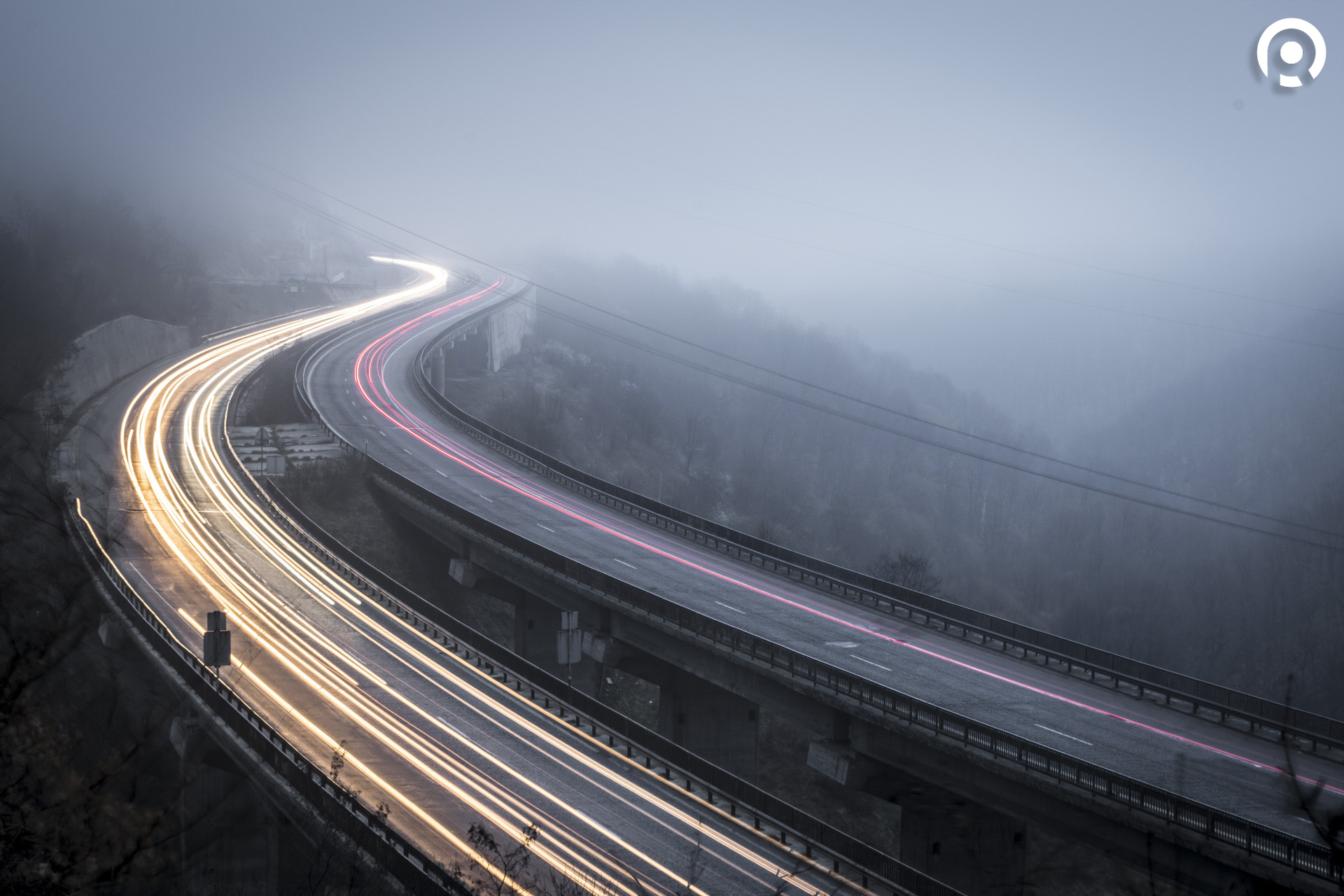
On the return journey, I quickly made my way back via the motorway, where I tested the active lane-keeping system, which steers the vehicle back into its lane if you cross the markings. Overall, it works well and, with a few minor exceptions, reacted adequately to my attempts to leave the lane, even through relatively sharp bends.
Another system that is becoming increasingly common in modern cars is automatic high-beam assist – a particularly pleasant feature that worked very well in the Renegade. On the motorway, the car also behaved well. To my surprise, aerodynamic noise was not excessive and the atmosphere inside the cabin at around 140 km/h remained pleasant. The boxy shape naturally had a noticeable impact on fuel consumption, but I still think 8.3 litres per 100 km is not bad at all, especially on a mountainous motorway. I also suspect the versions equipped with the nine-speed automatic gearbox from ZF Friedrichshafen would be even more economical in such conditions.
Conclusion
The Renegade is a subcompact SUV with strong character and real road presence – and off-road presence as well. In front-wheel-drive form, the Renegade is an excellent choice for the city thanks to its compact dimensions, excellent visibility and light steering.
The car is attractive and modern, but does not compromise practicality or driving behaviour. In fact, the main compromise lies in the lower-quality interior materials, although that is very common in this price segment. Even the test car, equipped with a powerful diesel engine and four-wheel drive, cost under approximately €31,000, while also featuring xenon headlights, leather upholstery, navigation, a heated steering wheel, active lane-keeping assist, active collision prevention, a panoramic roof and other extras that would significantly increase the price of more expensive vehicles.
And while €30,000 is certainly not a low price, a reasonably equipped Renegade can be purchased for around €25,000–€28,000, while abandoning the four-wheel-drive system can bring the price below €25,000. The problem is that Jeep models traditionally suffer from slightly heavier depreciation on the used market. Still, it is perfectly obvious that the Renegade is not aimed at rational buyers, but rather at those who want something a little more special.
Eng. Tsvetan Iiliev

Comments are closed.