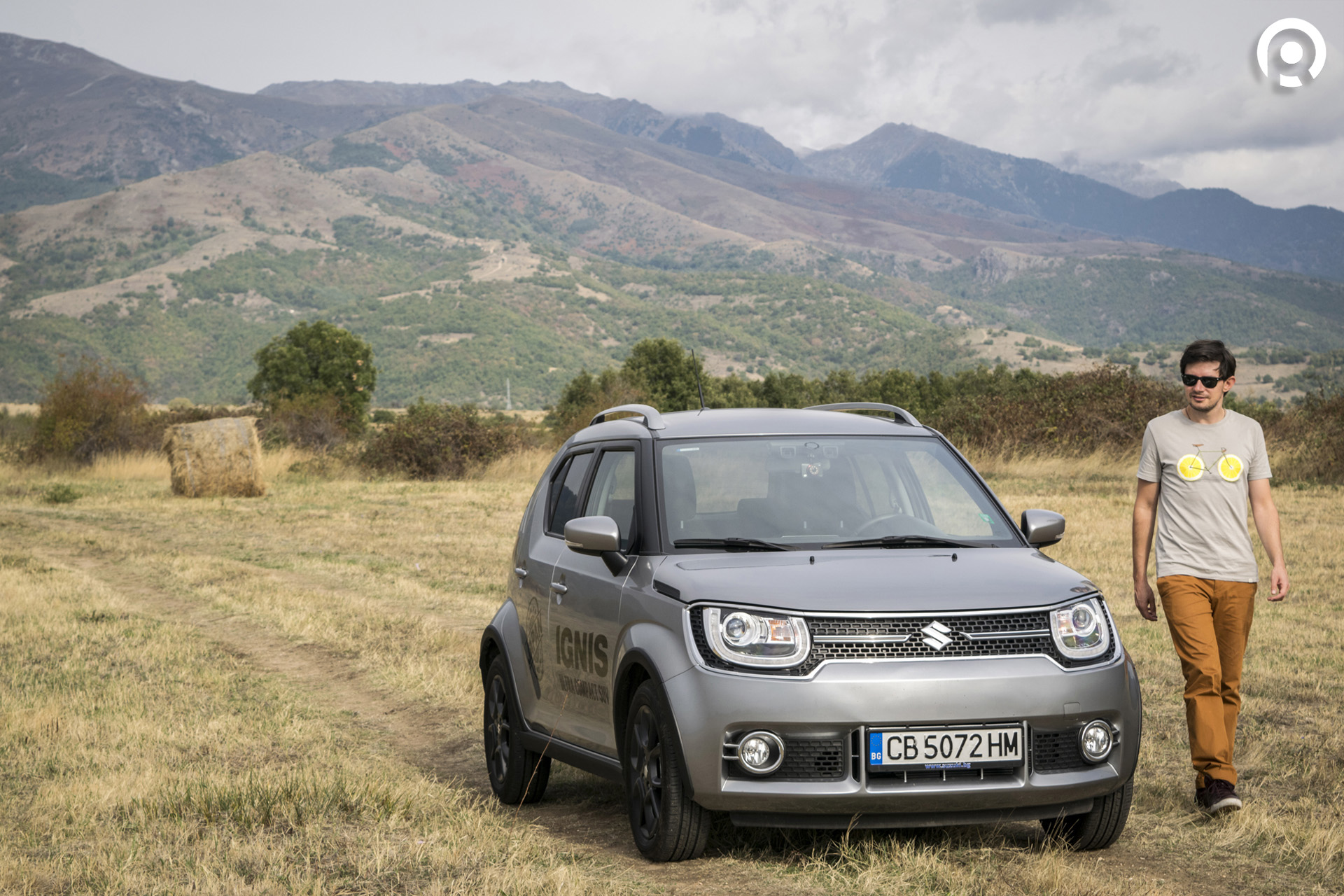
Do you know what a “kei car” is? These are extremely popular microcars in Japan, benefiting from tax incentives, featuring very compact dimensions, low weight, and engines limited to just 660 cc.
Now, the second-generation Suzuki Ignis isn’t a kei car, but it certainly reminds me of one. It’s tiny, yet surprisingly spacious inside. It’s extremely light, yet offers all-wheel drive and even a hybrid version.
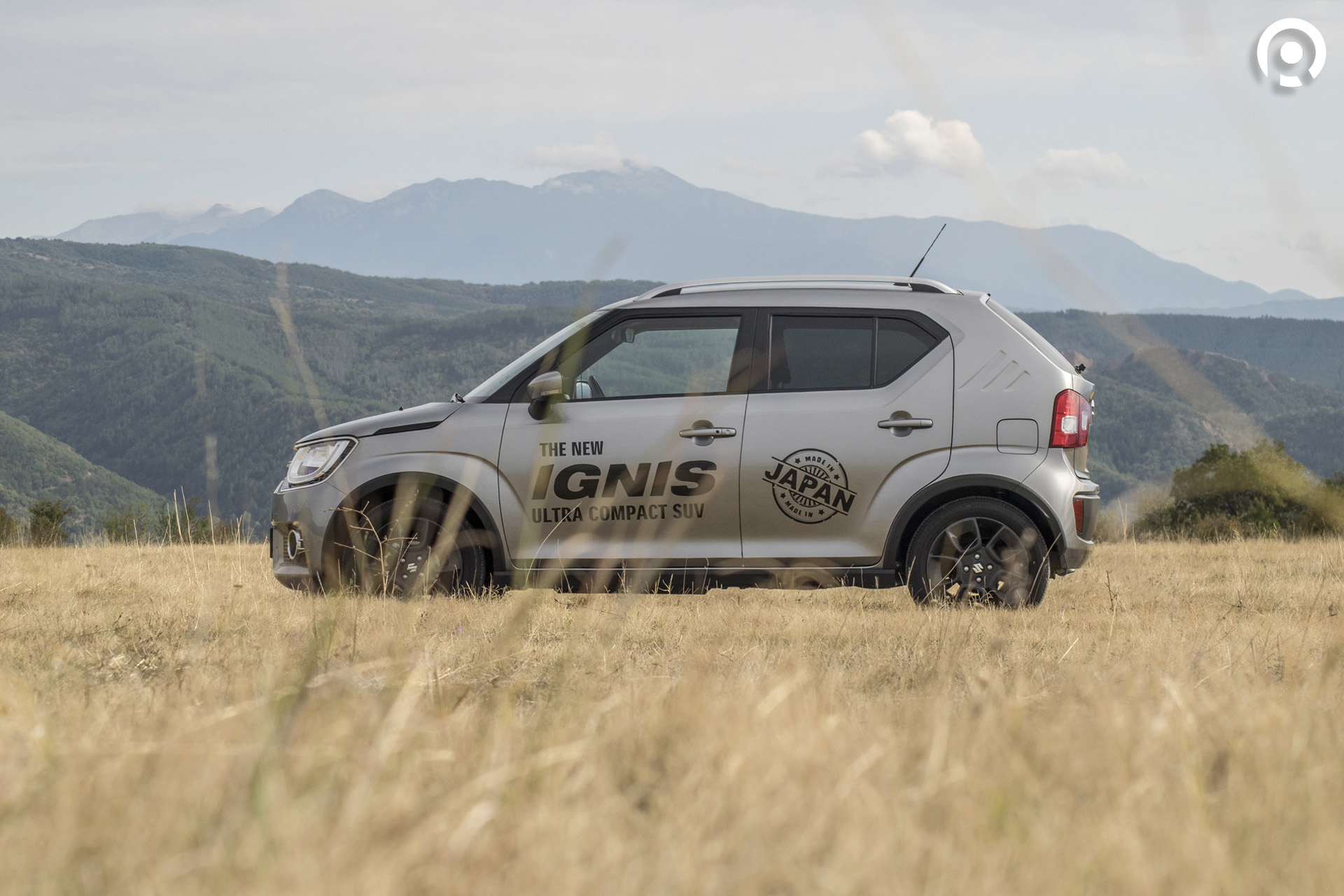
Design
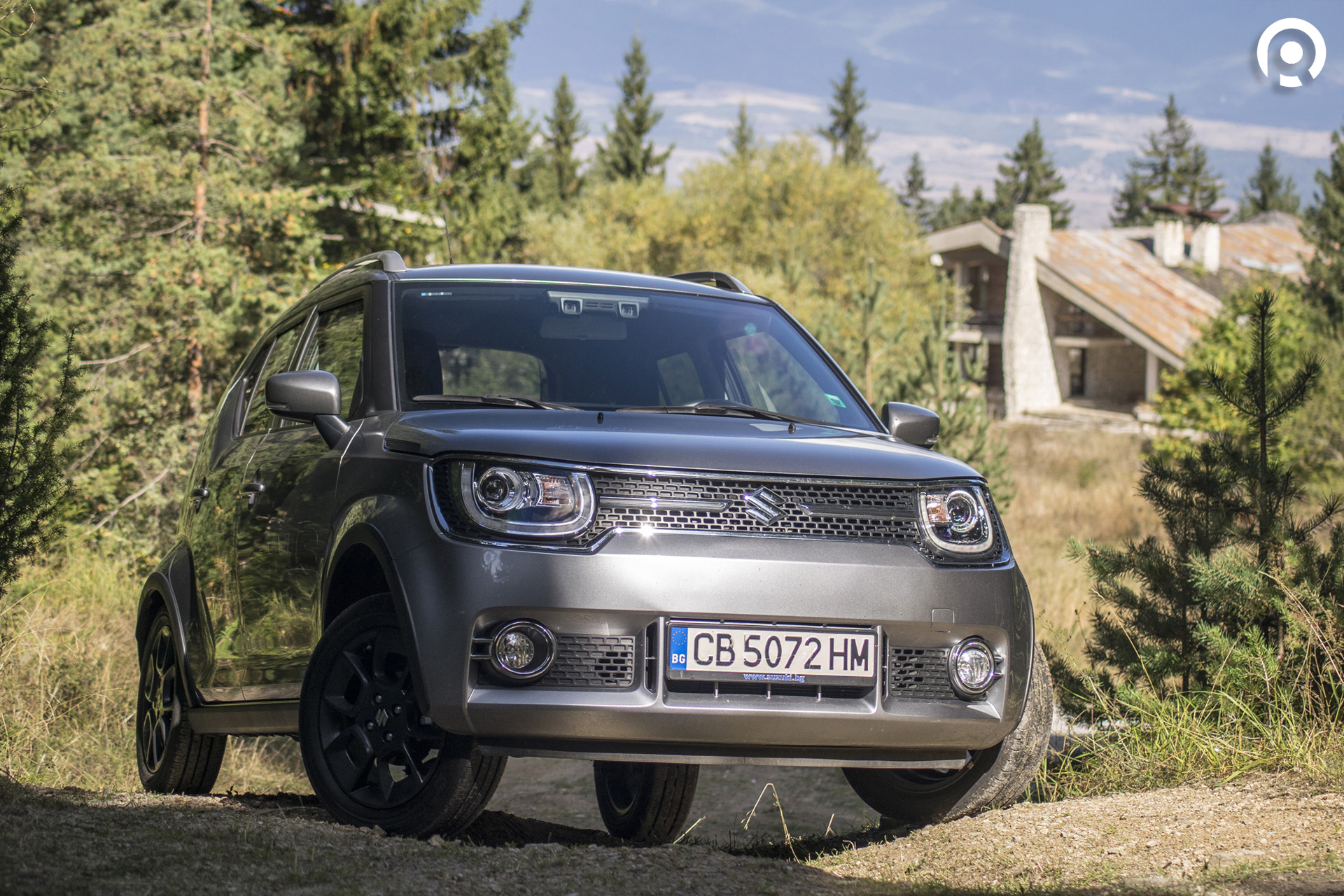
Is the Ignis ugly? The initial reaction from most people around me was something along the lines of “not ugly – very ugly.” After some time, a few became more forgiving towards the little Japanese car. Others didn’t.
Personally, I found it charmingly controversial from the first time I saw it on the streets of Eindhoven back in 2016. In the Netherlands, small cars are more common, so the Ignis fits in better than it does in Sofia, where typical “city cars” often seem to be BMW X5s and Audi Q7s.
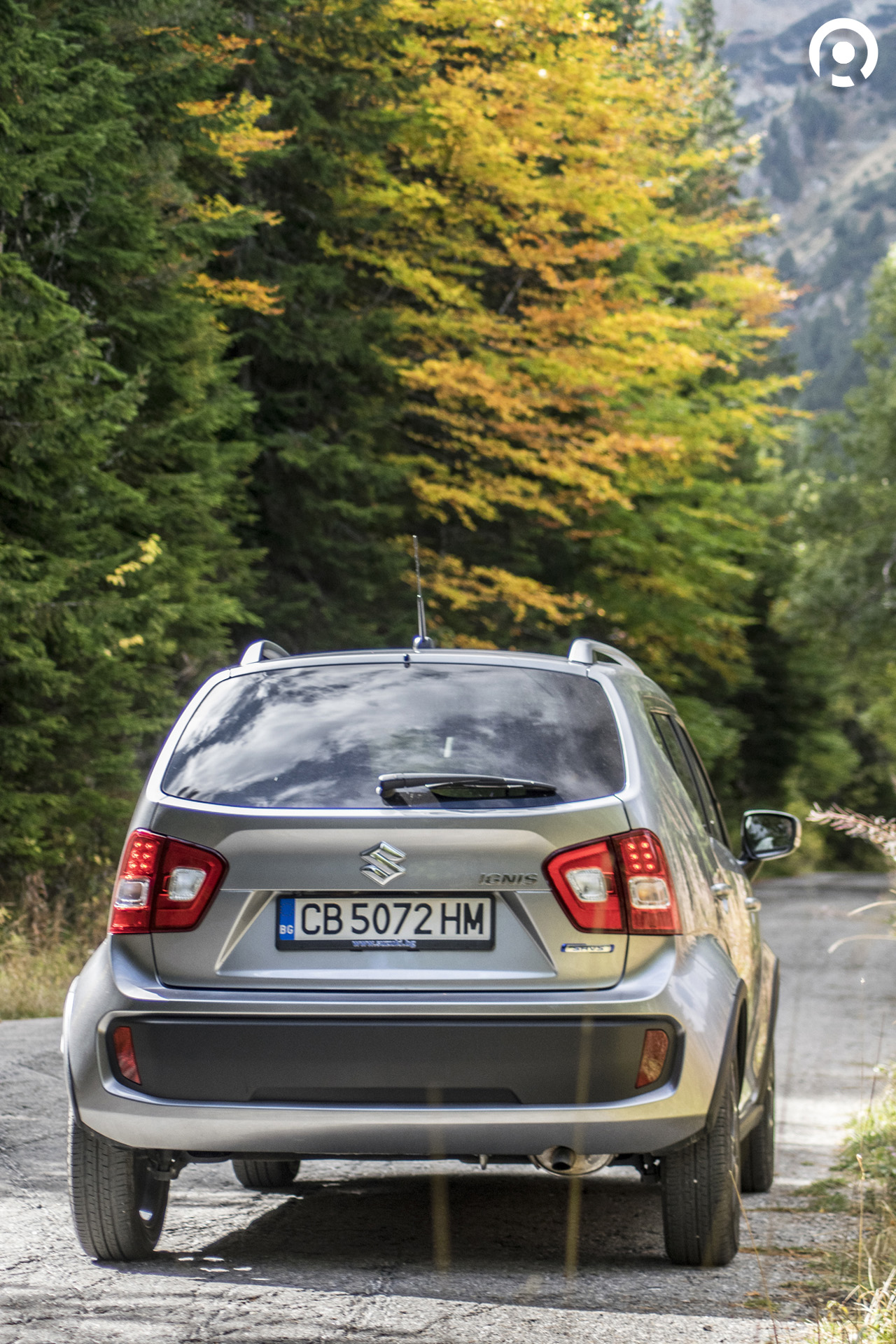
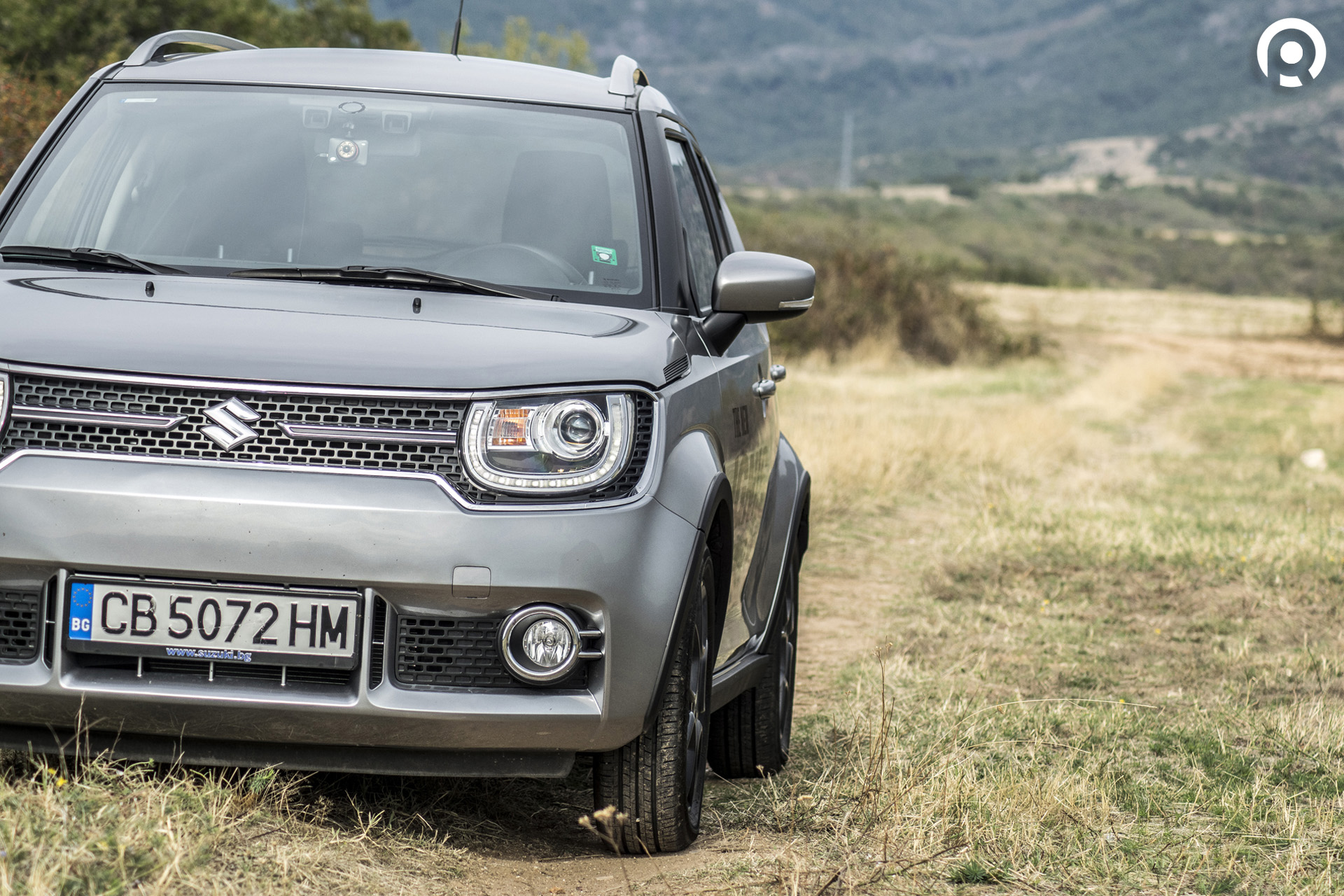
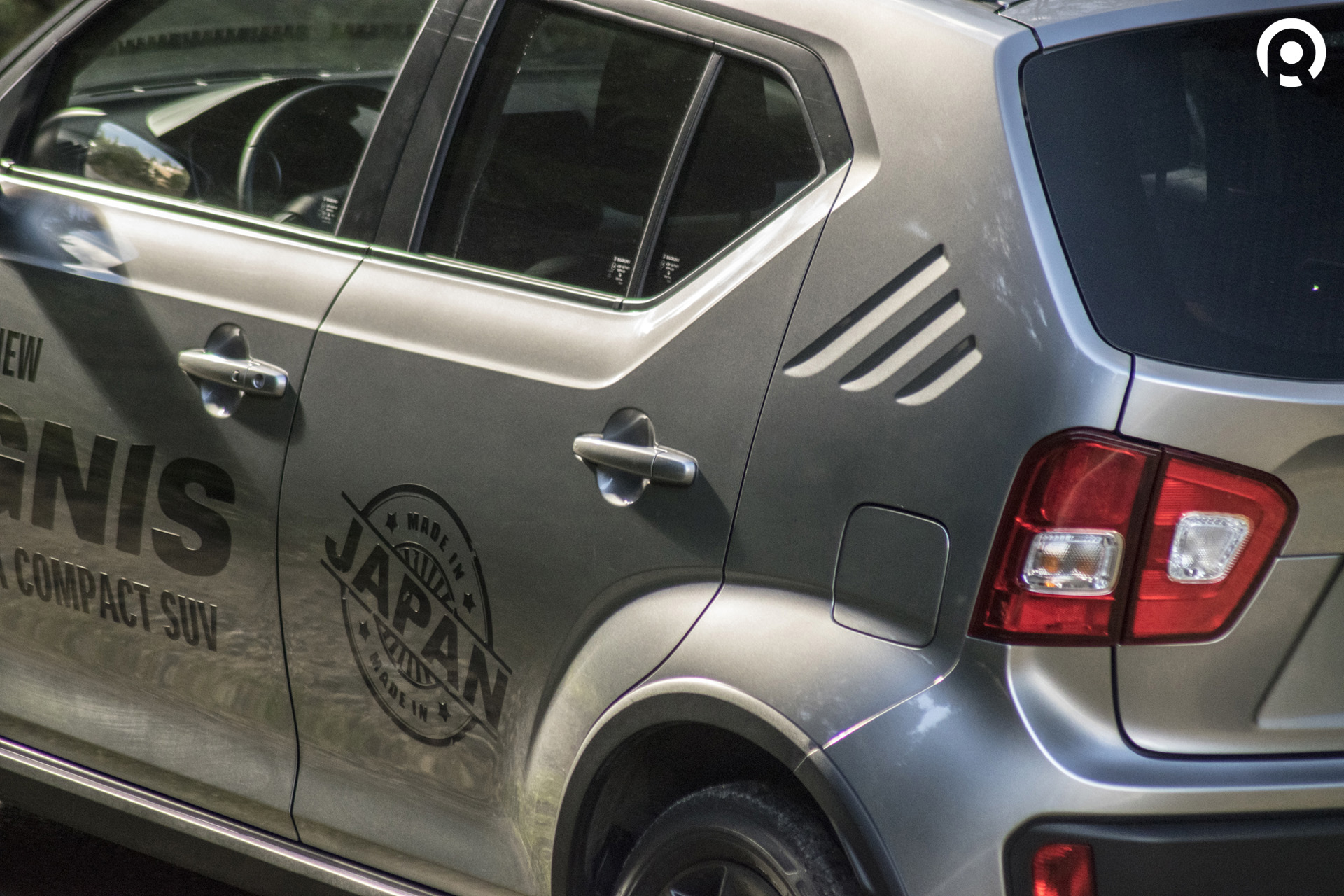
In any case, the Ignis is one of the most distinctive models in Suzuki’s lineup. In its details, you can spot references to the Swift (black A-pillars), the original Vitara in its overall stance, and those three slashes on the C-pillars – which, no, are not an Adidas collaboration. They actually reference the Suzuki Cervo from 1955, one of the earliest kei cars.
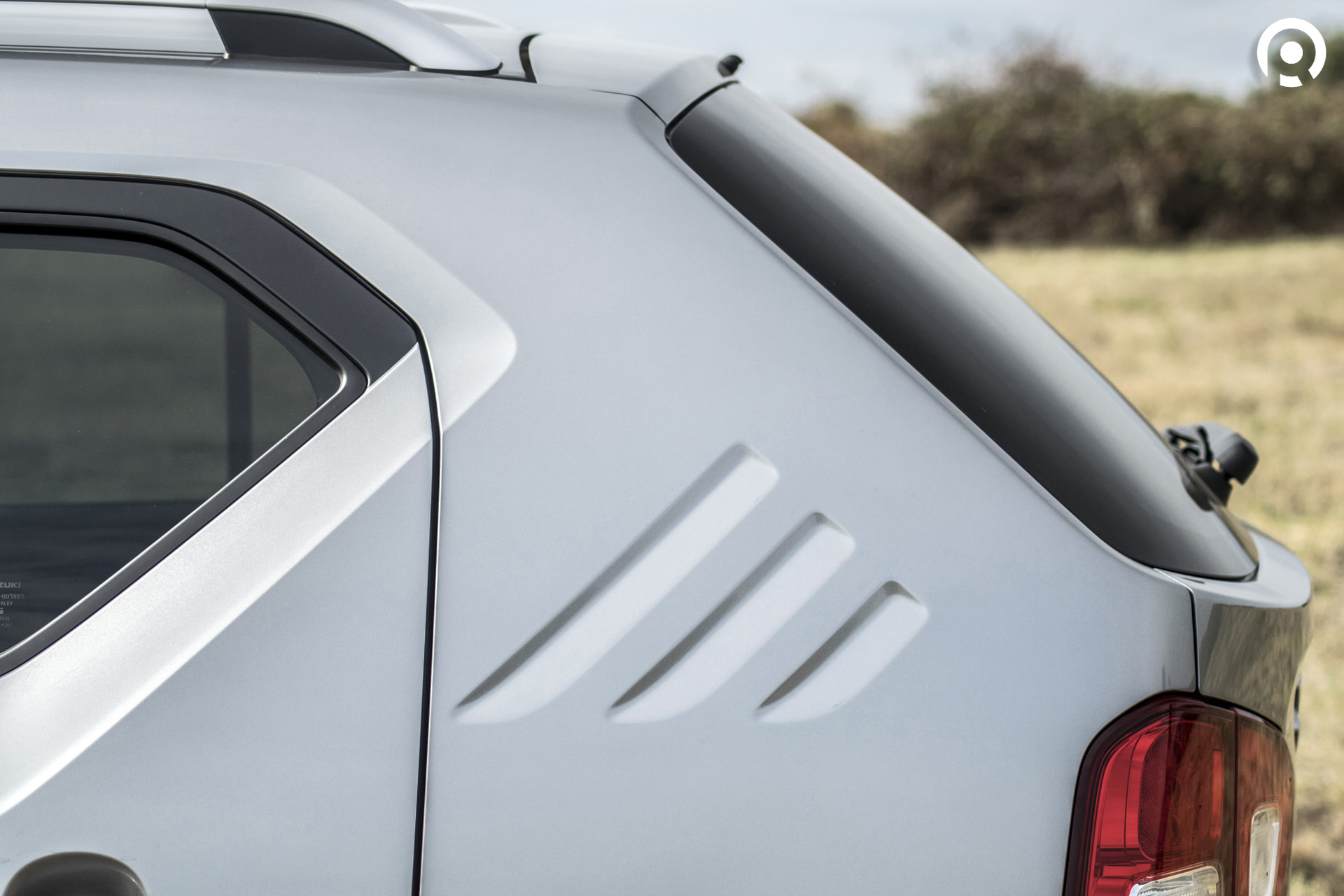
Another pleasant touch is the wide range of colours – nine body colours, plus five two-tone options with a black roof.
Interior
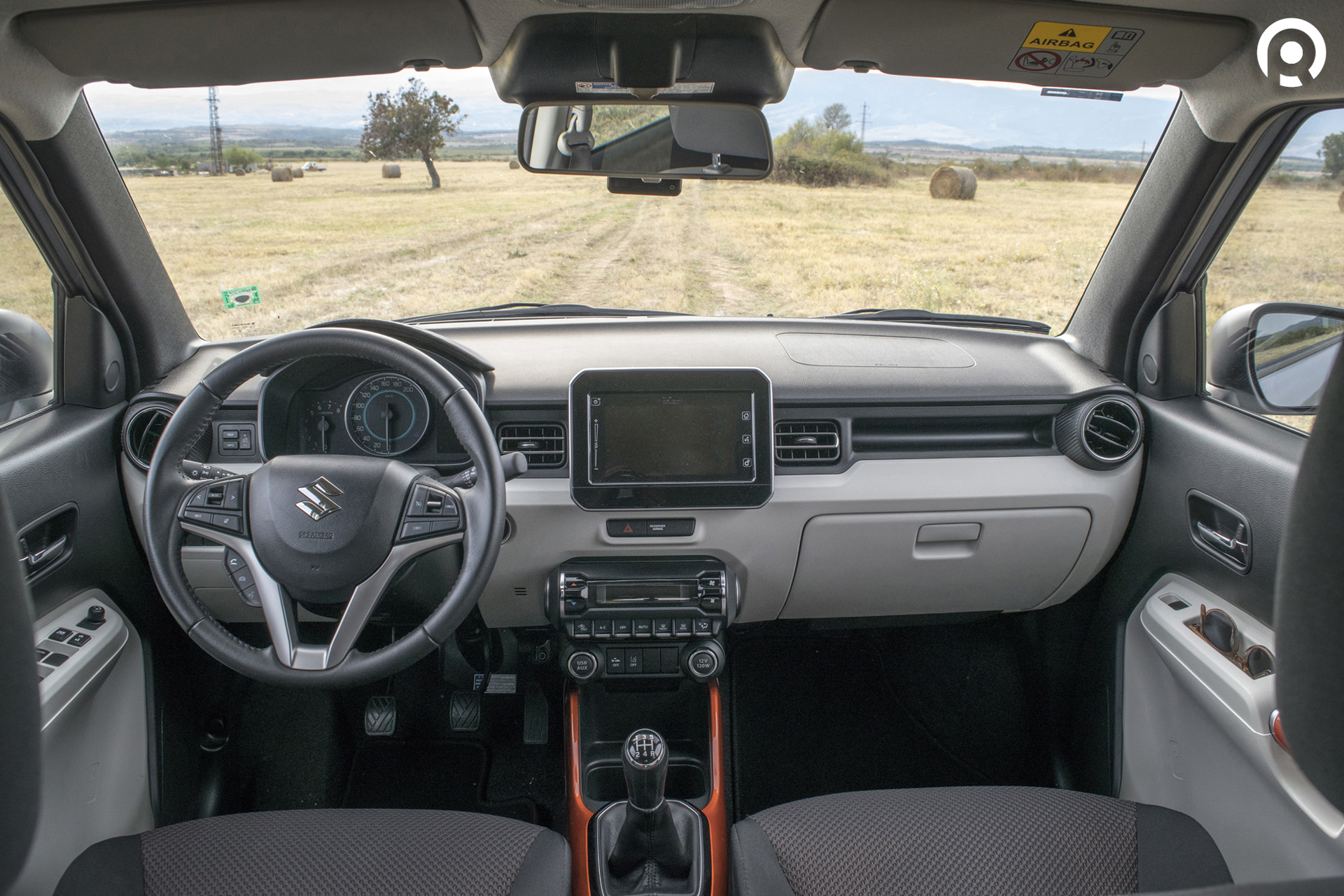
The Ignis becomes even more interesting inside. Not because of any dramatic design, but due to its excellent use of space.
Despite its compact dimensions and narrow body – so much so that the infotainment screen is slightly offset to the right so the steering wheel doesn’t block it – space for four passengers is impressive.
Let’s start from the beginning. The interior design is pleasant without being particularly striking. The use of three colours – black, grey, and orange – creates a cheerful atmosphere. A nice detail is how the three slashes from the C-pillars are echoed on the orange sides of the centre console.
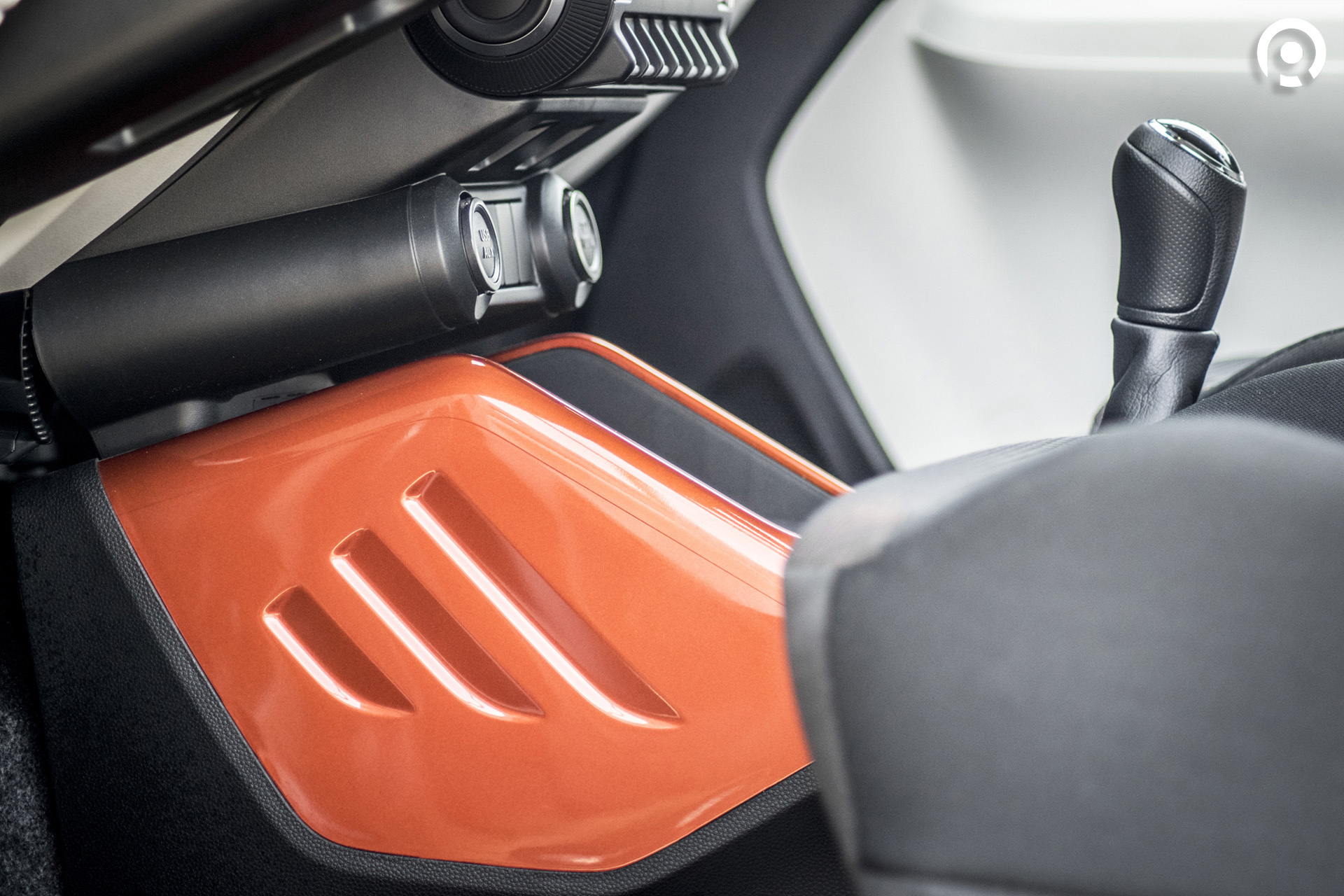


So far, so good – but there are drawbacks. Mainly, the plastics. There’s simply too much of it, and it’s too hard. In fact, the only soft-touch surfaces are the seats, steering wheel, and gear lever. These are the parts you interact with most, but still – softer materials elsewhere would have been welcome. Then again, this is typical for the segment.
Storage space is generally good. Large front door bins can hold a 1.5-litre bottle, there are two cup holders (oddly square-shaped), and space on the centre console for a phone or small items. At the rear, you only get holders for small bottles.

The seats are comfortable, and the driving position is good. There’s no lumbar adjustment, which is a drawback on longer journeys, but the Ignis isn’t really meant for those. The steering wheel doesn’t adjust for reach, which may make finding the ideal position harder, though I personally had no issue.
From an ergonomics perspective, the only truly odd thing is the onboard computer control. Its buttons are not on the steering wheel but on the instrument cluster itself, combined with brightness controls. It feels strange at first, but you get used to it.
On the road
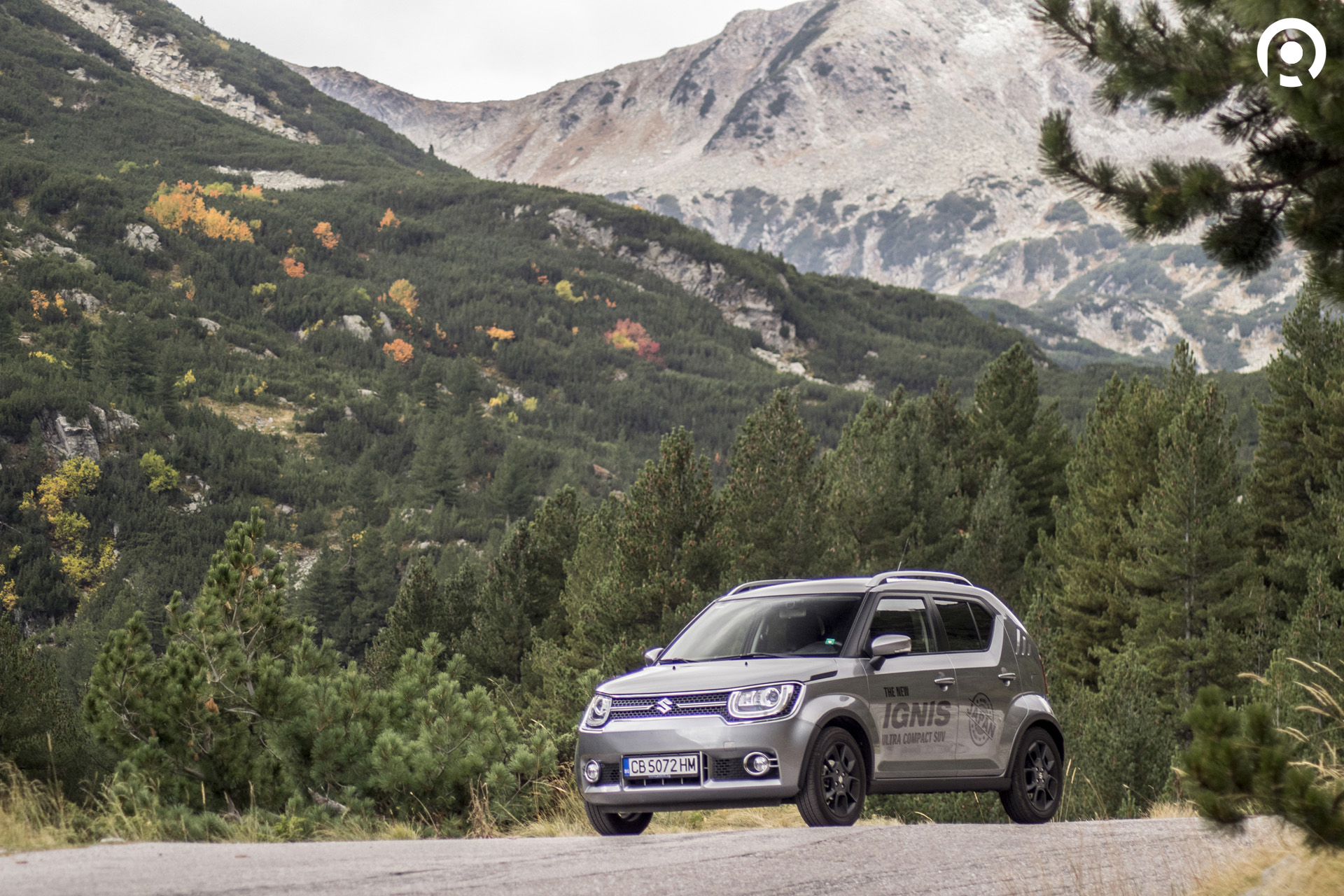
The Ignis is offered with a single engine – a 1.2-litre four-cylinder petrol producing 90 hp – but with several drivetrain options: front-wheel drive or all-wheel drive, and also a mild hybrid version, available with manual or automatic transmission.
My test car was the sensible choice – a mild hybrid with a five-speed manual and front-wheel drive.
The hybrid system is simple and affordable. It uses a starter-generator that replaces the traditional alternator. During start-off and certain acceleration phases, it assists the engine. Its contribution is subtle, almost unnoticeable. The lithium-ion battery is also small – just 7 kg – and is located under the driver’s seat, making replacement easy when needed.
Performance figures include 0–100 km/h in 11.8 seconds (0.4 seconds quicker than the non-hybrid) and fuel consumption between 4.1 and 4.7 l/100 km.
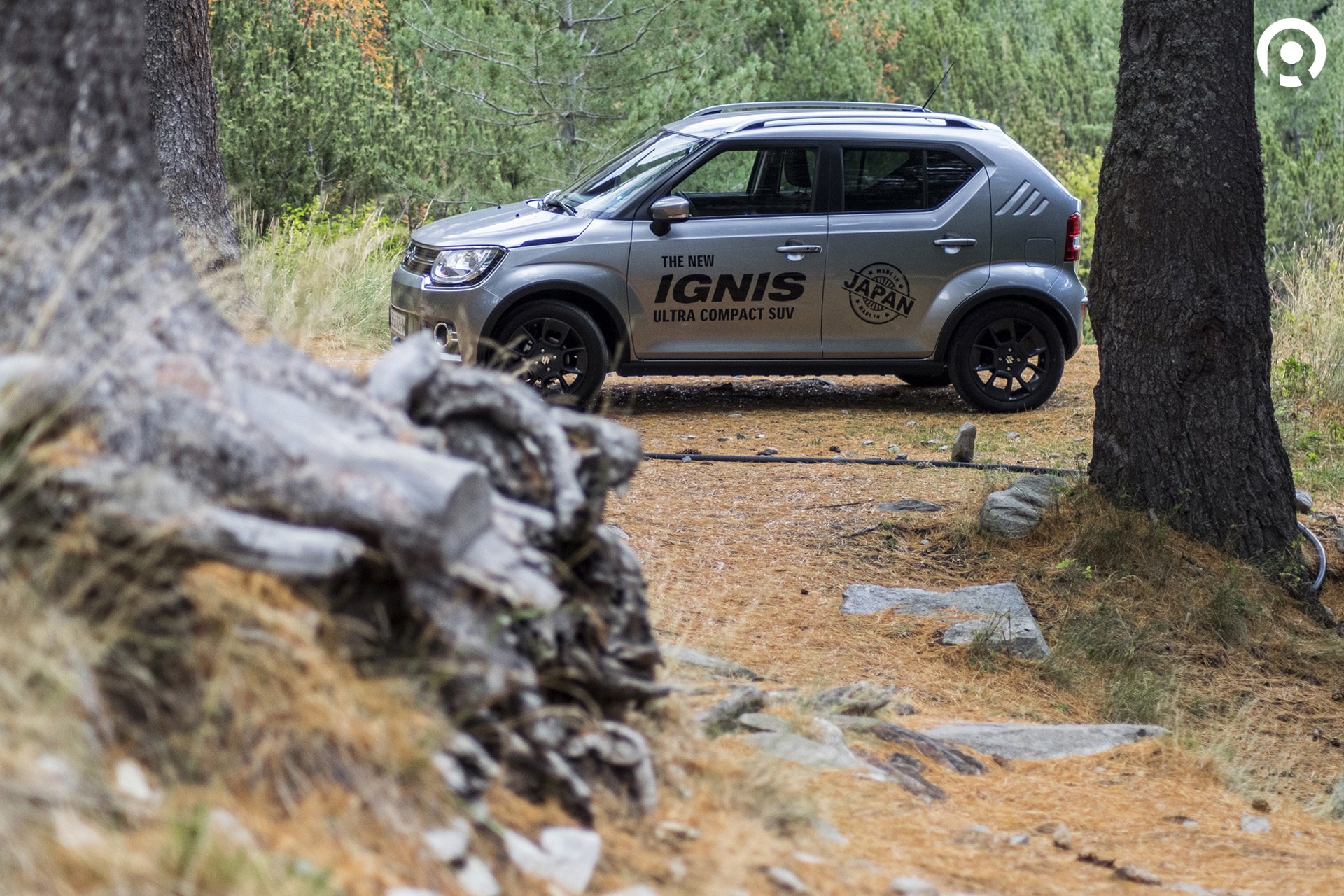
Naturally, equipped with this tiny city car, I did the most logical thing – went on a longer trip. Not extremely long, but even Bansko can feel far in the wrong car.
Everything started with crossing Sofia on a Friday afternoon – traffic, chaos, drivers ignoring lane markings… the usual. A perfect test environment.
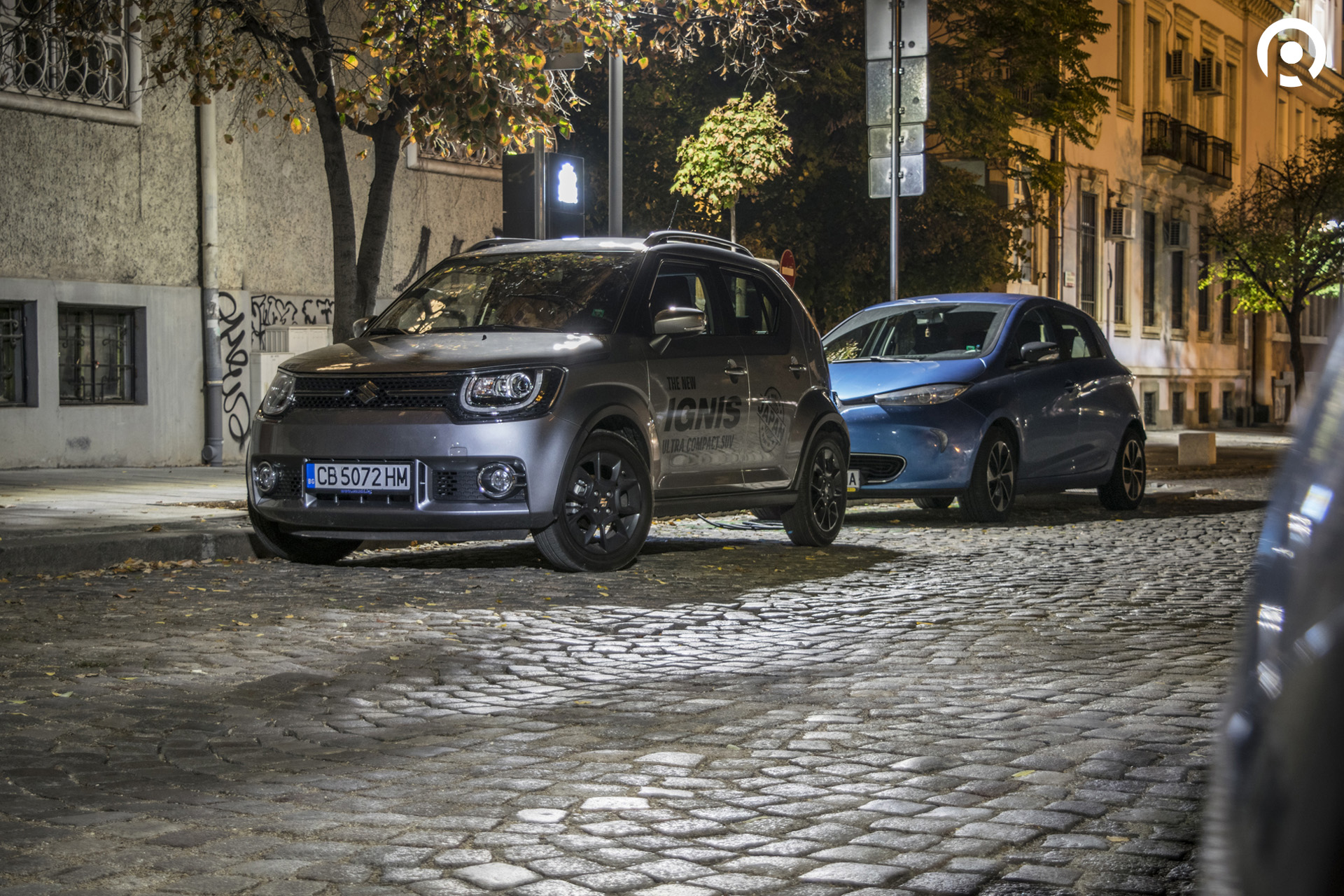
And here, the Ignis is in its element. The higher seating position compared to typical superminis improves visibility, and the controls are light and easy. Its narrow body and excellent manoeuvrability make navigating tight streets and awkward corners effortless.
Another highlight is the start-stop system. It shuts off the engine at around 20 km/h, improving efficiency, and restarts smoothly thanks to the hybrid system.
At low speeds, the suspension also impresses. It handles bumps surprisingly well, offering comfort comparable to larger cars like the Ford Fiesta or VW Polo – a definite plus.
Fuel consumption? Crossing Sofia from north to south, I recorded 5.5 l/100 km. On the return journey – 4.0 l/100 km. Excellent results.
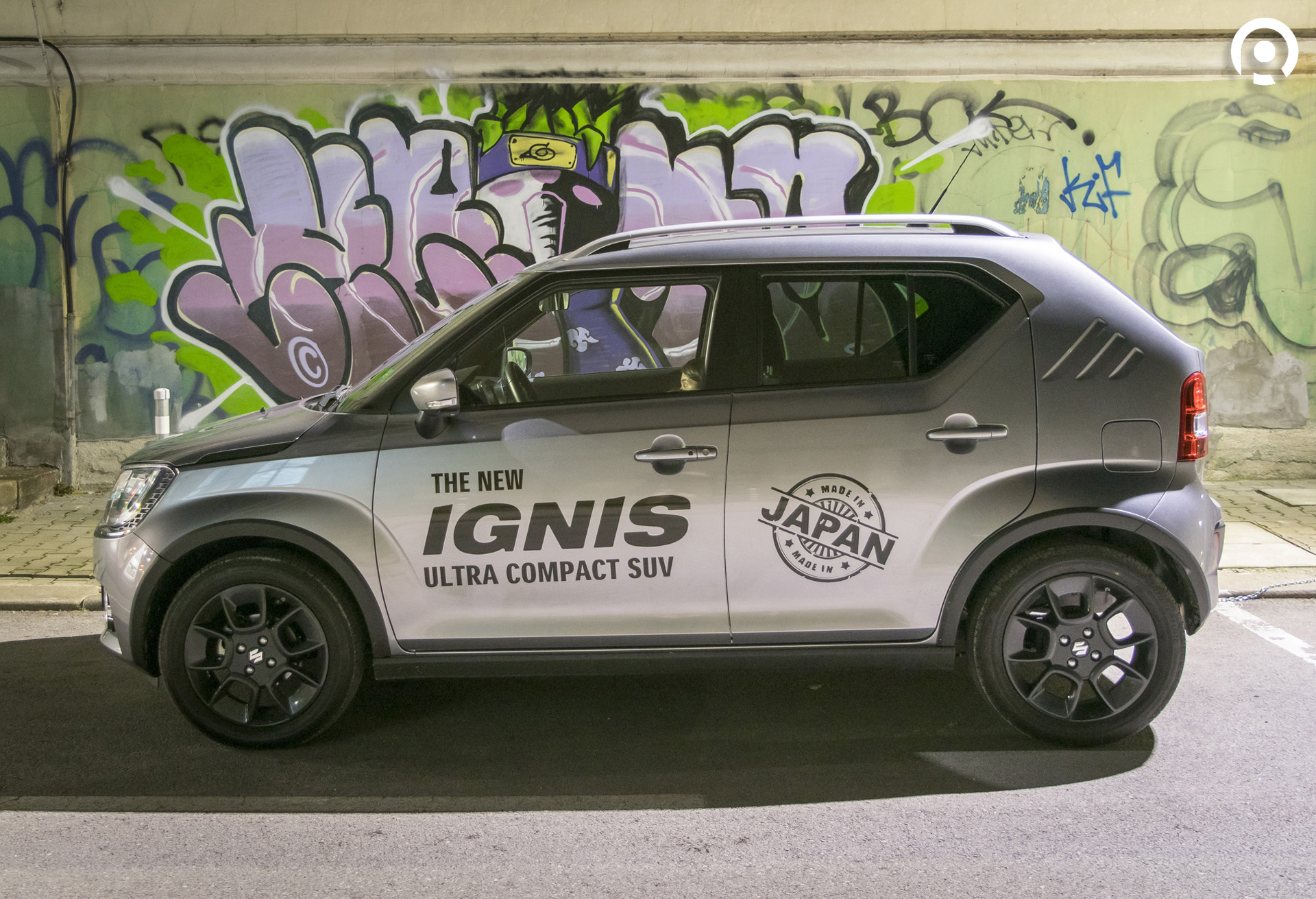
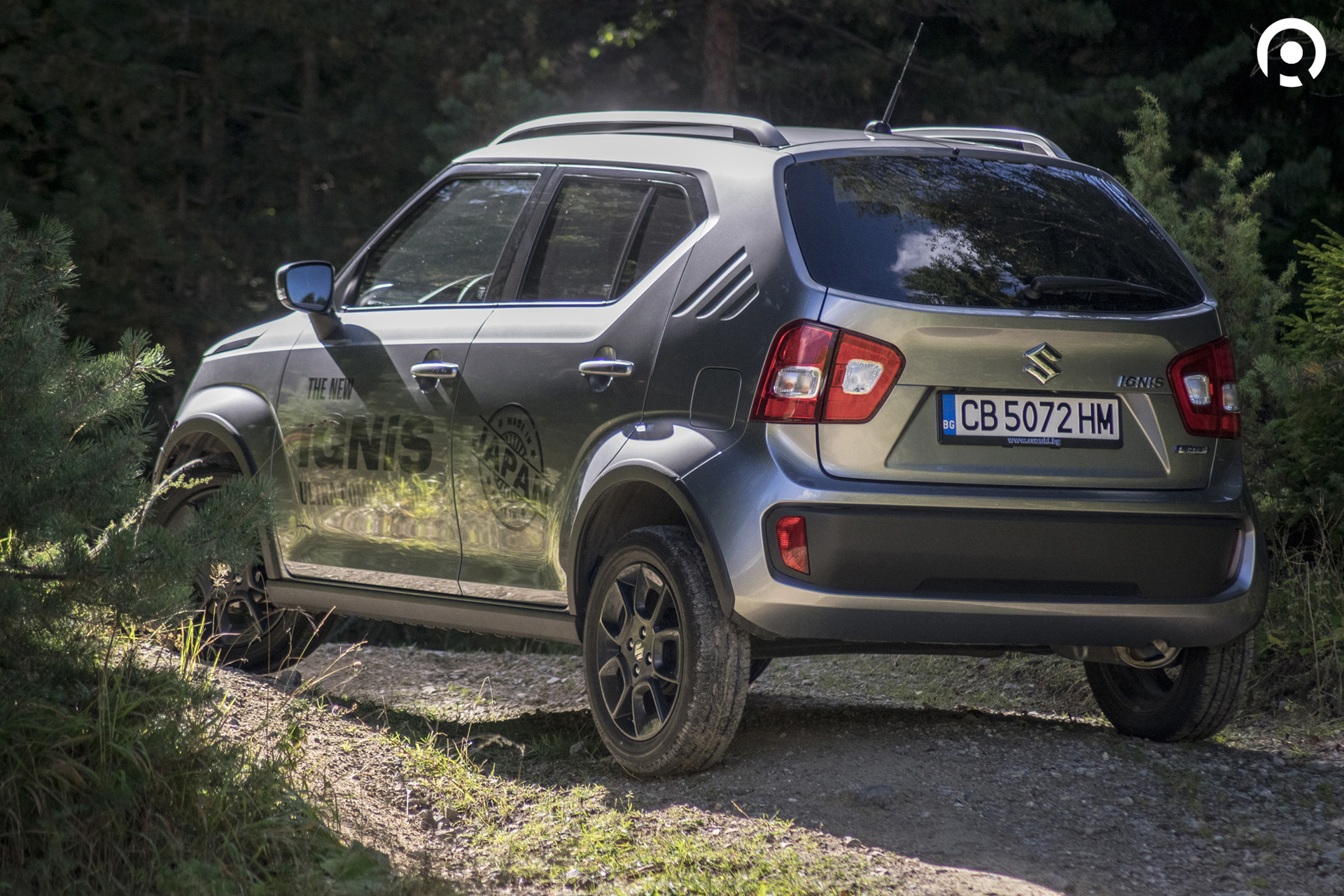
But let’s leave the city behind. On the Struma motorway, I pushed the car as much as possible. Maintaining 130–140 km/h is manageable, especially with cruise control, though uphill sections require downshifting. Still, it’s capable of handling longer journeys when needed. Noise levels remain acceptable. Fuel consumption here rises to around 5.7 l/100 km. Off the motorway, however, figures below 3.5 l/100 km are achievable.

Later, I drove through the Pirin mountains, including the road to Vihren hut. On twisty roads, the Ignis leans quite a bit – a result of its soft suspension, high ground clearance, and narrow body.
Conclusion
Outstanding in the city, competent outside it – that’s the Ignis.
Thanks to its spacious interior and the option to add roof accessories, it’s one of the most versatile cars I’ve come across.
The Ignis is an excellent choice as a second car for urban use or even as a primary vehicle for those who rarely leave the city. It offers more mature road manners than typical superminis and comfort levels approaching higher segments. Add to that the availability of all-wheel drive and increased ground clearance, and you get a car that feels at home even in “urban off-road” environments – or the occasional trip to the mountains.
Prices for the hybrid start at around €13,500 for the GL trim. The non-hybrid version is slightly more expensive due to higher equipment levels, starting at around €14,300. The top-spec hybrid GLX with all-wheel drive reaches approximately €18,100.
That’s more than basic superminis like the VW Up or Citroën C1, but in return, you get significantly more versatility.
Eng. Tsvetan Iliev