In the automotive world, there are legends that remain in production for decades, capturing the attention of multiple generations with their abilities or the spirit they carry.
One such model is the Defender from Land Rover. It is the direct successor to the original Land Rover Series I (R01) and over the years has built a reputation as one of the most capable off-road vehicles ever made. The generational change for Defender turned into a long-running saga that lasted years, and the new model was finally unveiled to the public at the end of 2019.
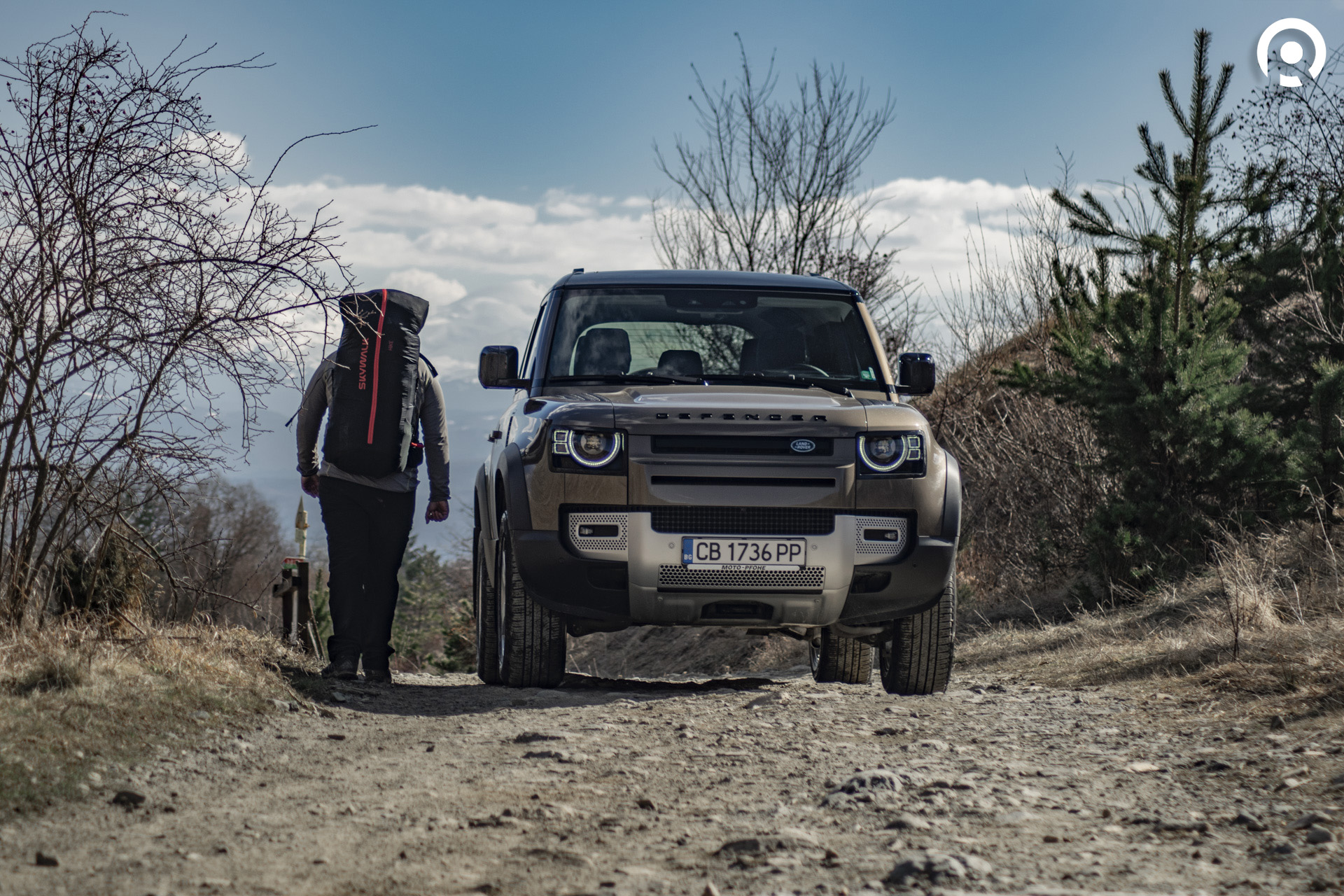
Eventually, my turn came to see what hides behind the rugged exterior of the new Defender. Is it a worthy successor to the classic model? And perhaps even more importantly – is it suited to modern everyday life?
Design
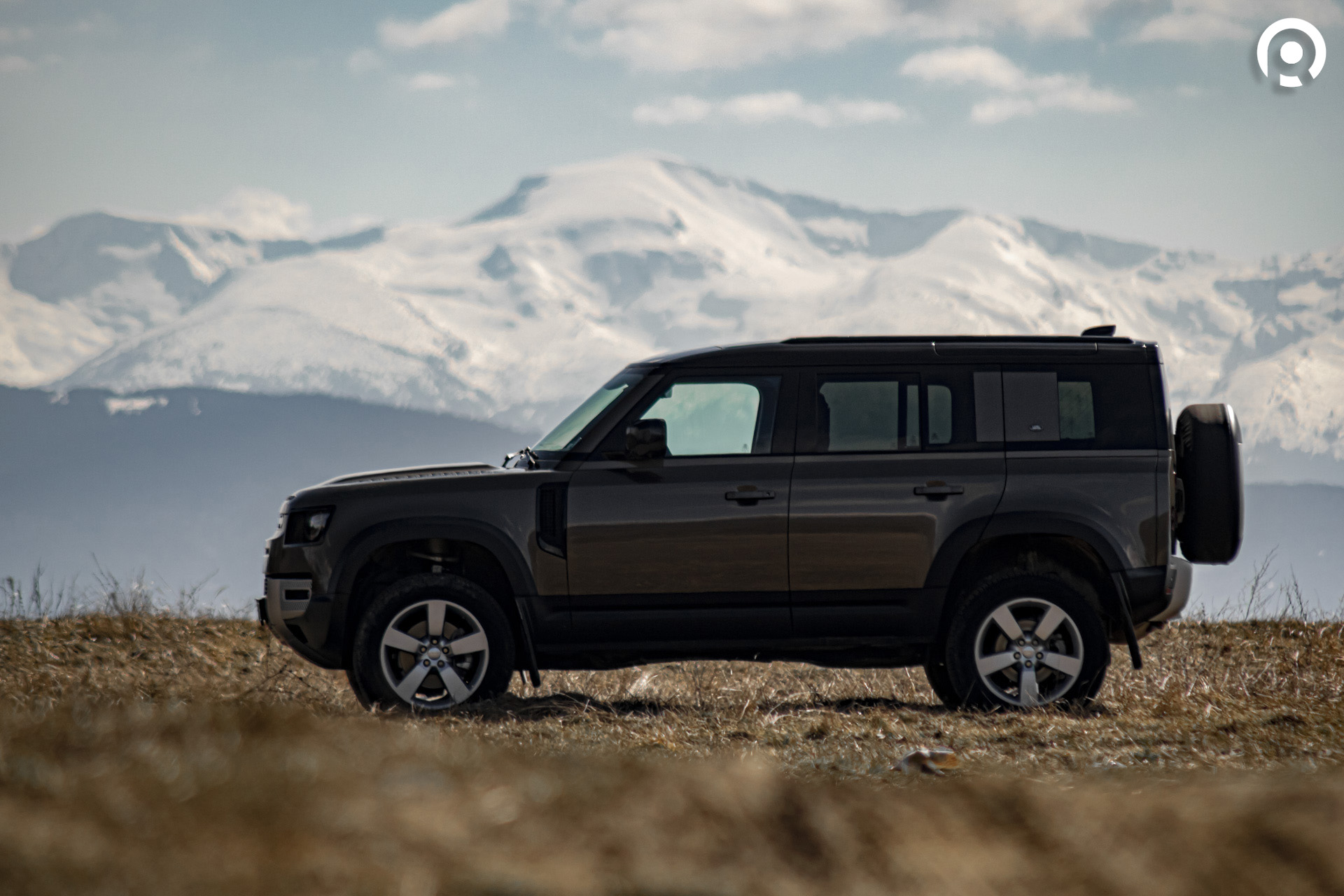
A few years ago I first heard some early information about the upcoming Defender. A friend of mine who was working as a designer at Jaguar Land Rover at the time mentioned, without going into details, that the car would come with 22-inch wheels.
I sensed a certain skepticism in his voice, which made me think the British had lost their minds and decided to build some kind of “lifestyle toy” that would never live up to the legacy of the classic model.
Fortunately, that impression turned out to be wrong.
Yes, the new Defender really can be ordered with 22-inch wheels and it could certainly serve as a stylish toy parked outside a café in the city centre. But the spirit of the original model has not been lost. In fact, its off-road capability surpasses that of the original Defender.
In other words, JLR has created a design that works equally well in front of a café and in the middle of a field. An excellent approach for the 2020s and one that covers the needs and desires of a much broader audience.
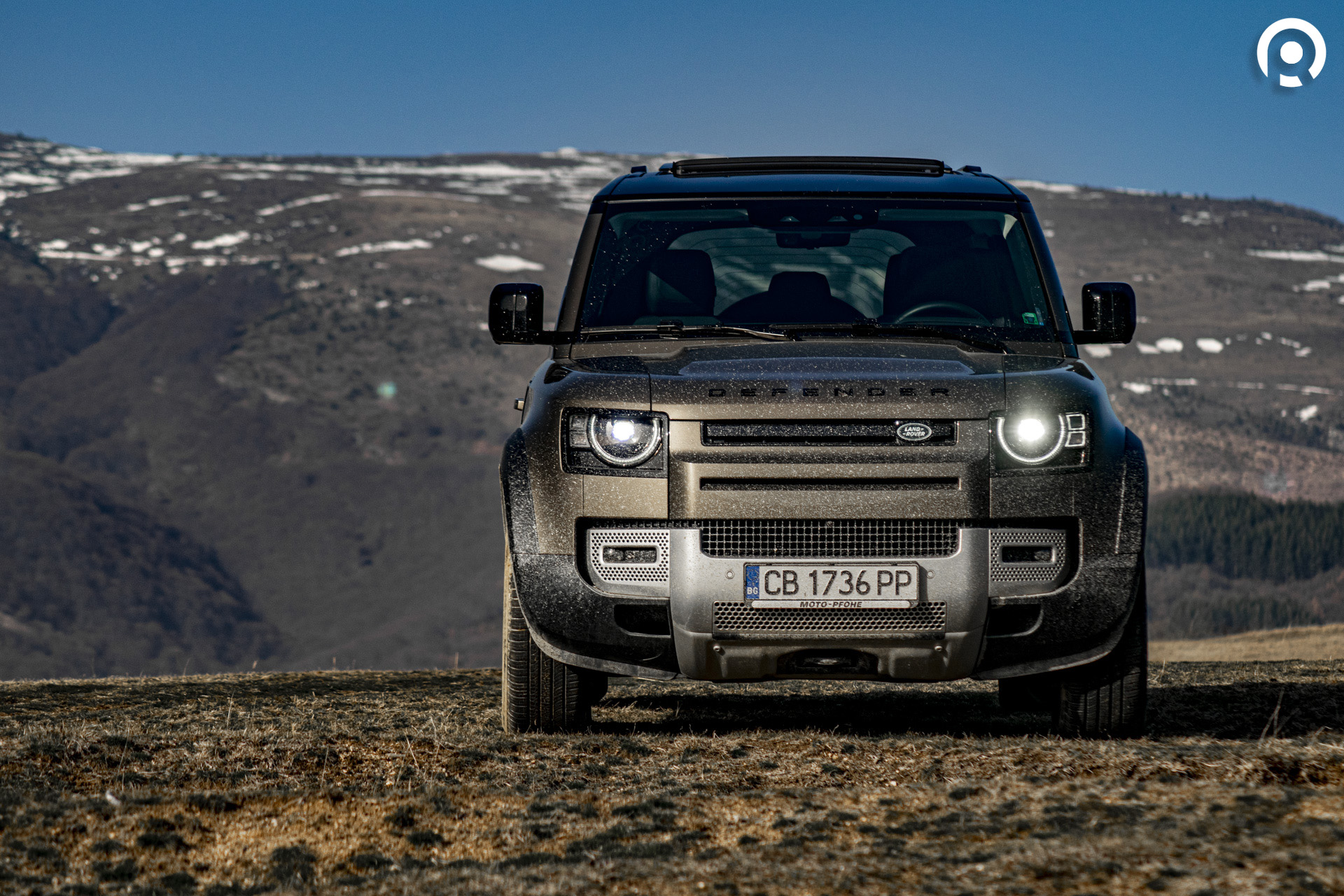
I believe the new Defender recreates the spirit of the original Land Rover in a brilliant retro-futuristic way. On one hand we see classic, tough lines and clear references to the past — especially at the rear of the vehicle and in the so-called Alpine windows, the curved windows at the back of the roof. At the same time, the car looks as if it has come straight out of a design studio concept phase thanks to certain details. The recessed headlights are one example, while the rear lights are another strong modern design element.
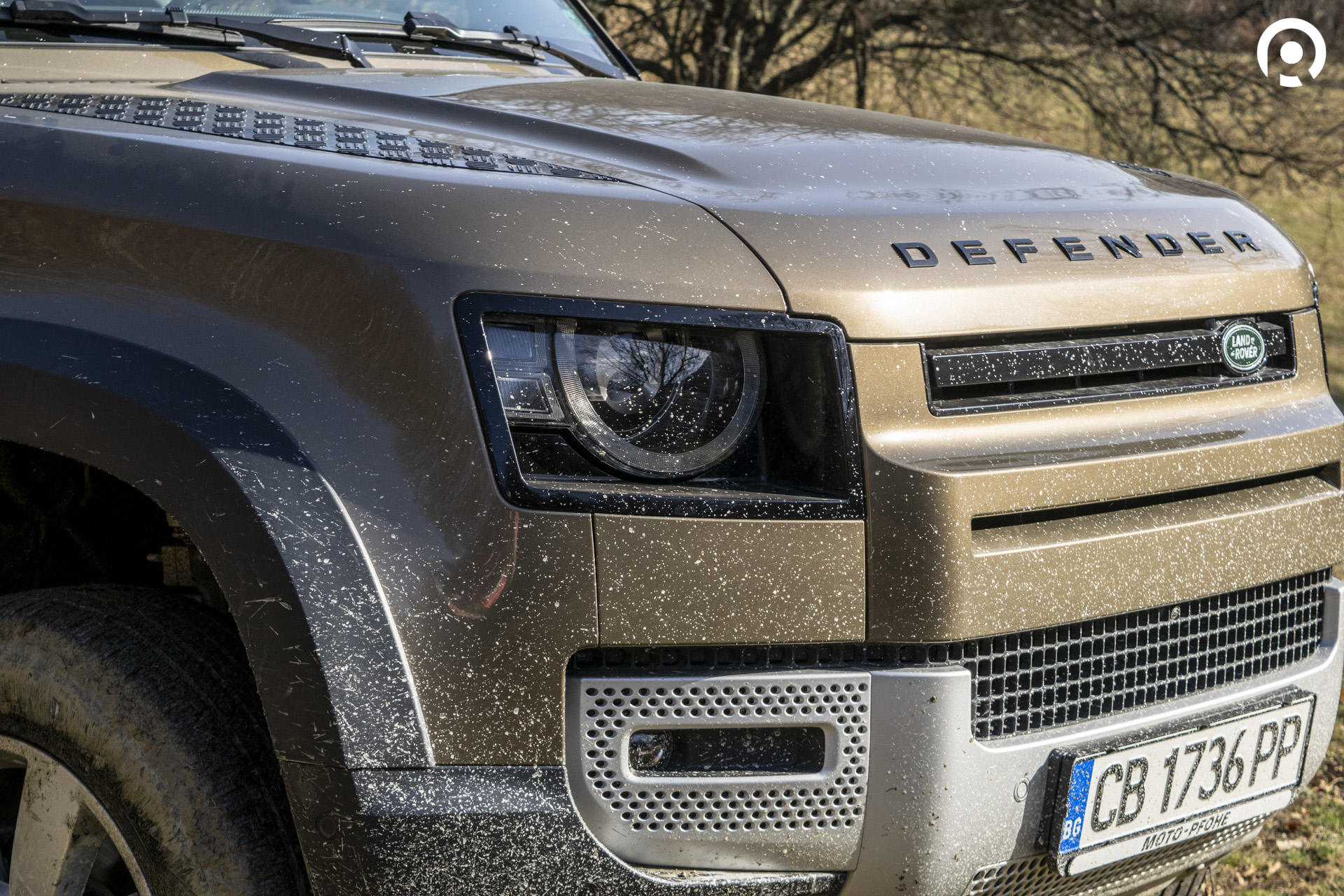
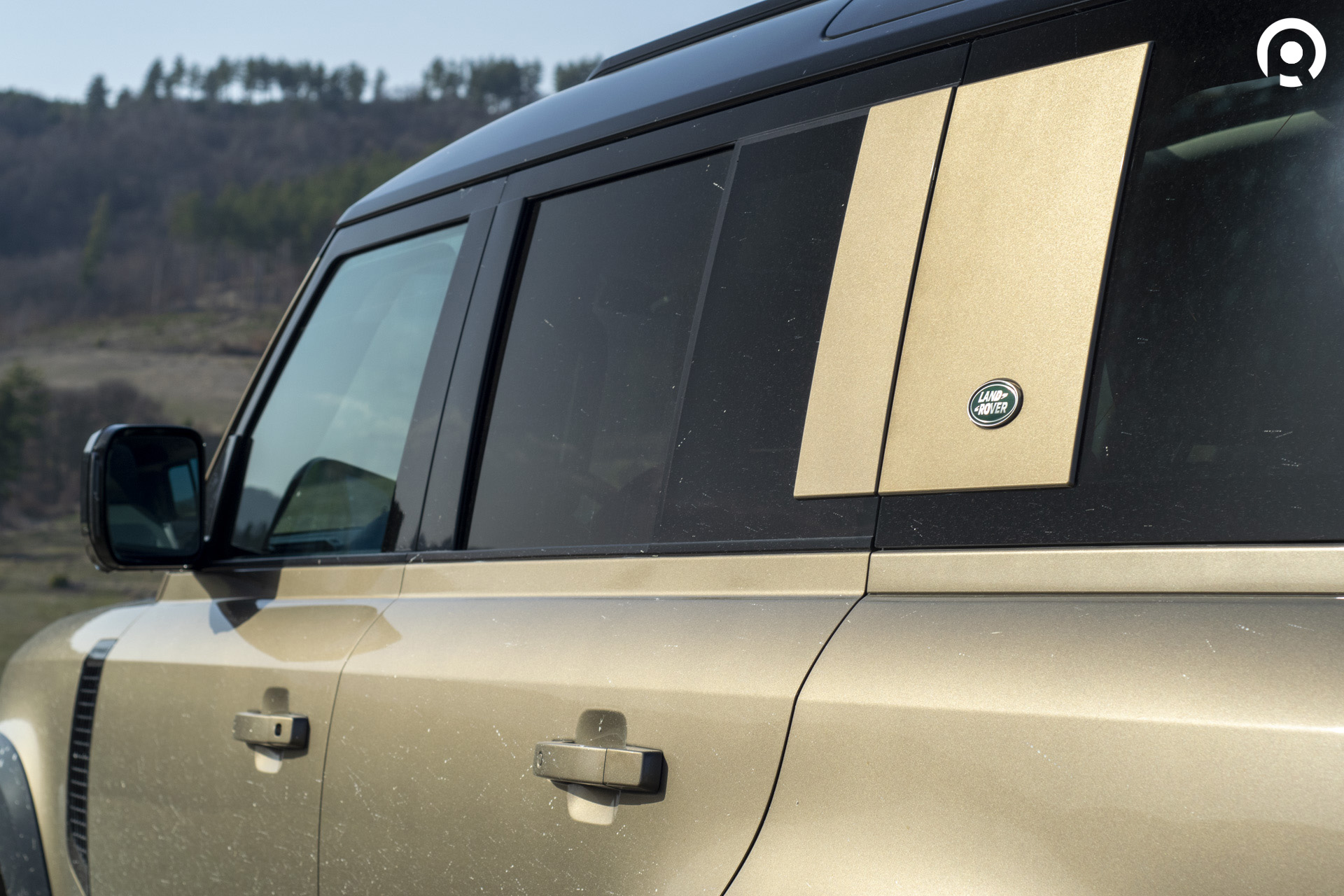
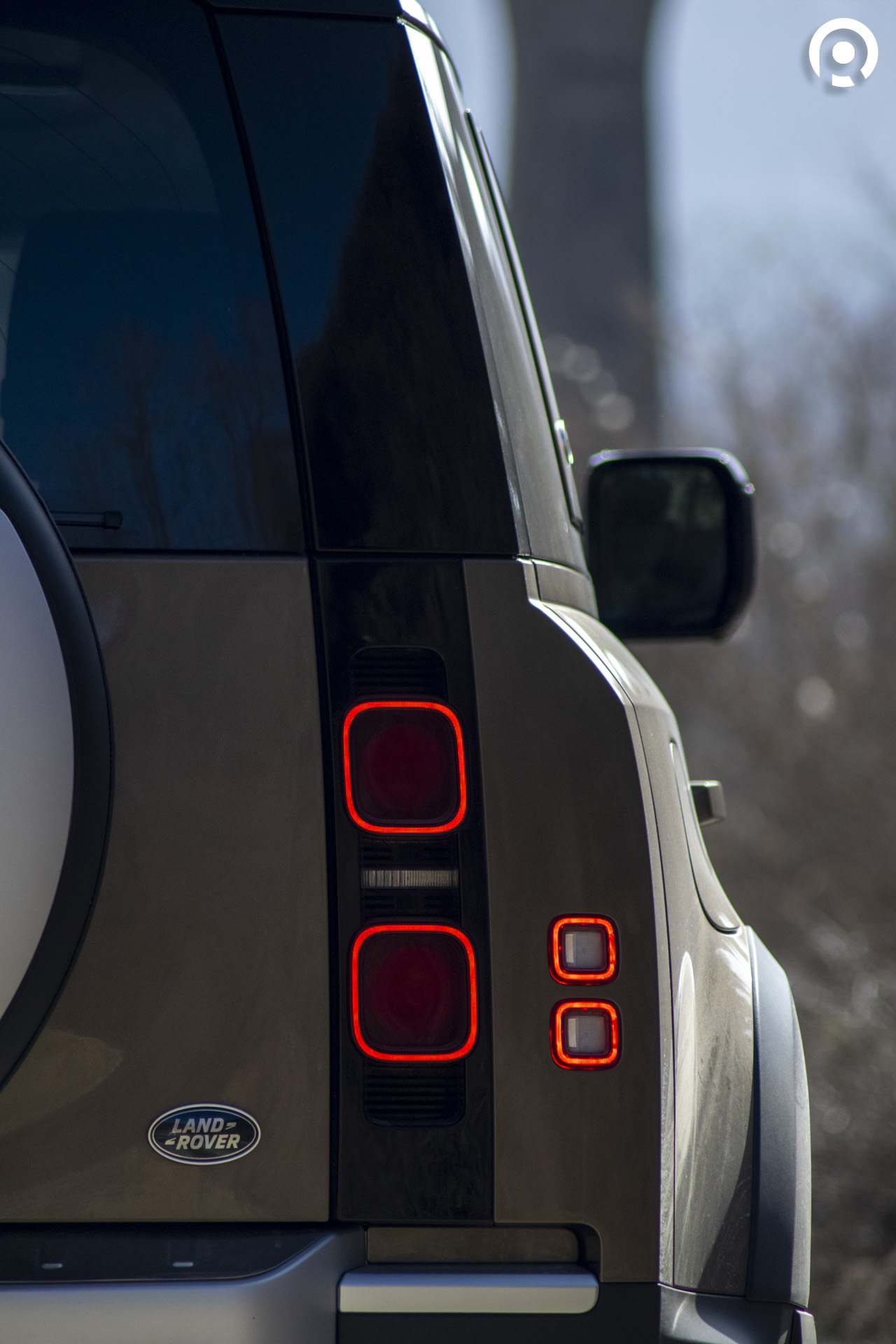
In my opinion, Defender has a very successful design that carries the spirit of the past without looking overly retro or outdated. It is a clever modern reinterpretation similar to what we have seen with models such as the Mini Hatch, Fiat 500 and perhaps most closely the Jeep Wrangler.
Beyond its style, Defender also impresses with its sheer size. It is 5 metres long, almost 2 metres tall (and over 2 metres in off-road mode), while the width reaches 2.10 metres.
At the same time, the front and rear overhangs are extremely short in order to provide large approach and departure angles for those who plan to use the Defender far away from asphalt.
Interior
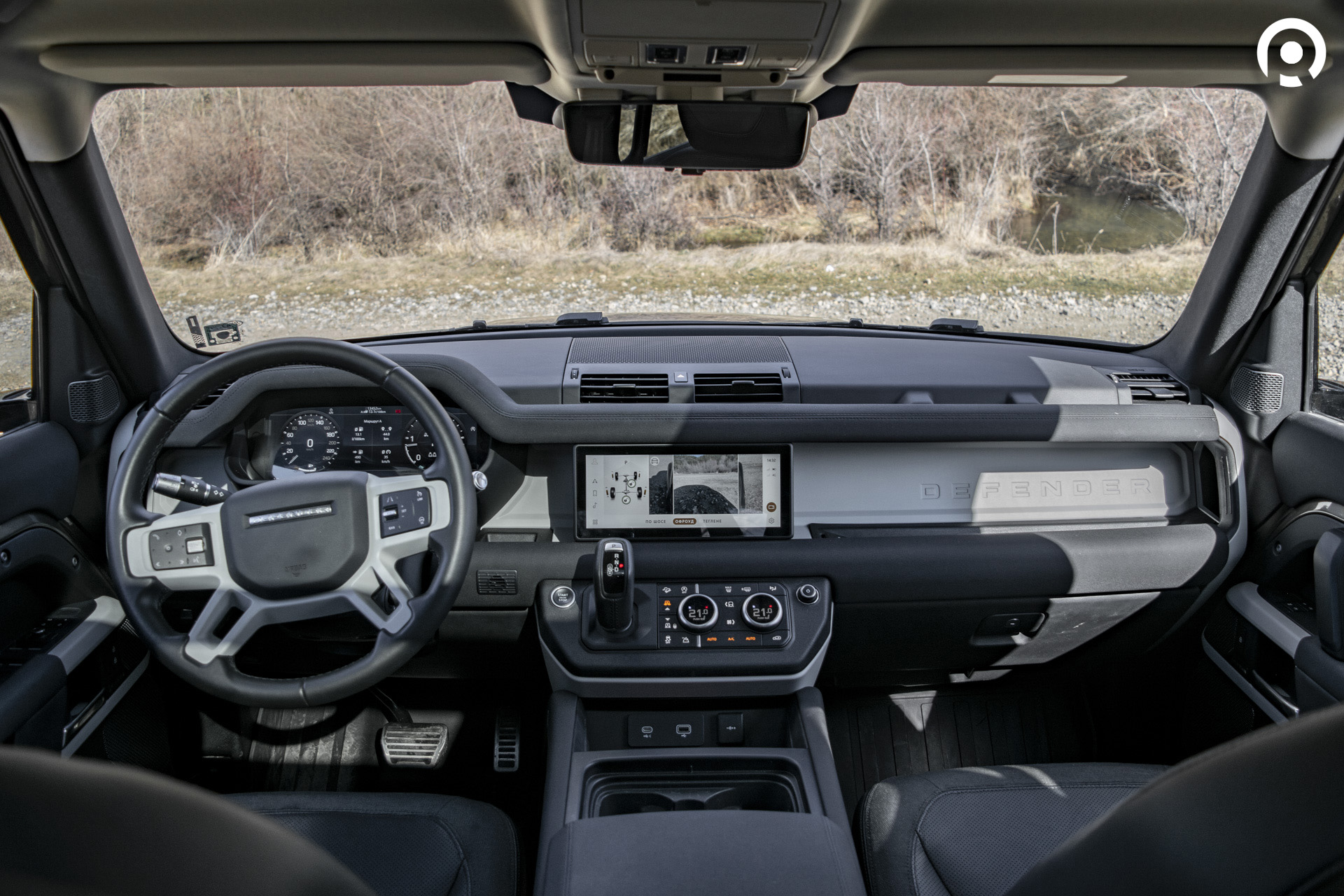
The interior of Defender is no less successful than its exterior design. It combines interesting styling and retro references with practical elements necessary for using the car for work and adventure — things like luggage hooks, large grab handles for climbing in and out, or holding yourself steady when the car is leaning at a worrying angle on a hillside. The floor is plastic for easier cleaning as well.
And on top of all that — there is a lot of space.
[vr url=http://roadhunter.eu/wp-content/uploads/2021/03/gptempdownload-2.jpg view=360]
*The image above is a 360-degree view. Click on it to explore it.
I will start with the obvious: the design and materials. Overall, Defender features a rugged interior design with exposed screws and strong references to its utilitarian past. A little like the Wrangler… but more refined and noticeably more luxurious.
Did I say luxury? Yes, I did. In my opinion, this design and these materials may be far removed from the traditional understanding of luxury — leather, metal and wood — but they create a new, modern interpretation of the concept. Some people might dislike the term, but I would call it “lifestyle luxury.”
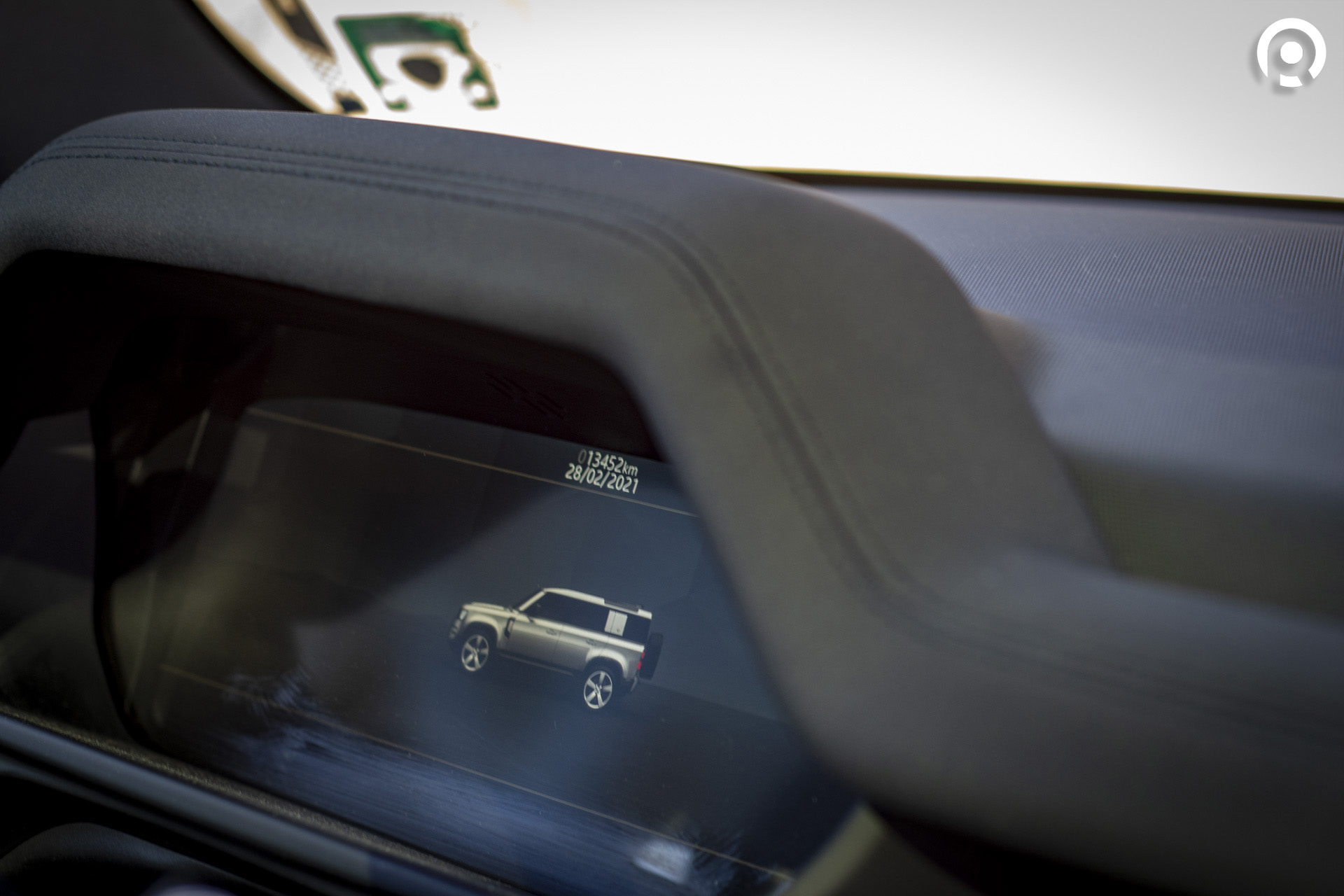
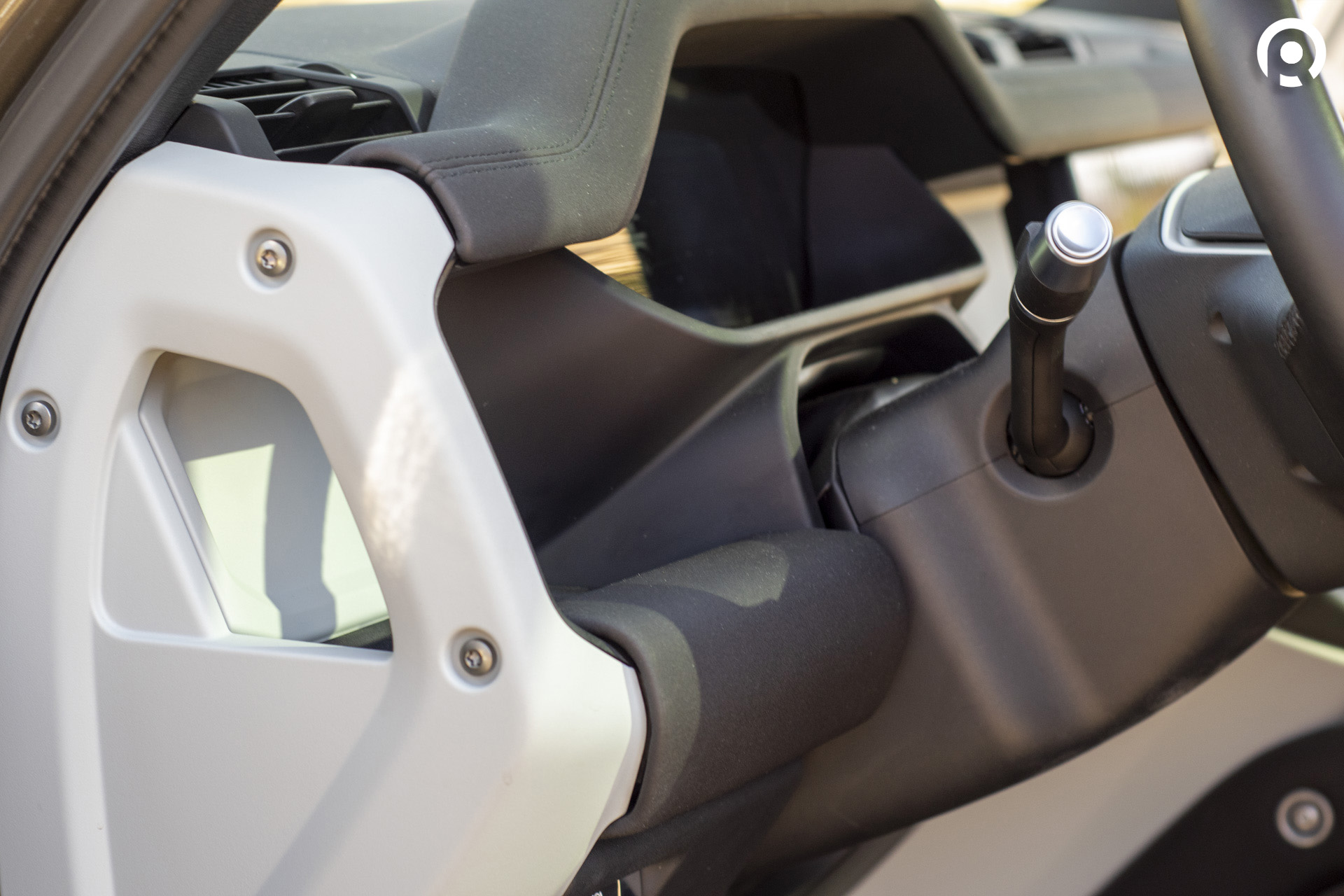
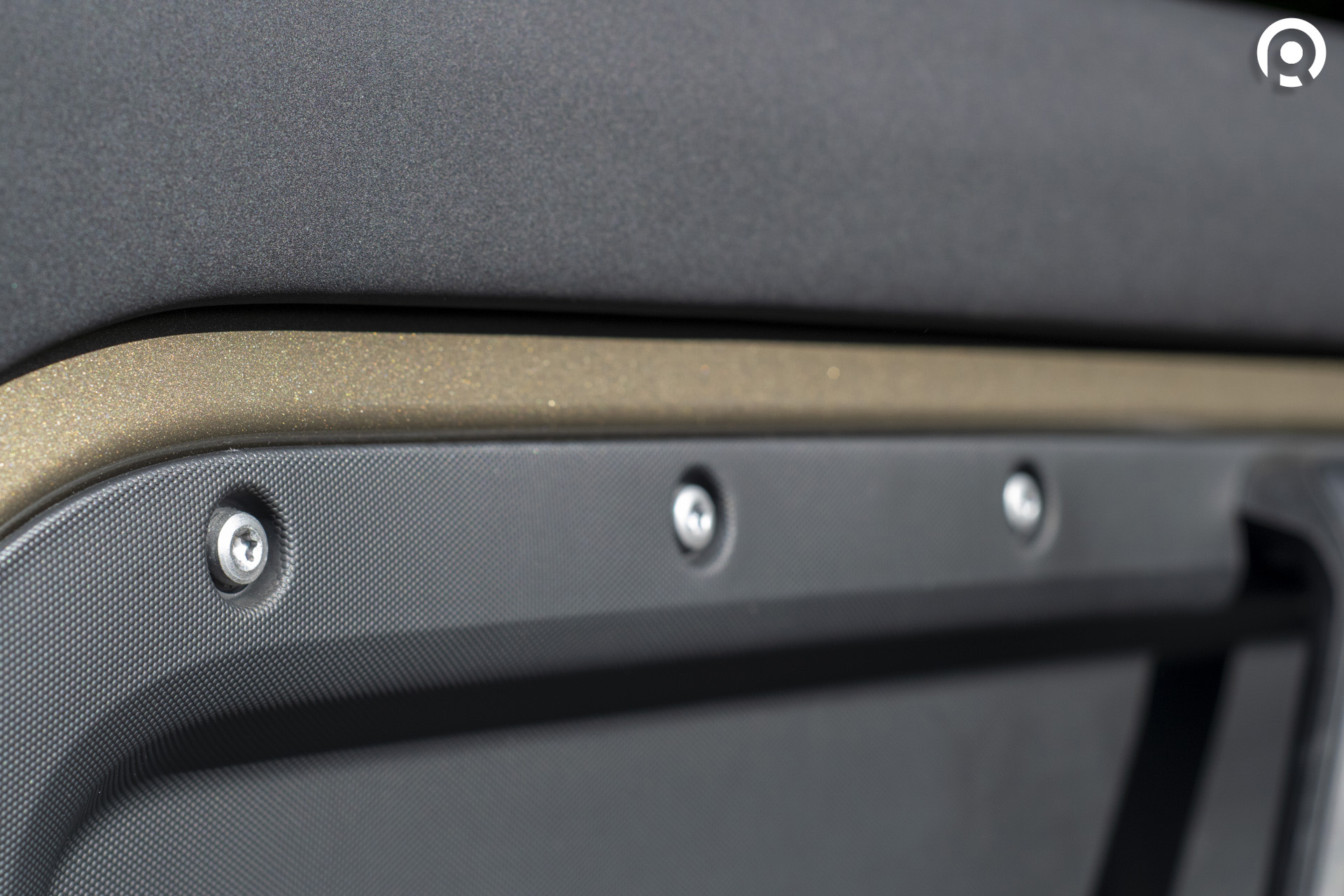
The materials themselves are particularly interesting. The light grey plastic you see on the steering wheel and across much of the dashboard initially looks like something produced through rapid prototyping — designed on a computer and then sent straight to a 3D printer. For some people that might seem strange or even cheap, but I think it fits perfectly with the spirit of the vehicle. And in reality it feels extremely solid — as if it might be the last component of the car that would ever break.
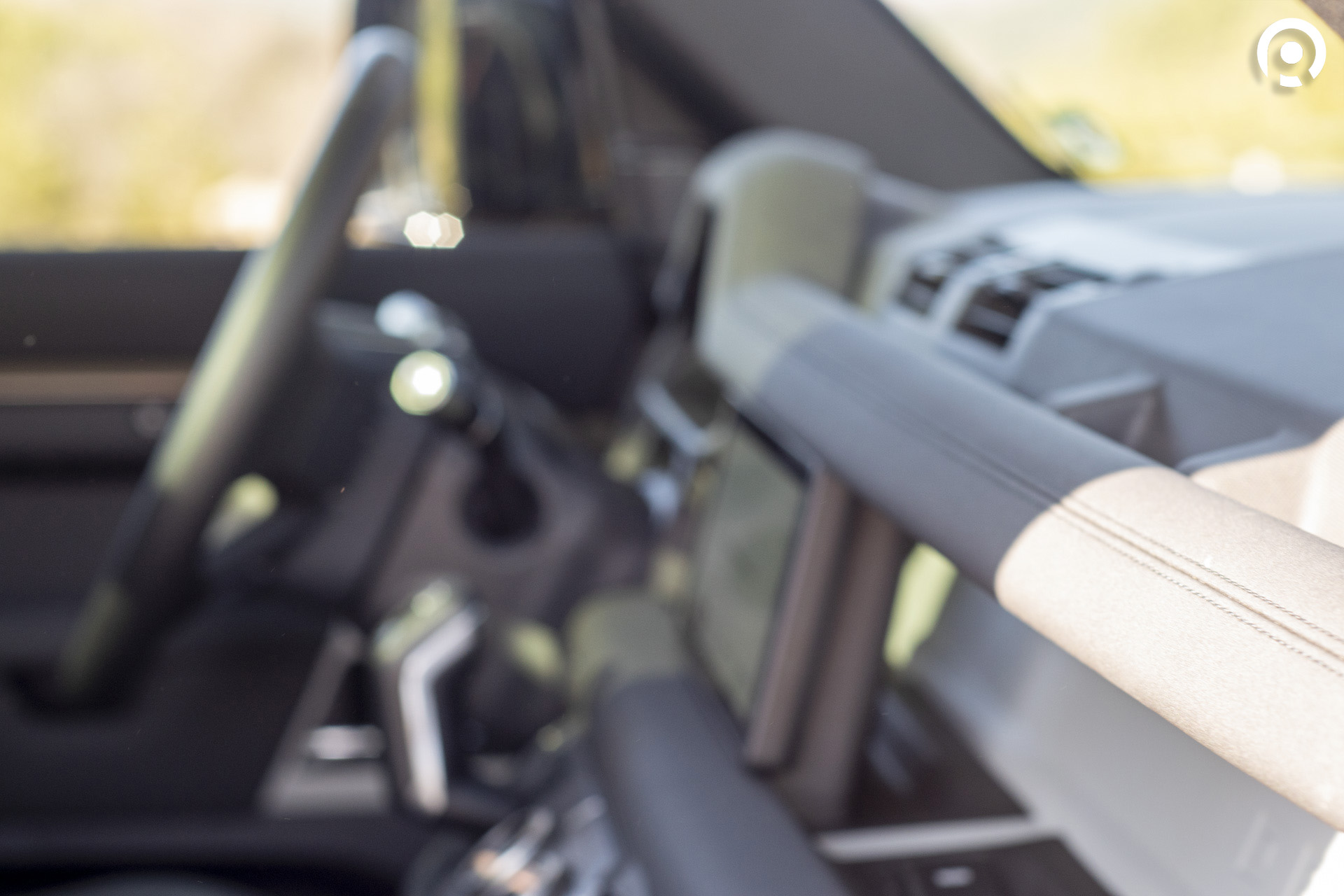
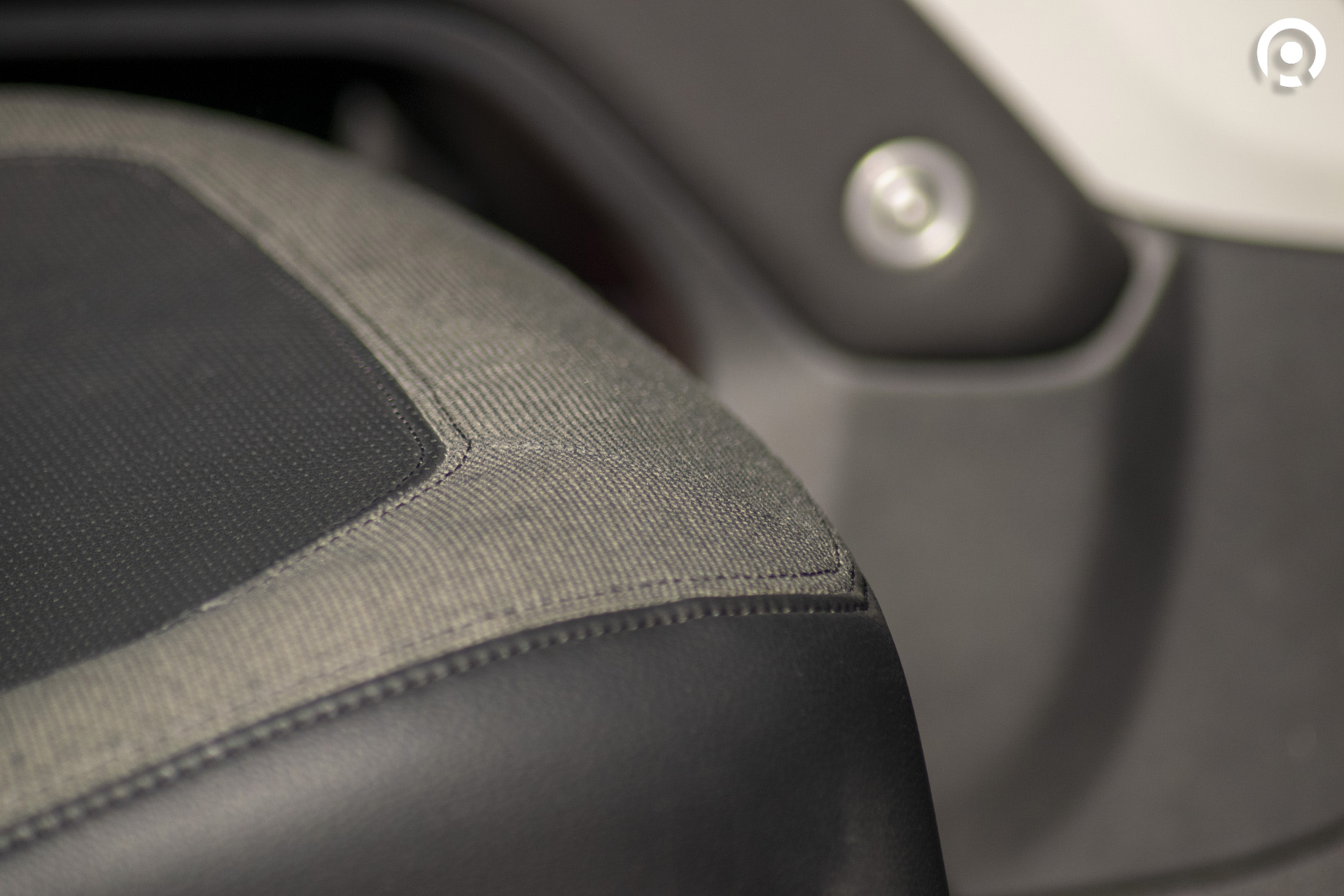
The characteristic cross-beam across the dashboard, which turns into a grab handle in front of the passenger, is upholstered in a material resembling neoprene. Meanwhile the seats combine leather and textile with wool blends in the areas most exposed to wear. The goal is to create an interior that is more resistant to the challenges of adventure, but the result is also genuinely interesting from a stylistic point of view.
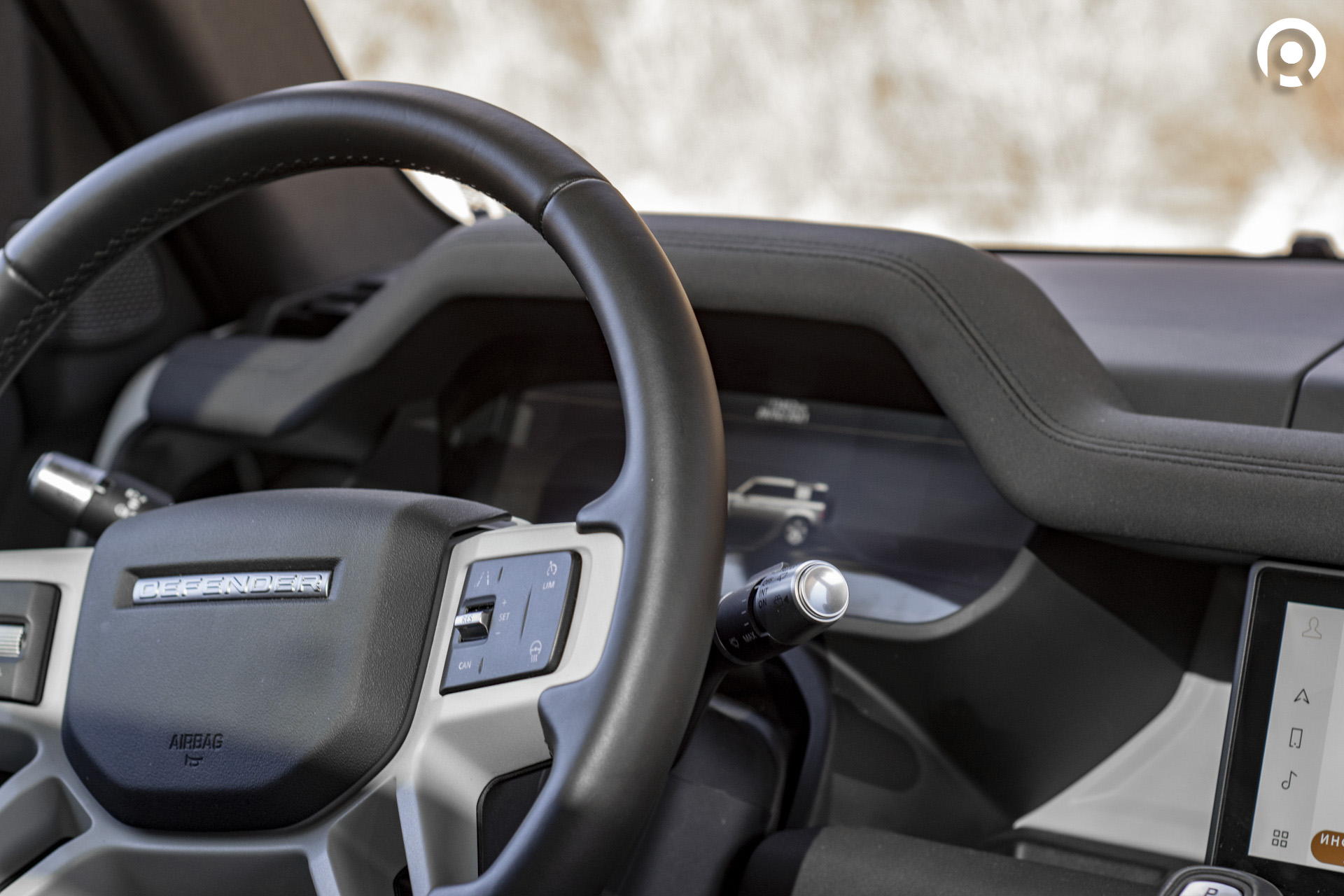
Overall, the interior feels very well built, although the impression is somewhat spoiled by a number of creaks and rattles. In my opinion they mainly come from the panoramic roof, and if you plan to regularly twist the Defender’s body during serious off-roading, it might be better to choose a version with a metal roof instead.
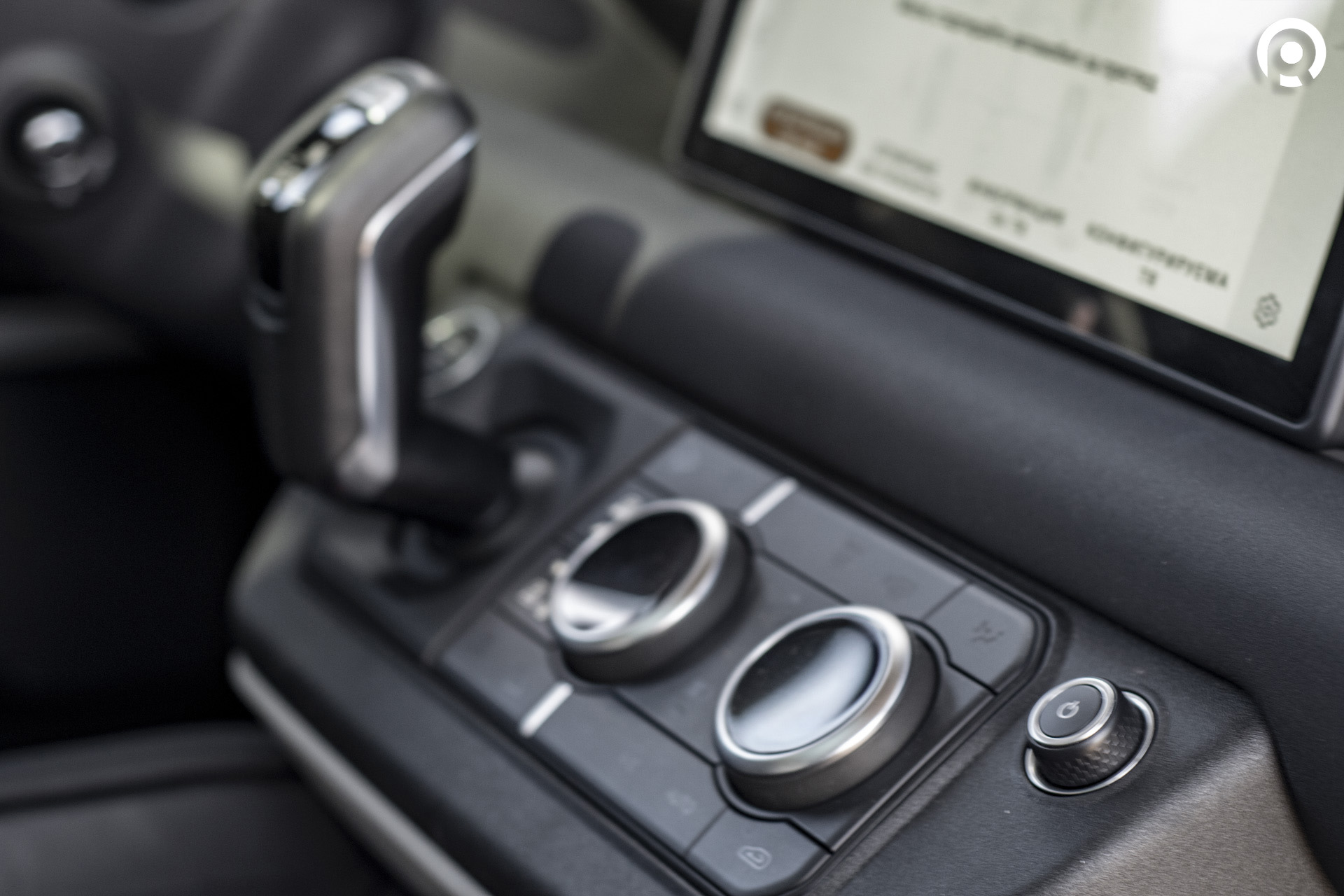
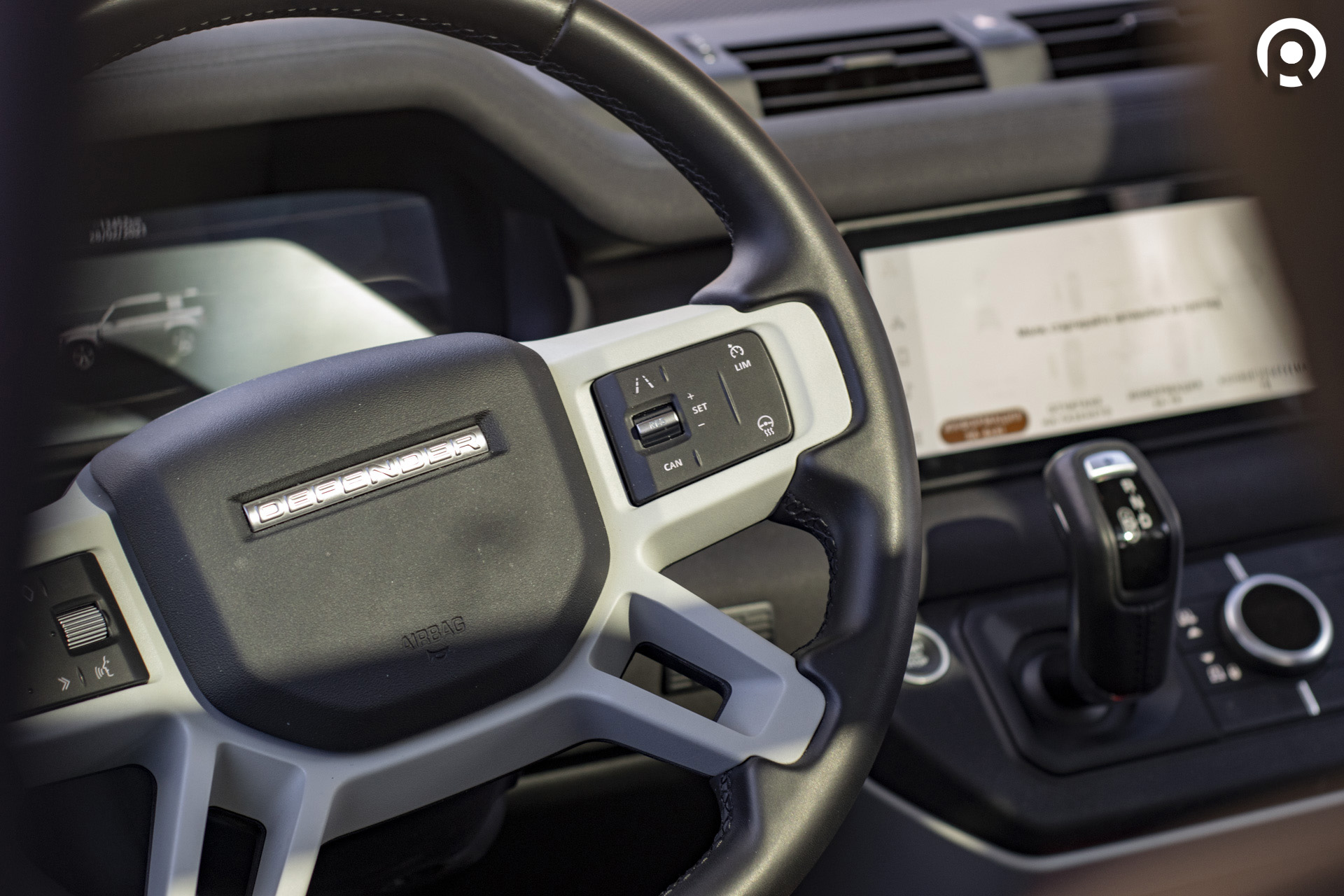
You may also notice the unusually high position of the gear selector and the cluster of controls around it. It looks different compared to other models from the brand and slightly напоминает what you might expect to find in a van.
The reason is interesting — Defender can be ordered with an optional third seat in the front row. In this configuration, the lower part of the centre console moves aside to free up legroom for the unlucky person sitting in the middle.

The second row impresses with a huge amount of space and is genuinely comfortable. The rear seat base is positioned high, the floor is flat, and the distance to the front seats is generous. On top of that, the glazing is very generous, providing excellent visibility in every direction.
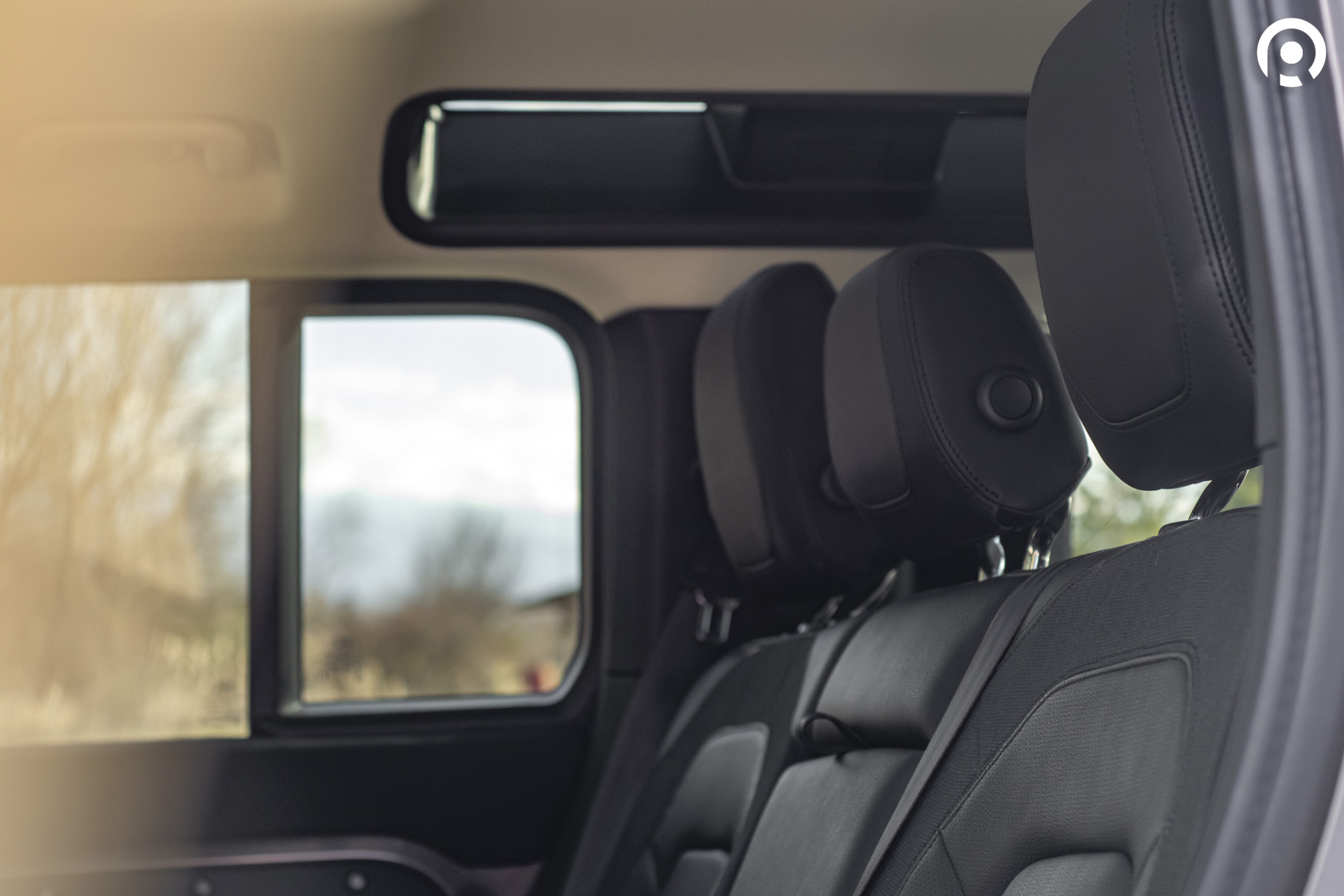
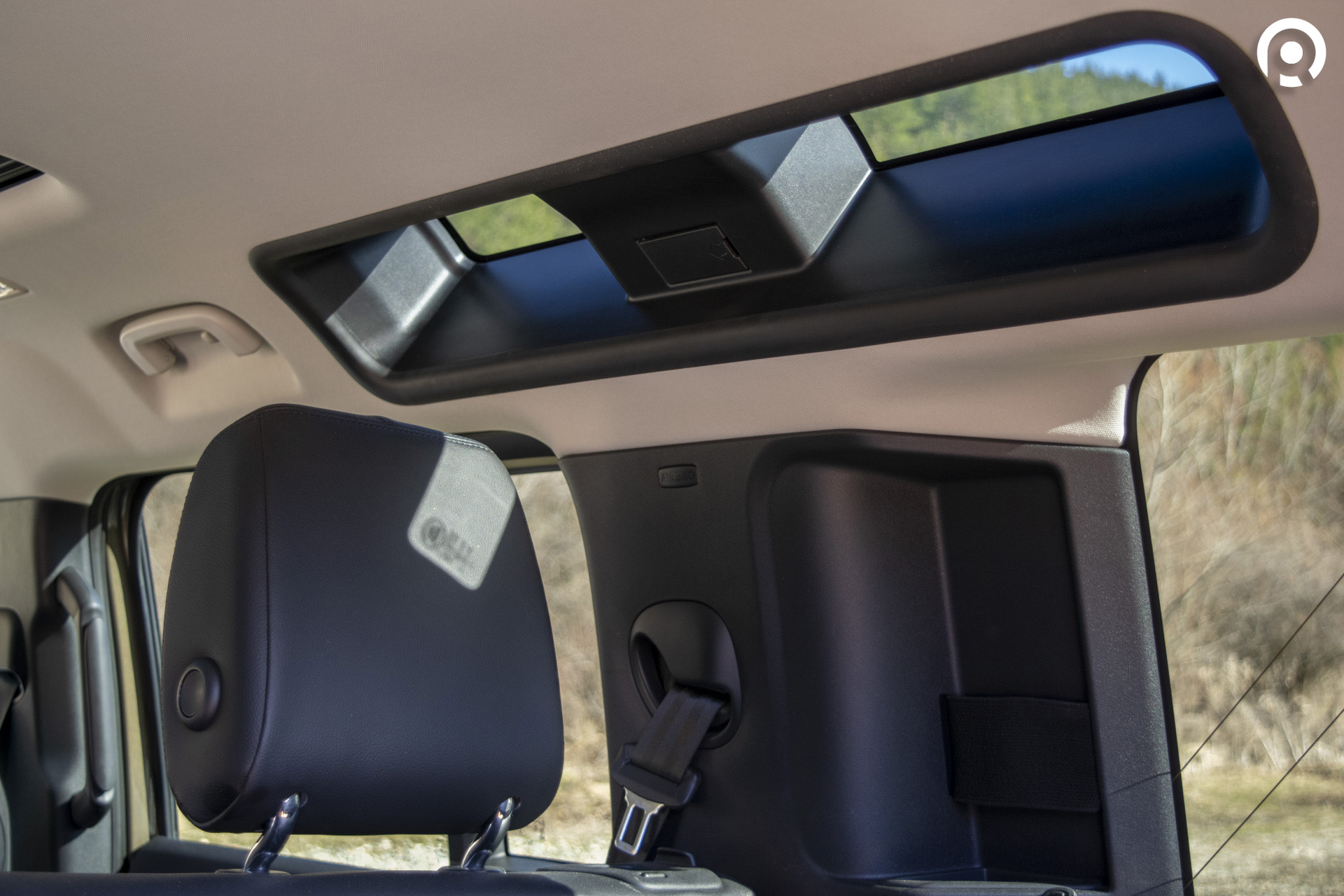
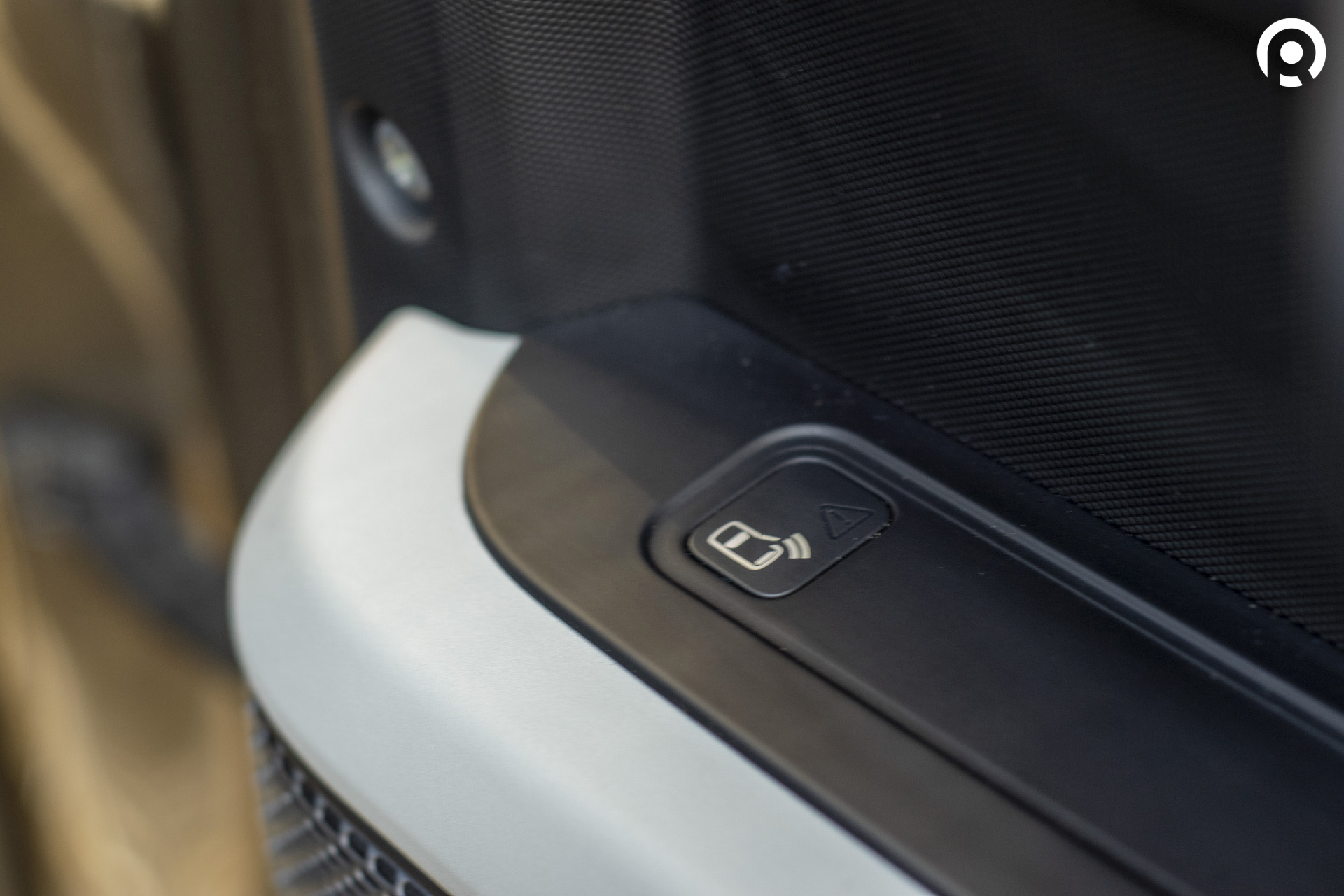
Speaking of visibility, it is impossible not to mention the ClearSight mirror. With the press of a button, the central rear-view mirror turns into a screen displaying an image from a camera mounted on the roof of the car — where it is less likely to get dirty. Extremely useful if the luggage compartment is loaded all the way to the roof.
There is another system called ClearSight Ground View. This feature uses cameras and software to allow you to observe the terrain around the front wheels closely — without seeing the car’s body itself. A very helpful tool when navigating difficult off-road terrain.
Overall, I think the Defender’s cabin offers a bit of everything — space, technology, practicality and character. A very well executed job from Land Rover.
On the road
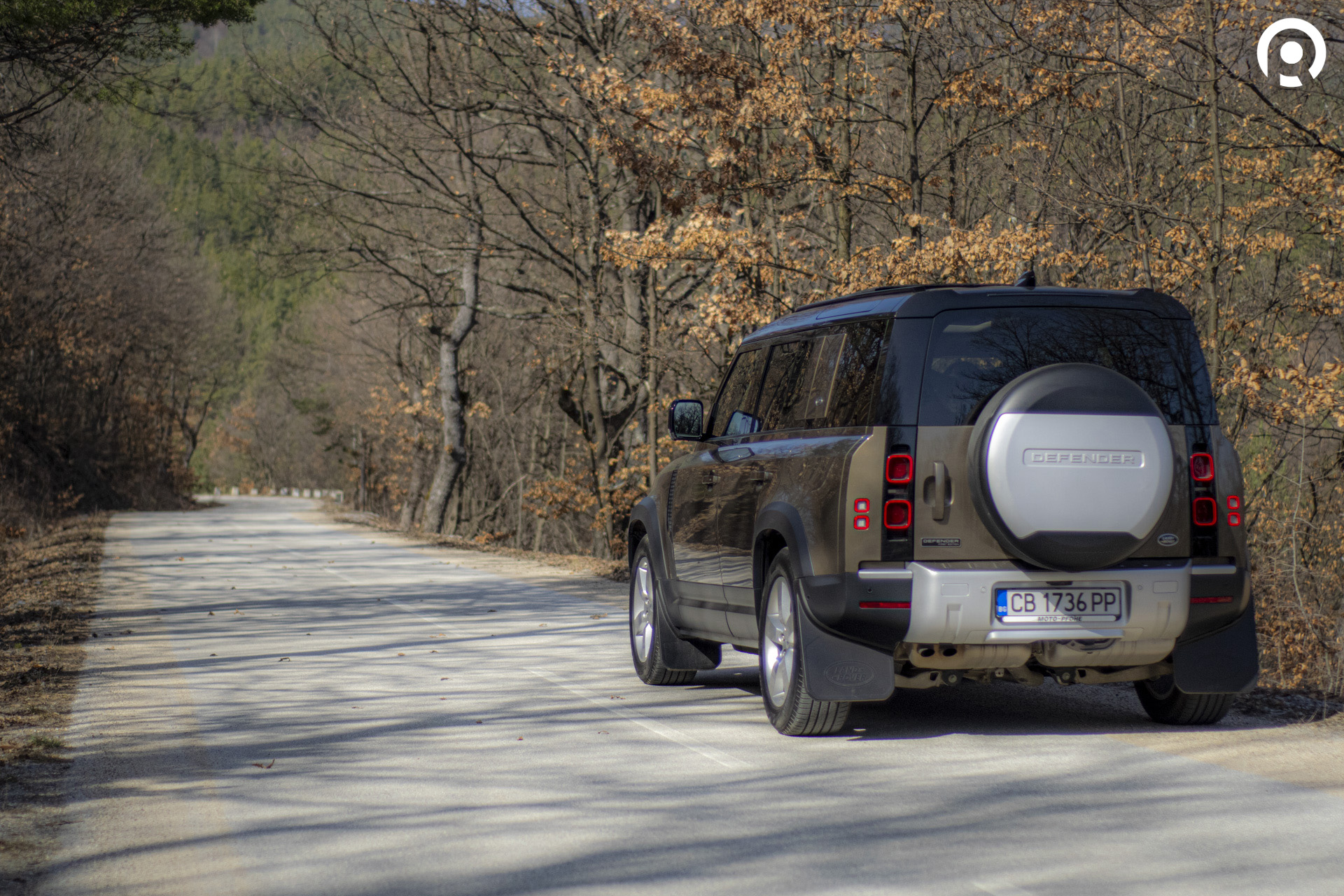
Although it has been on the market for less than a year, the Land Rover Defender (L663) has already undergone a major change. That change is electrification, in the form of mild-hybrid systems with a starter-generator.
But that’s not the only development. The four-cylinder diesel engines have now disappeared from the range. Diesel power now comes from six-cylinder inline units with mild-hybrid assistance, producing 200, 250 or 300 hp.
On the petrol side, a mighty V8 engine with 525 hp has joined the lineup.
But let’s return to the test car. It was equipped with a four-cylinder diesel producing 240 hp. The car accelerates from 0–100 km/h in 9.1 seconds, while expected fuel consumption is between 8.9 and 9.6 l/100 km. The gearbox is an eight-speed automatic from ZF Friedrichshafen, paired with a low-range transfer case.
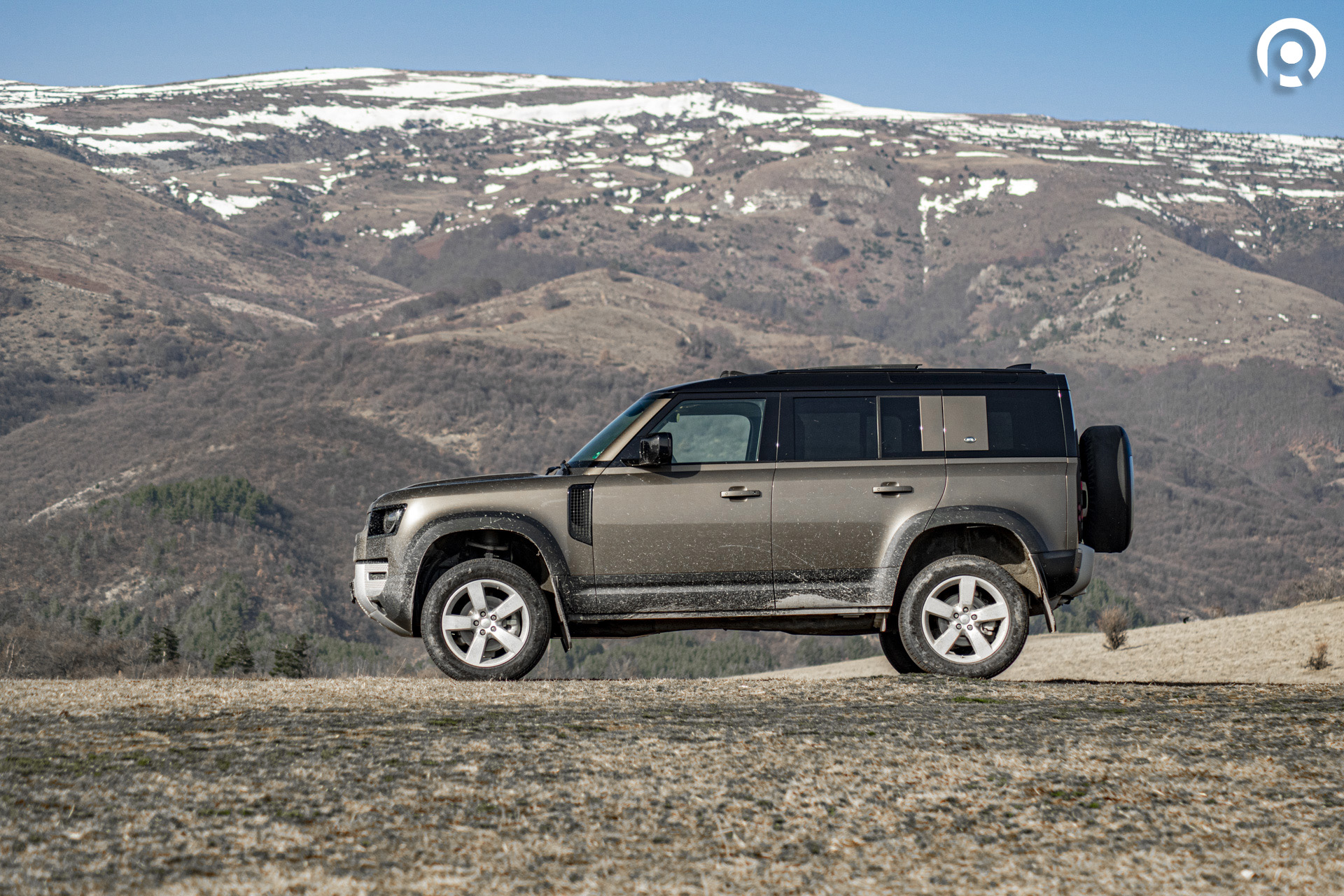
Those are the dry figures. The interesting part, of course, is how the car performs both on the road and off it.
The moment I opened the driver’s door I was reminded of the Defender’s generous dimensions. Even in the lowest suspension setting — designed to make entering and exiting easier — getting into the car still involves a bit of climbing.
Other models from the brand are not very different in this respect, such as the Land Rover Discovery or the Range Rover Sport. For some people, adding the optional side steps might be quite useful.
Once seated in the high driving position I set off, starting in the city. There the car’s size once again made itself felt, particularly in the form of limited visibility close to the bodywork.
This is where the camera system deserves praise again. In certain situations it can be extremely helpful and even offers a “remote” perspective using AR technology. What I saw in the Defender is probably the most comprehensive system of this type.
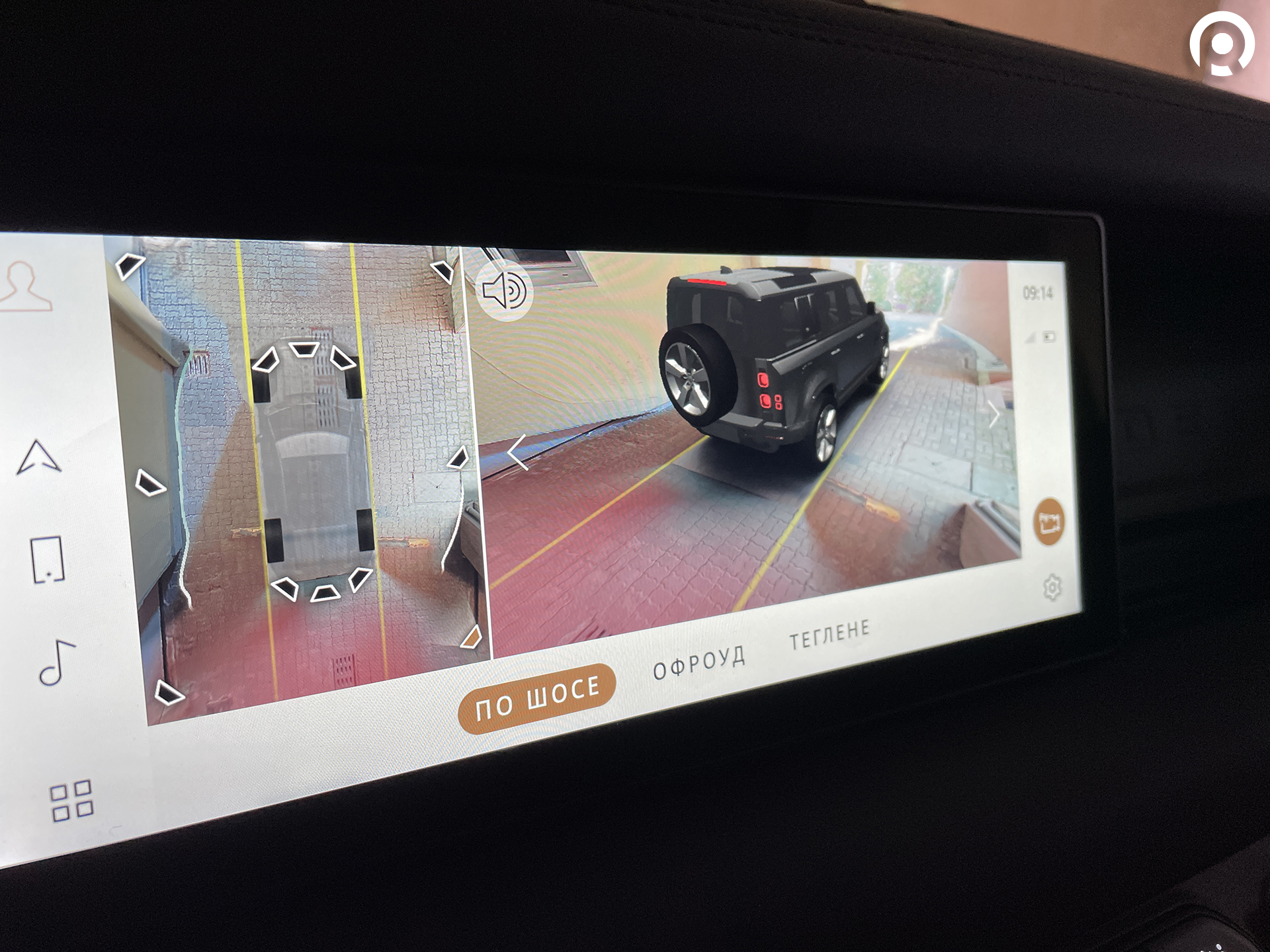
Beyond the issue of size and cameras, the car behaves surprisingly civilised in the city. It does not feel like a focused off-road machine but rather like a luxury SUV. At low speeds the car is fairly quiet, although the engine has a slightly rough diesel clatter. The air suspension also deals well with bumps without particularly impressing.
In other words, if it were not five metres long, I might say the Defender is perfectly suitable as a city car.
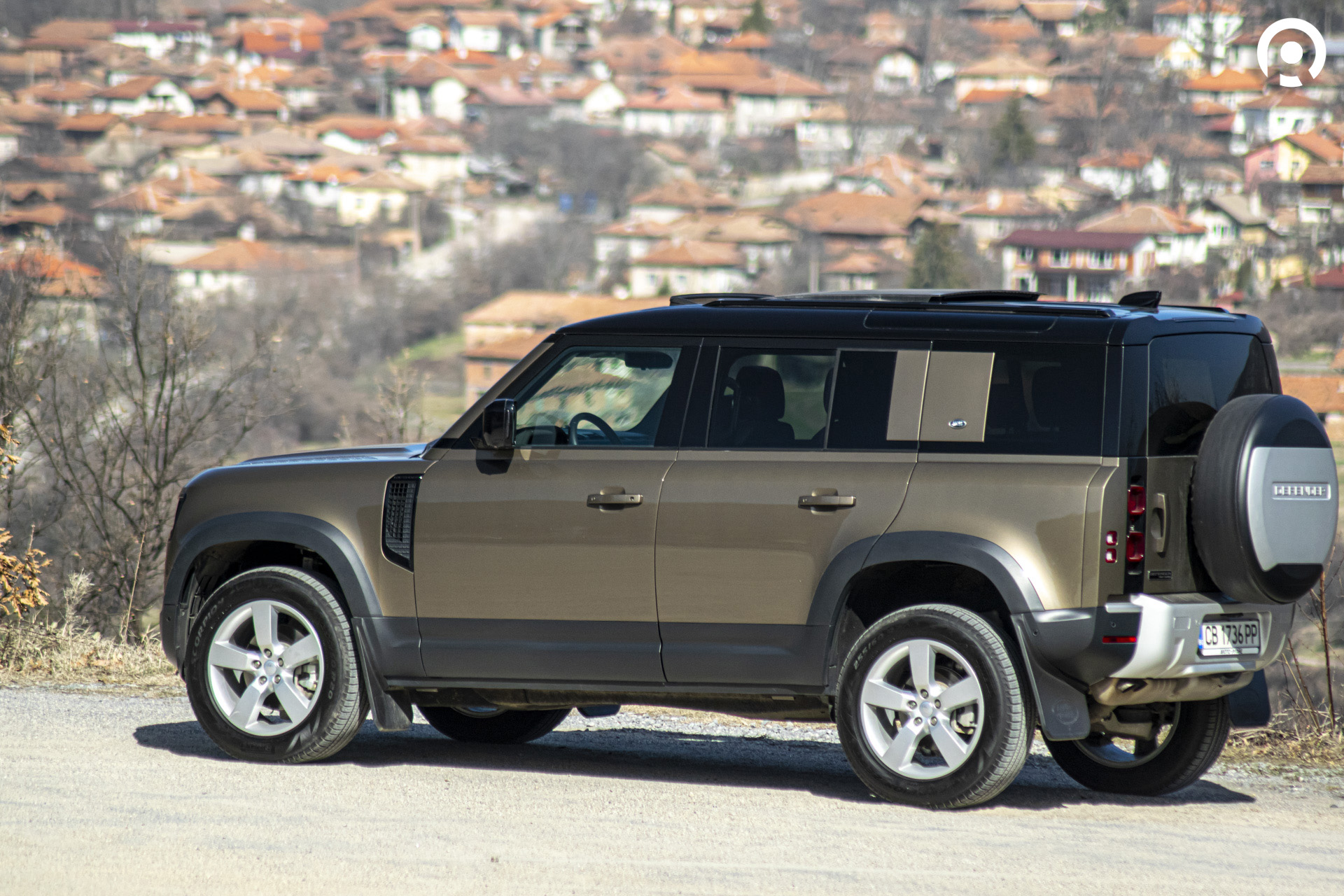
The next day I headed towards the Sub-Balkan road. At speeds of 90–100 km/h, the Defender confirmed my impressions from the city — it does not suffer from the typical disadvantages of dedicated off-road machines.
The car behaves well and I can easily imagine using it in everyday life. The cabin is quite quiet. As expected, the huge side mirrors and upright windscreen generate slightly more aerodynamic noise, but nothing disturbing. In this respect, the car’s style has clearly taken priority over aerodynamics, resulting in a drag coefficient of 0.39 (compared to 0.33 for the similarly sized Discovery).
The road was not busy, but there were still opportunities for overtaking. The Defender’s dynamics with this engine are decent, although I noticed a rather large delay between pressing the accelerator and the response from the engine and gearbox.
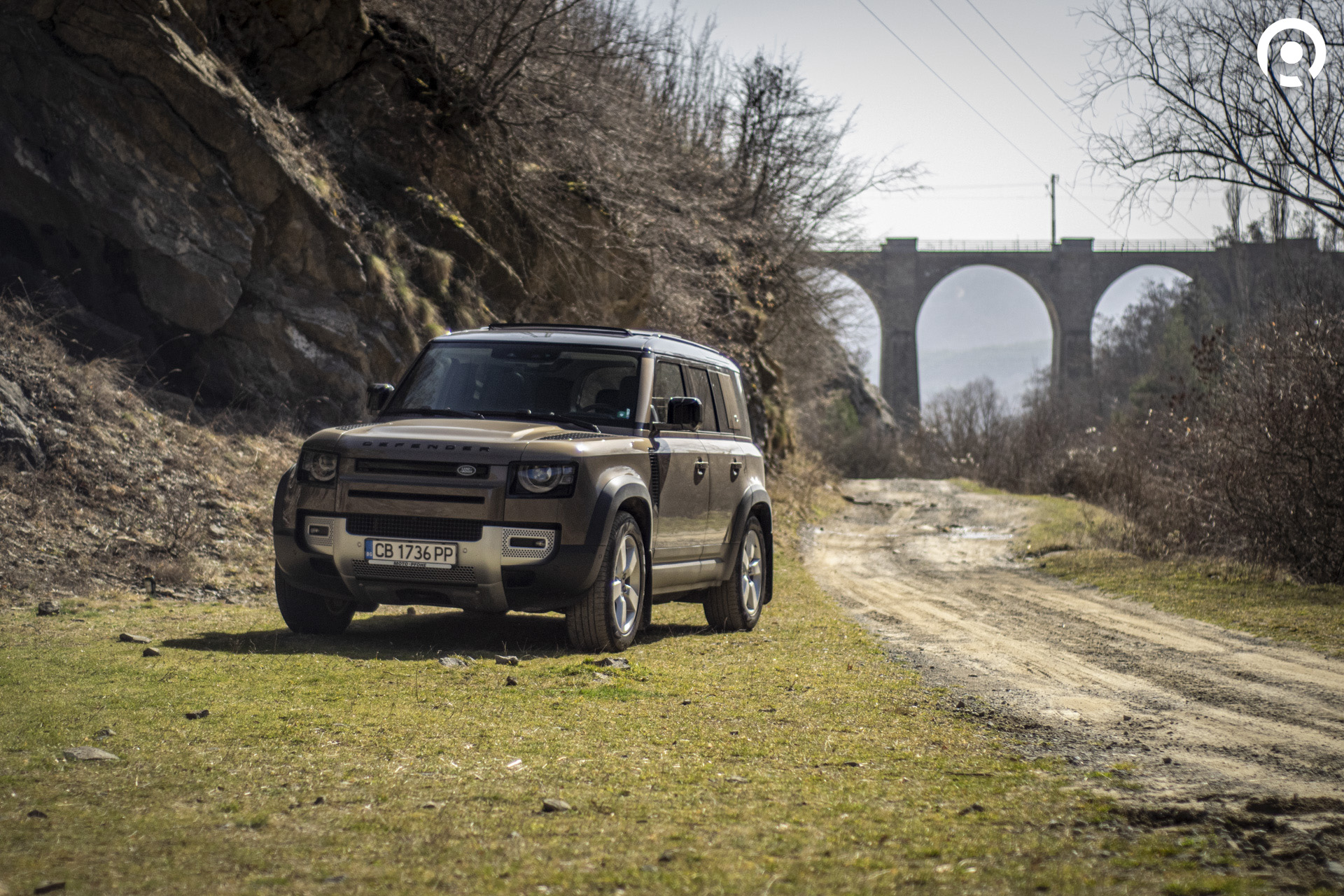
As a result, overtaking requires some planning, although the excellent visibility allows you to look far ahead in traffic.
Soon I reached the twistier section of road near Bunovo where, cautiously, I decided to push the car a little harder. The vehicle’s weight and high centre of gravity become very obvious, and despite the air suspension the Defender leans quite noticeably in corners.
Add the seats with limited lateral support and the large steering wheel and… I quickly backed off the throttle. It is clear that this is not a car designed for enthusiastic cornering, but I had to try.
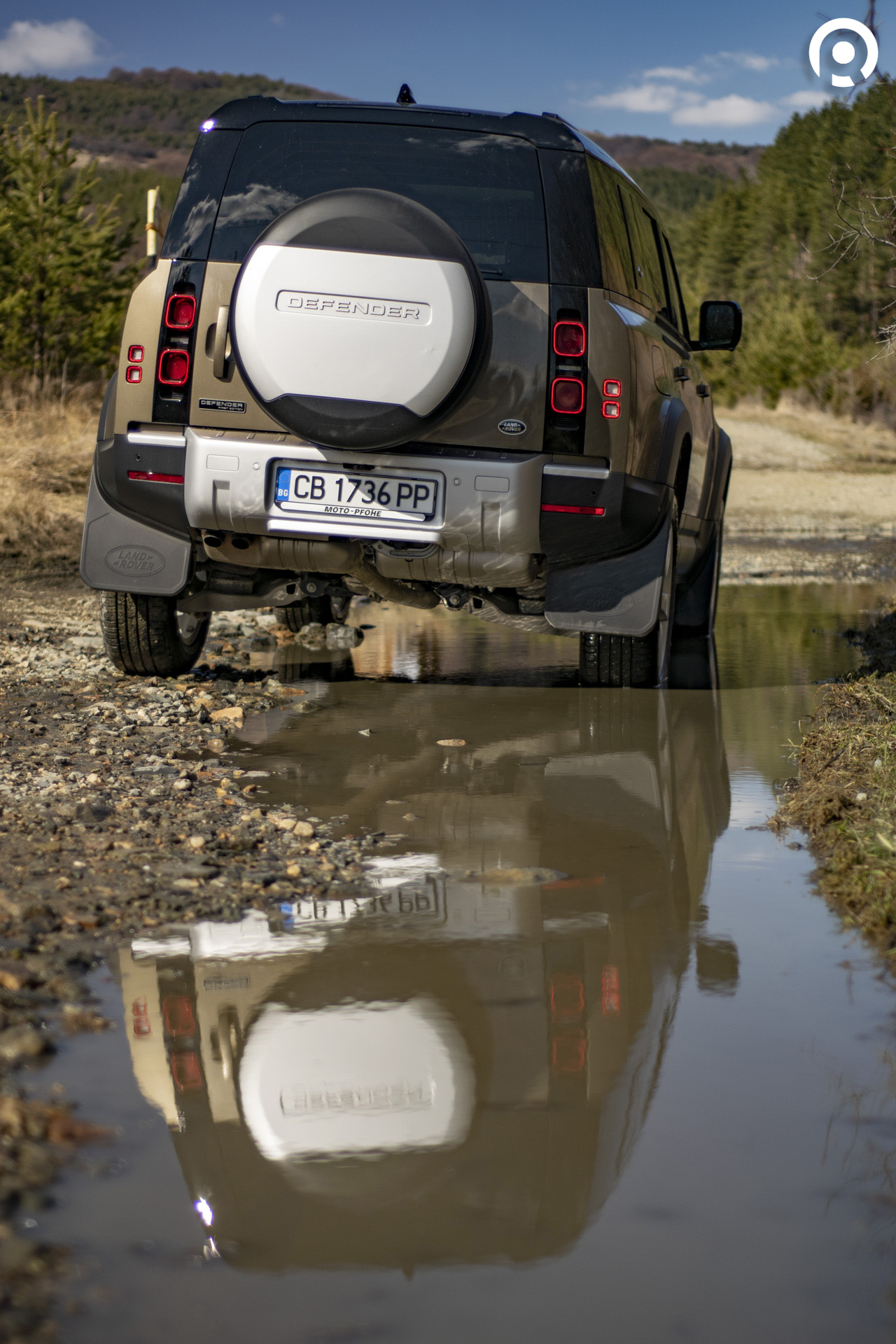
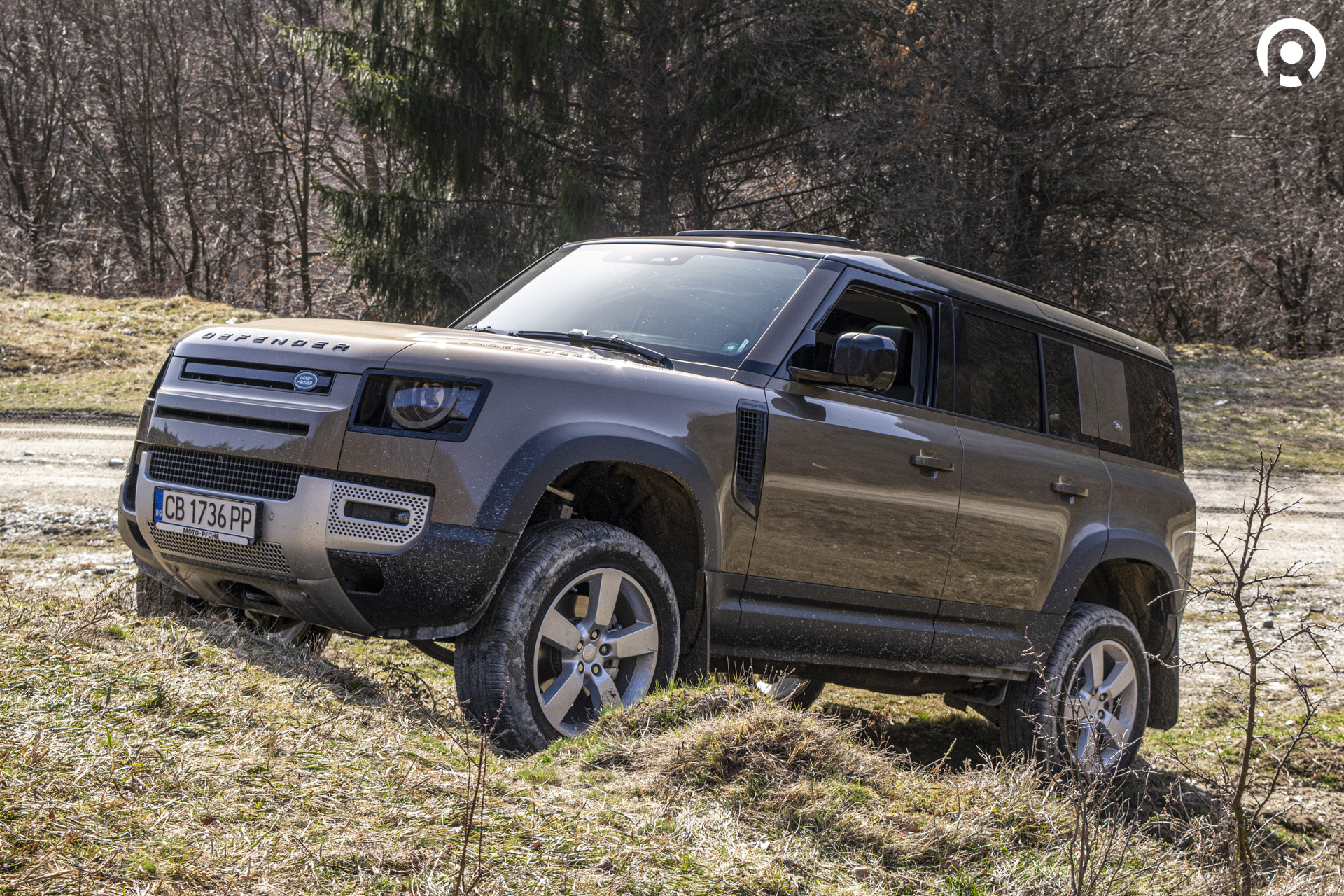
Not long after discovering the Land Rover’s weakest side — corners — I decided to test its true strength. I left the main road and headed towards the mountains.
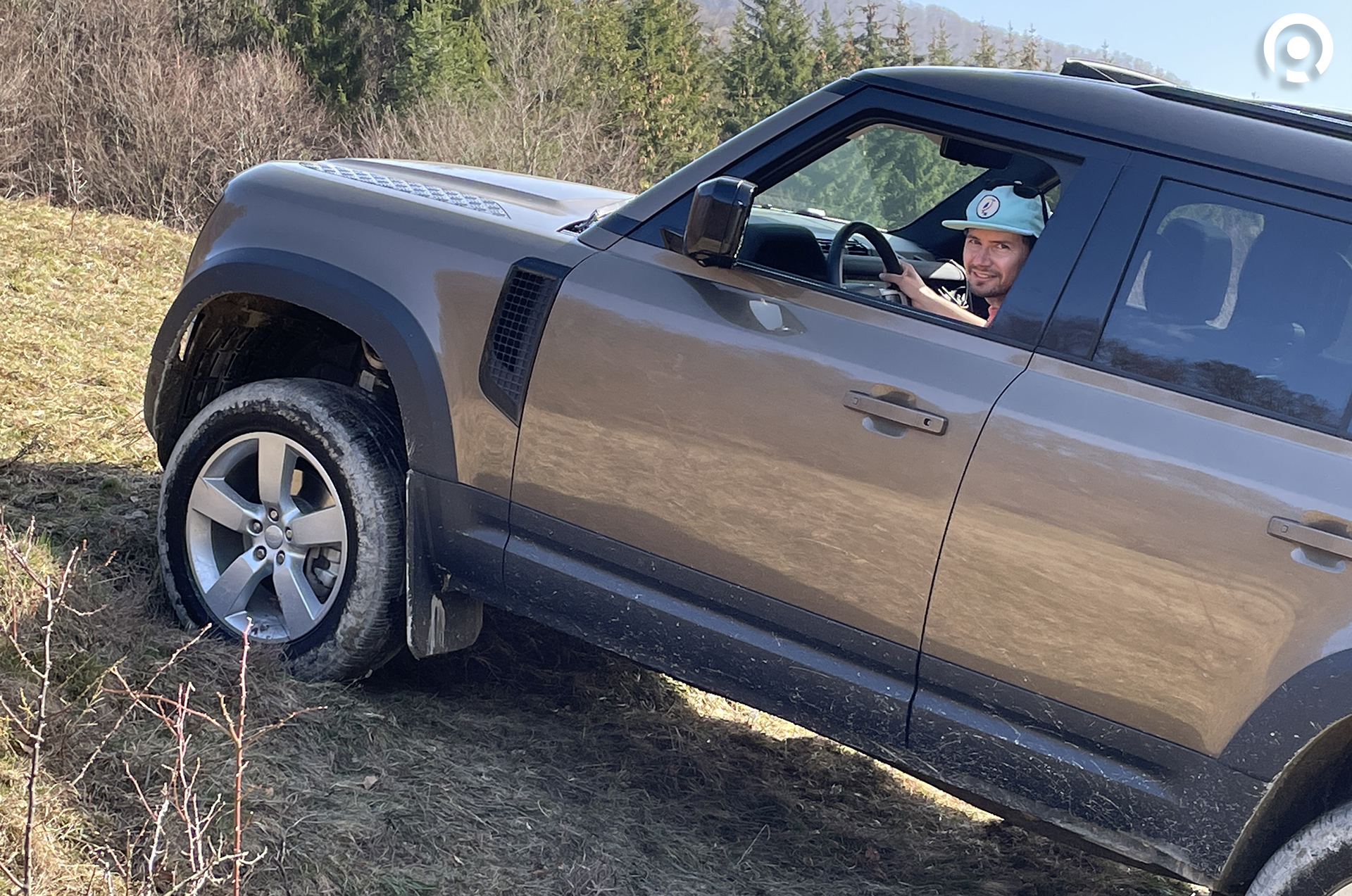
The Defender was built for off-road adventures. Its body structure is unique within the Land Rover lineup, meaning it does not share core structural components with other models. This allows for a geometry specifically designed for off-road capability.
The car has very short overhangs, resulting in an approach angle of 38° and a departure angle of 40°. It can wade through water up to 900 mm deep, with sensors that measure water depth.
Then there is the low-range transfer case, a locking centre differential, and an active rear differential (optional). Controlling all of this is the well-known Terrain Response system, which manages the engine, differentials and traction control depending on the selected driving mode — or automatically if you let the system decide.
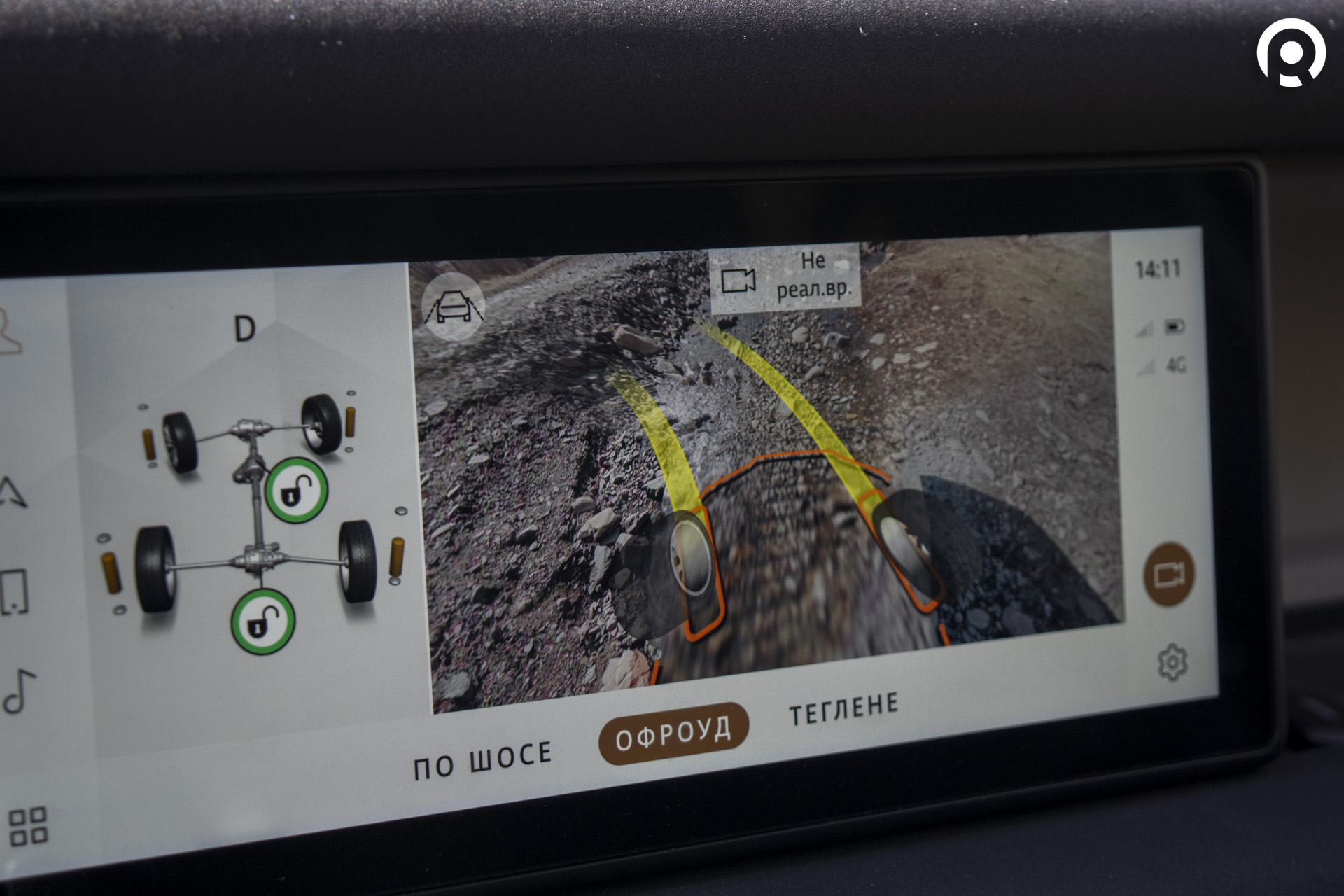
The result is that even people who have no idea what a differential is can achieve quite a lot off-road.
Without pushing my luck too far, I drove through deep mud, climbed a hill where I could momentarily see nothing but sky — the camera system proved extremely helpful here — and the following day I even found a suitable river near Vitosha Mountain.
I entered the water confidently, wading through 40 cm according to the sonar system, and exited without any difficulty at all. All of this happened with remarkable ease.
After nearly 400 kilometres in very diverse conditions, I returned the Defender with an average fuel consumption of 10.6 l/100 km. I would say the result is reasonable, but it hardly matters because this particular engine is no longer available.
I am convinced that the new six-cylinder hybrid engines will offer much more for the model and will likely bring some real improvements in efficiency as well.
Conclusion
Land Rover has modernised its off-road legend, the Land Rover Defender (L663), in the best possible way — creating a modern interpretation of an exceptionally capable vehicle.
The model is built for serious work or adventure, and a wide range of packages and accessories is available to suit specific needs. For example, you can deploy a folding ladder mounted near the C-pillar. Why would you need a ladder? To climb onto the roof, where you might install a folding roof tent.
And the roof itself can support 168 kg while driving. That is just one example — the possibilities are numerous.
The good news is that despite the Defender’s classic virtues, the car does not require serious compromises in everyday life. It is wide, comfortable and refined. The cabin is both practical and comfortable, the equipment can be genuinely luxurious, and the company’s latest technologies are present here as well.
The few drawbacks I noticed during my time with the Defender are mostly related to the engine, which feels a bit rough and somewhat slow to respond. I was also not particularly fond of the creaking noises, which in my opinion come mainly from the panoramic roof.
In my view, the Defender is not only suitable for work or for hardened adventurers. It can also serve perfectly well in more moderate roles — even as a family car for people who value authentic style, generous space and a sense of freedom.
Eng. Tsvetan Iliev